A Major Leap for Accessible Science
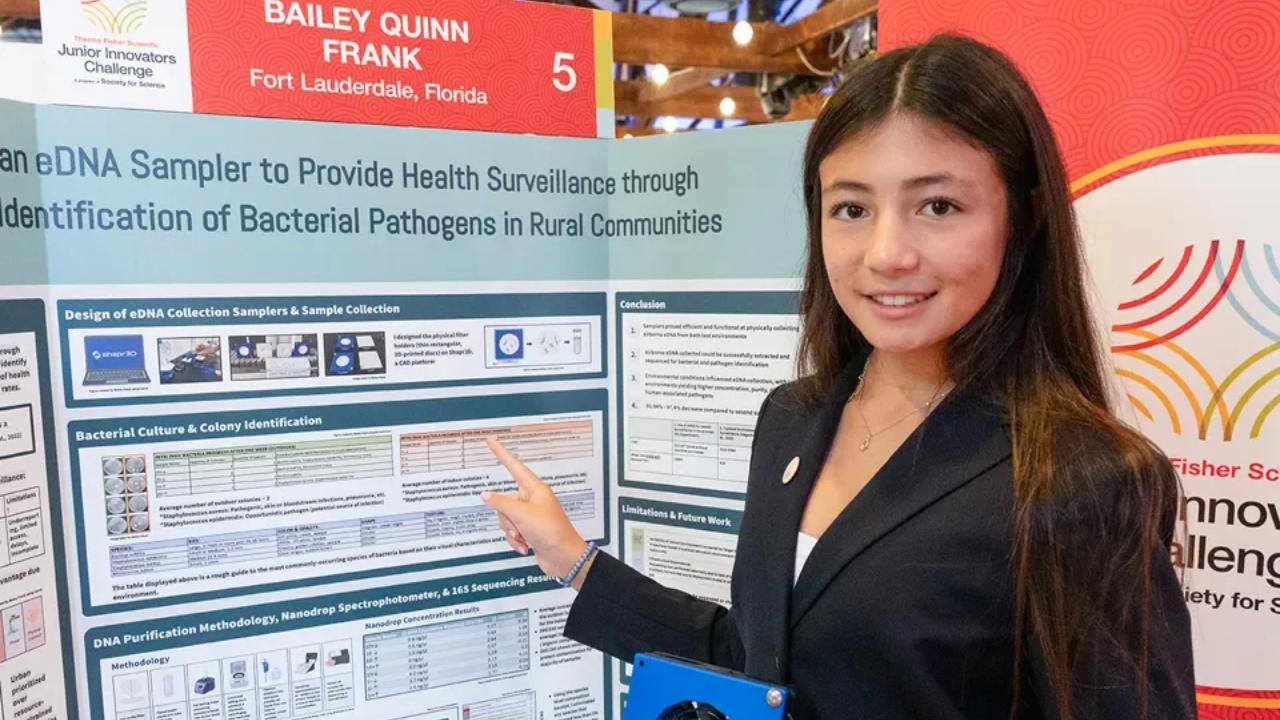
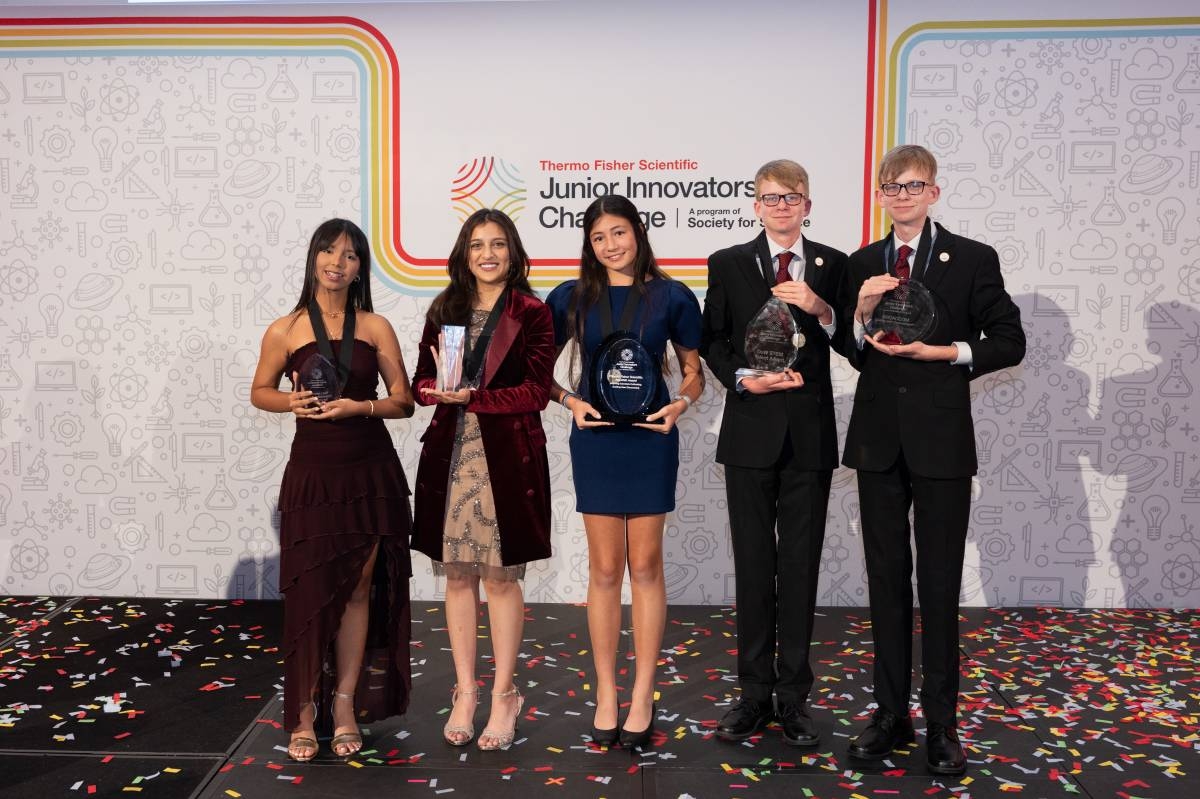
At the 2026 Thermo Fisher Scientific Junior Innovators Challenge (JIC), one name stood out among 2,000 applicants: 15-year-old Bailey Quinn Frank. Winning the competition's top honor, the $25,000 ASCEND Award, Frank impressed judges with a device that manages to be both remarkably simple and potentially life-saving: a low-cost environmental DNA (eDNA) sampler.
While sophisticated air monitoring systems exist, they are often prohibitively expensive for rural or resource-limited areas. Frank’s design bypasses this hurdle by utilizing a small fan and basic filter paper to capture airborne bacterial DNA. By analyzing these samples, researchers can identify microbial communities in the air, providing a scalable way to monitor environmental health threats.
Why Airborne eDNA Matters
Environmental DNA, or eDNA, is increasingly becoming the gold standard for biodiversity and pathogen surveillance. While typically associated with water quality testing, the ability to effectively monitor air for pathogens like bacteria and viruses could provide critical early warnings for public health—similar to how wastewater monitoring was utilized during the COVID-19 pandemic.
- Traditional surveillance is often slow and requires high-cost laboratory equipment.
- Low-cost samplers allow for more frequent, widespread testing in remote locations.
- Detecting pathogens early can lead to faster public health responses in rural areas.
- Frank’s device proved successful in distinguishing between indoor and outdoor bacterial communities.
A Competition Rooted in Real-World Problem Solving
The Thermo Fisher JIC is not just a science fair; it is a rigorous program that forces students to apply critical thinking and collaboration. Beyond their individual projects, finalists this year participated in team challenges, such as coding with micro:bits to design sustainable cities and using AI to identify turtle species. Frank’s success was not based on her hardware alone, but also on her high-level performance during these collaborative exercises.
Middle school is where a spark of interest can become a lifelong passion for science. Bailey's research on using eDNA samplers to detect pathogens is a remarkable example of that spark in action.
— Maya Ajmera, President & CEO, Society for Science
The future of STEM looks bright, with the 30 finalists collectively taking home over $100,000 in prizes. Other winners explored critical issues ranging from dementia-related proteins to wildfire prevention using hydrogels, signaling a generation that is deeply invested in solving the planet's most pressing challenges.