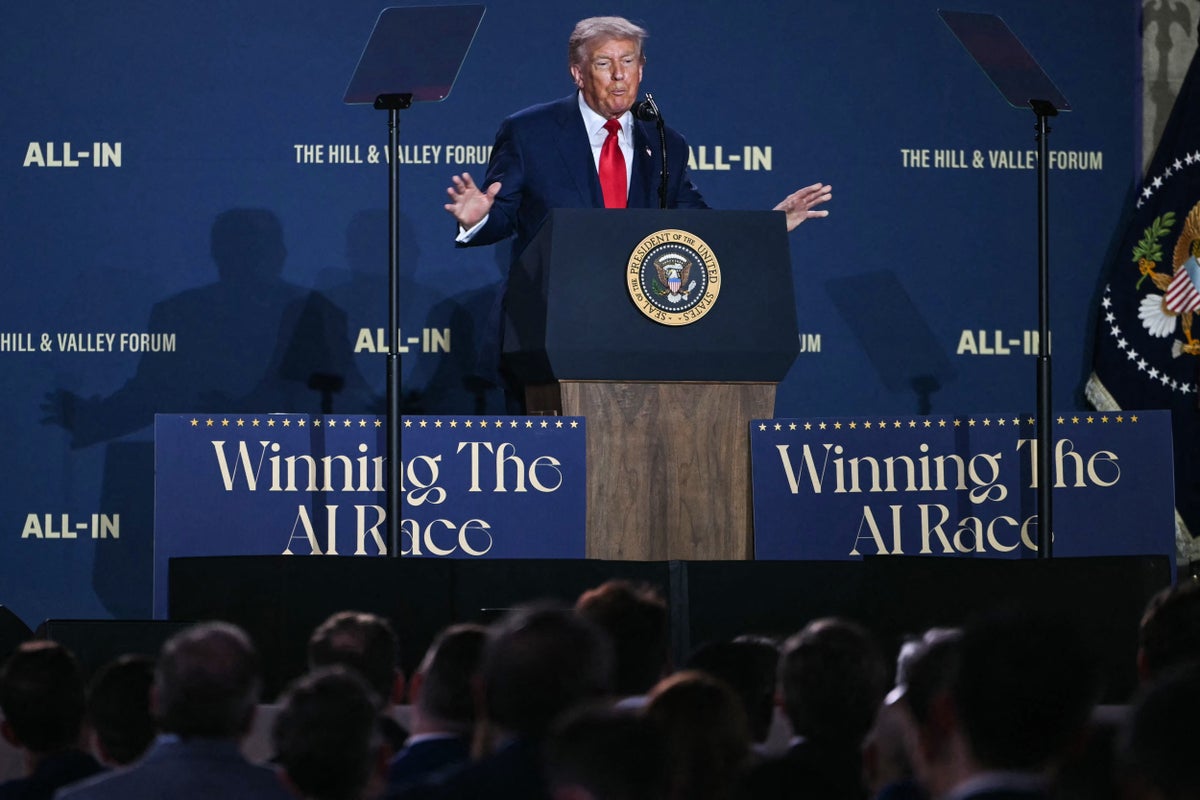
A Shift in Language
In a significant move affecting federal communications, President Donald Trump has initiated a plan to formally retire the terms "Artificial Intelligence" and "AI." The administration aims to replace these long-standing industry standard terms with "Super Intelligence" and its abbreviation, "SI." This mandate, which centers on official documents and executive branch correspondence, seeks to pivot away from what the President has described as an "inaccurate" and "bad" descriptor for rapidly advancing technology.

The Mechanics of the Rebrand
The transition was formalized through an executive order issued on September 30. Under this directive, federal agencies are instructed to adopt "Super Intelligence" (SI) in all new relevant documentation. While the order does not require the retroactive modification of existing contracts, archives, or regulations, it sets a new baseline for future government reporting and policy discussions.
- Primary terms 'Artificial Intelligence' and 'AI' are to be phased out in executive branch communications.
- New preferred nomenclature is 'Super Intelligence' and 'SI'.
- The policy applies to new documents; legacy contracts and archives are exempt from immediate revision.
- The administration argues the new term better captures the technology's current promise and potential.
Impact and Controversy
The administration's stance is that "Super Intelligence" is a more modern and accurate reflection of the current state of technology. However, the move has drawn scrutiny from various sectors. Critics argue that the rebranding effort serves as a distraction from deeper industry issues, including the environmental impact of data centers and broader concerns surrounding economic stability and safety.
The term ‘Super Intelligence’ more appropriately captures the promise, potential, and rapidly advancing capabilities of these technologies.
— Executive Order, September 29