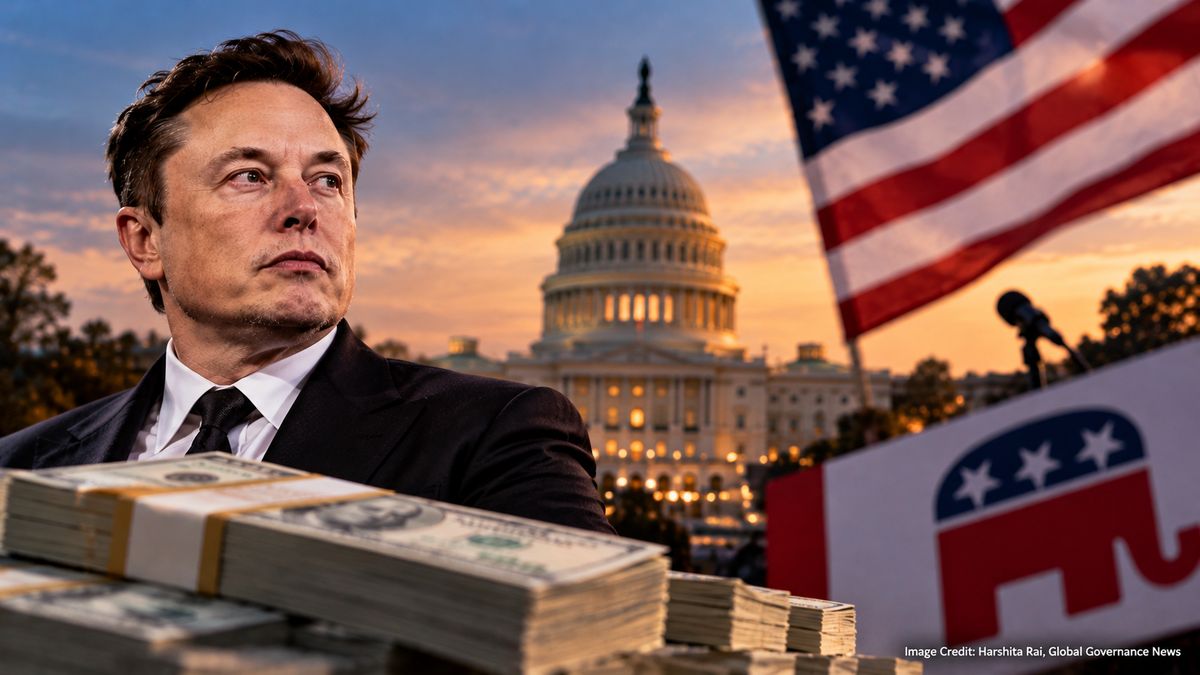
A Historic Shift in Campaign Finance
In a move that has sent shockwaves through the political establishment, Tesla and SpaceX CEO Elon Musk has emerged as the most significant individual political donor in the history of the United States. Federal filings confirm that Musk has pledged approximately $446 million to support the 2026 midterm elections, a record-shattering amount that far exceeds the contributions of any other private citizen in a midterm cycle.
The capital is being funneled primarily through his super PAC, America PAC, as well as various Republican groups. This influx of cash comes at a critical juncture, as Republicans fight to maintain their narrow majorities in both the House and the Senate ahead of the November 3 election.
Where Is the Money Going?
The sheer scale of Musk’s involvement extends beyond broad party support. Recent filings reveal specific strategic deployments aimed at bolstering key races:
- $158 million in contributions documented in September alone.
- $10 million donated to the Lone Star Liberty PAC to support Ken Paxton.
- $20 million allocated to a House GOP super PAC.
- $10 million directed to the Republican Governors Association.
- $2 million earmarked for the Republican Attorneys General Association.
This spending represents an escalation of the trend observed in the 2024 cycle, where Musk contributed roughly $290 million to support the Republican platform. By moving into the $446 million range for 2026, Musk has not only solidified his role as a primary financier for the GOP but also signaled a permanent shift in how individual wealth can influence the eleventh-hour dynamics of congressional races.
This is the largest donation by an individual donor in any midterm cycle ever. It does have the potential to really supercharge a lot of Republican races in the eleventh hour.
— Emily Birnbaum, Bloomberg Corporate Lobbying and Influence Reporter
Broader Impact and Scrutiny
The impact of such massive personal spending has not gone unnoticed by political rivals. In Texas, for instance, opponents have voiced concerns over the influence of corporate moguls on local and national candidates, with some accusing the influx of funds of attempting to 'buy' legislative outcomes. Despite this, the surge of capital underscores the current climate of the 2026 midterms, where total political ad spending is projected to reach a record $11.6 billion by Election Day.