technology••5 min read

The Silent Revolution: How Automatic Image Annotation Is Changing AI Training

Automatic image annotation is rapidly replacing manual, time-consuming labeling processes in computer vision development. By leveraging AI-assisted tools, developers are slashing production costs while simultaneously boosting the accuracy of their models.

The Silent Revolution: How Automatic Image Annotation Is Changing AI Training

The Bottleneck of AI Development

For years, the most significant hurdle in building advanced computer vision models has been the data itself. To teach a machine to see, developers must feed it thousands of images, each carefully labeled by humans to identify specific objects—a car, a pedestrian, a traffic signal. This process, known as manual image annotation, is notoriously repetitive, time-consuming, and expensive.

However, a shift is underway. Automatic image annotation is changing the landscape, allowing AI teams to automate the drudgery and focus on refining model performance.
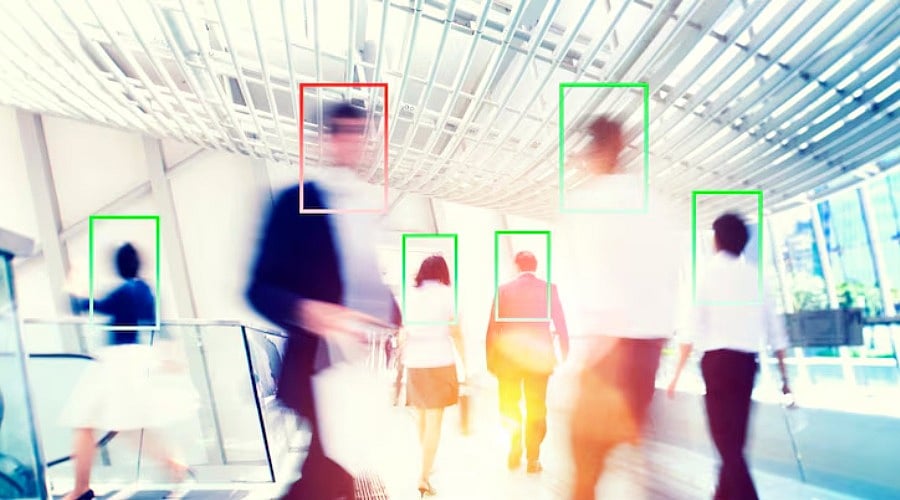
Automatic annotation techniques are drastically reducing the time required to prepare high-quality datasets for AI models.

How Automatic Annotation Works

At its core, image annotation provides the 'lessons' a computer vision model needs to generalize. By using pre-labeling or model-assisted labeling, engineers can create a base model that handles the bulk of the classification work. Once the initial dataset is labeled, that model can assist in labeling subsequent, unseen images.

  • Reduced Costs: Automation can cut labeling time and costs by up to 50%.
  • Higher Efficiency: Human annotators transition from manual pixel-labeling to reviewing and correcting AI-generated outputs.
  • Increased Accuracy: Iterative learning allows models to improve their precision as they process more data.
  • Scalability: Teams can handle massive datasets that would be impossible to process manually.

The Impact on Real-World AI

This technology is not just for niche research; it is essential for high-stakes industries like autonomous driving. In these applications, a model must distinguish between a pedestrian and a background object with near-perfect reliability. By speeding up the iteration cycle, developers can train more robust models that are capable of safer navigation in complex environments.

Pre-labeling decreases labeling costs as the model gets smarter with every iteration, leaving teams more time to focus on manually labeling edge cases or areas where the model might not be performing as well.

— Labelbox Engineering

Key Takeaways

  • Manual image labeling is the primary bottleneck in computer vision development.
  • Automatic annotation techniques reduce labor costs by up to 50%.
  • Pre-labeling allows models to learn from every iteration, improving overall accuracy.
  • Human input remains vital for reviewing edge cases and ensuring model quality.
  • Automation is critical for scaling AI in sectors like autonomous driving.

FAQ

What is image annotation?

It is the process of labeling images with metadata so a computer vision model can recognize objects, patterns, or categories.

How does automatic annotation save money?

By using AI to perform the initial labeling, companies reduce the number of hours human workers spend on repetitive tasks, cutting costs by nearly half.

Does automation replace the need for humans?

Not entirely. Humans are still required to audit the AI's labels, particularly for edge cases or complex scenarios where the model lacks confidence.

Why is this technology important for autonomous vehicles?

It allows developers to process massive amounts of road data quickly, ensuring the vehicle can reliably distinguish between obstacles in real-time.

Related Videos

AI data annotation explained in under 2 minutes

Moveworks

Image Annotation (Image Labeling) - All you need to know about it

Kotwel

Sources