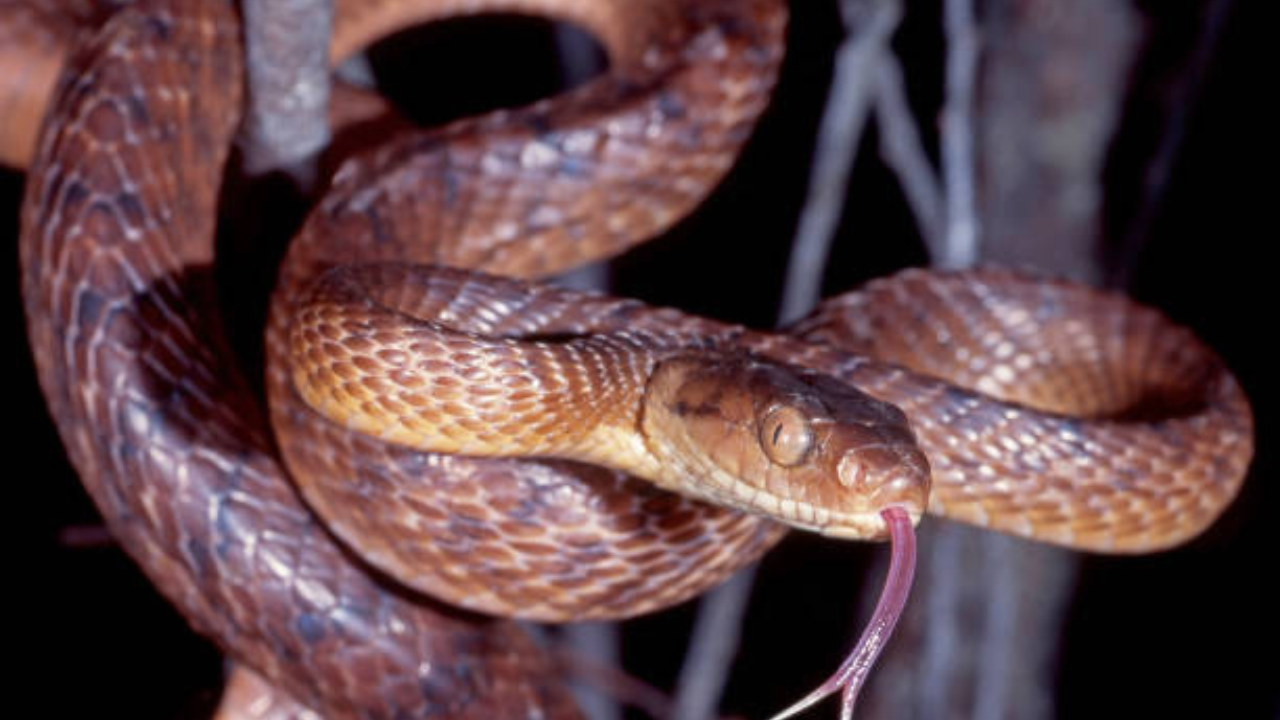
A Predator That Can Swim
The brown tree snake has long been one of the most destructive invasive species in the Pacific. Originally introduced to Guam following World War II, the reptile decimated the island’s endemic bird and lizard populations. Now, conservationists are sounding the alarm after a recent experiment revealed that a brown tree snake was able to swim more than 3 kilometers. This discovery has triggered fresh concerns for the safety of Cocos Island, a vital sanctuary where endangered ko’ko’ birds (Guam rails) are currently being bred in an effort to save the species from extinction.
Decades of Ecological Damage
The impact of the brown tree snake on Guam’s ecosystem cannot be overstated. According to the USDA, the snakes have caused the extirpation or extinction of 10 of the 13 native bird species on the island. Because these birds evolved in a snake-free environment, they lacked the defensive behaviors necessary to survive the arrival of such an efficient predator.
- Ecological Collapse: Most native forest birds and several lizard species have been wiped out.
- Infrastructure Impact: The snakes frequently crawl along power lines, causing approximately one power outage every four days on the island.
- Human Interaction: With densities reaching up to 30,000 snakes per square mile, the reptiles often enter human homes through air ducts and sewage lines, leading to hundreds of reported snakebites.
- Secondary Effects: The loss of birds—which act as seed dispersers—has potentially altered the very composition of Guam’s forests and increased the population of spiders.
Why Cocos Island Matters
Cocos Island serves as a critical refuge for the ko’ko’ bird. Since these birds are functionally extinct in the wild on Guam's main island, successful breeding programs on satellite islands are essential to the species' survival. The revelation that brown tree snakes are capable of swimming significant distances suggests that even bodies of water previously thought to be effective barriers may not provide enough protection against the persistent predator.
The indigenous birds of Guam evolved in a snake-free habitat and consequently lack the protective behavior or barriers of other birds, making them easy prey for the brown tree snake.
— U.S. Department of State