
Solving the Winter Range Problem
For many electric vehicle owners, winter is the 'moment of truth'—a season where driving range often plummets as sub-zero temperatures sap battery efficiency. Finnish startup Donut Lab is looking to change that narrative. Following a series of rigorous evaluations conducted by the VTT Technical Research Centre of Finland, the company’s first-generation battery cells have demonstrated remarkable performance in deep-freeze conditions.
The Results: How It Performed
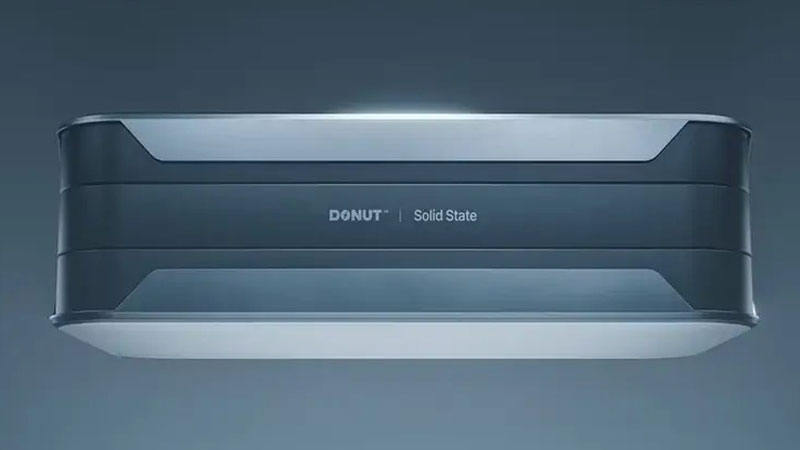
VTT tested a complete module containing 14 of Donut Lab’s first-generation cells without the use of external heating or insulation. Under these harsh conditions, the results were striking:
- Capacity Retention: The module retained 97% of its initial ampere-hour capacity.
- Energy Output: It delivered 1,254 watt-hours at -30°C (-22°F), compared to 1,354 watt-hours at a baseline of 25°C (77°F).
- Efficiency: This equates to roughly 93% energy retention, even without thermal management systems.
Donut Lab noted that in a real-world vehicle application, the battery would typically be housed in an insulated case, which would likely further enhance performance by trapping the heat generated by the battery during discharge.
Winter is the moment of truth for every battery. All electric vehicle owners know what happens to driving range when the temperature drops.
— Marko Lehtimäki, CEO of Donut Lab
A Broad Testing Roadmap
This cold-weather test marks the conclusion of a comprehensive evaluation program for Donut Lab's Gen1 cells. VTT has put the technology through a gauntlet of trials to ensure durability and reliability, including:
- Five-minute fast-charging capabilities.
- High-temperature performance testing up to 100°C (212°F).
- Assessment of swelling and internal pressure.
- Self-discharge rates and energy density.
Looking Toward the Future
With the Gen1 testing phase wrapped up, Donut Lab is shifting its focus toward next-generation iterations. The company plans to move forward with system-level demonstrations, aiming to prove that their technology can handle the rigors of the road beyond the laboratory setting. For an industry searching for ways to minimize the impact of climate on EV range, the data suggests Donut Lab is a name worth watching.