space exploration••5 min read

NASA Officially Closes the Book on the Historic OSIRIS-REx Mission

NASA has formally concluded its landmark OSIRIS-REx mission following the successful retrieval and analysis of asteroid Bennu samples. The mission has provided unprecedented insights into our solar system’s history and the potential origins of life on Earth. Researchers are now using these findings to solve long-standing planetary mysteries.

NASA Officially Closes the Book on the Historic OSIRIS-REx Mission

A New Chapter in Planetary Science

On September 30, NASA officially brought the curtains down on the OSIRIS-REx mission, marking the end of a historic seven-year journey. As the first U.S. effort to successfully collect and return a pristine sample from an asteroid, the mission stands as a monumental achievement in space exploration. Beyond the feat of navigation and engineering, the data returned from asteroid Bennu is already reshaping our understanding of the early solar system.
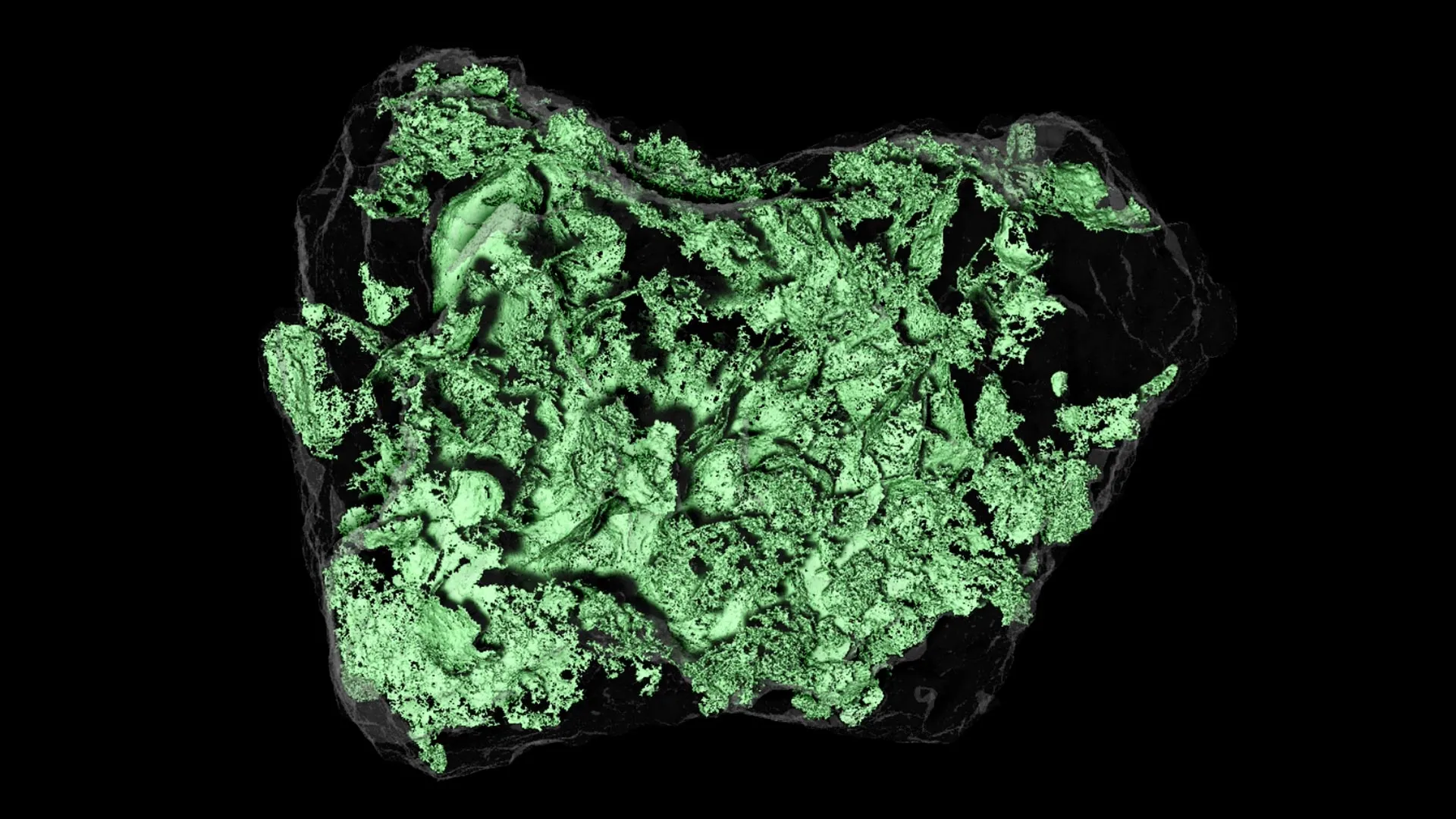
X-ray analysis of a particle sample retrieved from asteroid Bennu.

Solving the Mystery of Bennu’s Boulders

One of the most immediate impacts of the returned samples is the resolution of a puzzle that has long confounded scientists: why Bennu loses heat so rapidly despite its rocky surface. By examining the material brought back to Earth, researchers discovered that the asteroid's boulders are riddled with hidden cracks. This structural anomaly explains the rapid heat dissipation, a mystery that observation from afar could never fully solve.

Searching for the Origins of Life

Beyond simple physics, the mission was driven by a fundamental question: how did life on Earth emerge? Bennu, a carbon-rich asteroid, is a time capsule of the early solar system. Early analysis has revealed that the samples are composed of approximately 5% carbon by weight. Scientists are currently cataloging the organic molecules present in these samples to see how they align with the building blocks essential to Earth’s biosphere.

  • The samples contain significant amounts of hydrated, water-rich minerals.
  • The 5% carbon content provides a rich resource for organic molecule identification.
  • Data from the mission helps refine models regarding the Yarkovsky effect, which influences asteroid orbits.
  • The findings will assist future scientists in developing strategies for potential asteroid impact avoidance.

I am immensely proud of what we did.

— OSIRIS-REx Mission Team

Key Takeaways

  • OSIRIS-REx officially concluded on September 30 after successfully returning the largest asteroid sample in history.
  • Analysis of the samples revealed that Bennu’s boulders contain microscopic cracks, solving a major thermal mystery.
  • The asteroid is rich in carbon (5% by weight) and hydrated minerals, providing clues to the origins of life.
  • The mission data will be critical for future planetary defense and asteroid impact avoidance research.
  • This was the first U.S. mission to collect and return surface material from an asteroid.

FAQ

What was the primary goal of the OSIRIS-REx mission?

The primary goal was to collect a pristine sample from the asteroid Bennu and return it to Earth to study the origins of the solar system and potential organic life precursors.

Why is asteroid Bennu considered significant?

Bennu is a carbonaceous, near-Earth asteroid that acts as a time capsule, potentially holding organic molecules and water-rich minerals that shed light on how life began.

What did scientists learn about Bennu’s boulders?

Researchers discovered that the boulders on Bennu are filled with hidden cracks, which explains why the asteroid loses heat so quickly.

How much carbon was found in the asteroid samples?

Initial assessments by the science team indicated that the samples consist of approximately 5% carbon by weight.

Related Videos

OSIRIS-REx Asteroid Sample Return (Official 4K NASA Broadcast)

NASA

OSIRIS-REx Sample Collection at Asteroid Bennu: SamCam View of TAGSAM

NASA Video

OSIRIS-REx: Countdown to Launch (full documentary)

AZPM

Sources