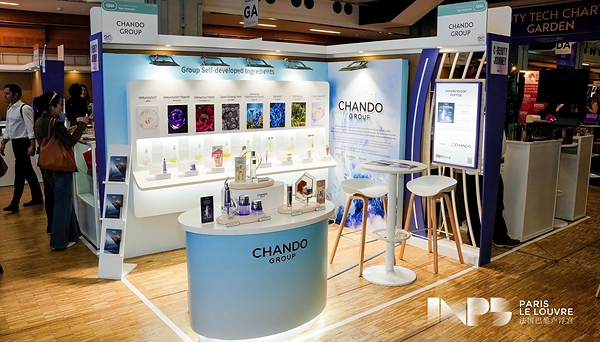
A New Paradigm in Skin Health
At the 12th edition of COSMETIC 360 in Paris, CHANDO Group took the main stage at the Louvre to challenge how we think about anti-aging. The company debuted 'Fatigue-Aging' (or 'Fatiguescence')—a research-backed concept that suggests our fast-paced, high-stress lifestyles are physically manifesting on our skin earlier than ever before.
Collaborating with the Shanghai Institute of Nutrition and Health, CHANDO discovered that the onset of wrinkle formation for Chinese women has shifted roughly four years earlier compared to data from 2018. The culprit? A combination of cumulative stress, sleep deprivation, and lifestyle factors that impact cellular energy metabolism.

AI-Driven Ingredient Innovation
To combat these fatigue-related aging symptoms, CHANDO Group turned to computational biology. By screening a database of over 2.8 million yeast protein sequences, researchers identified the HiMurchaSin™ Super Anti-Aging Peptide, derived from Himalayan extremophile yeast.
- Targets PGC-1α, a key regulator of mitochondrial energy metabolism.
- Delivers 8.5 times the penetration capacity of conventional tetrapeptides.
- Promotes cellular renewal and combats fatigue-induced skin degradation.
- Recognized with the 2026 INPD Raw Materials Award.
The Future of Anti-Aging Science
This research signifies a shift from traditional cosmetic chemistry toward 'Scientific Beauty.' Shanshan Jiang, MD, emphasized during her keynote that addressing chronic stress aging is now a central paradigm for Chinese skin research. By focusing on mitochondrial biogenesis—the process by which cells increase their energy output—CHANDO is moving beyond surface-level treatments to address skin health at the cellular level.
By targeting PGC-1α, a key regulator of mitochondrial energy metabolism, [the peptide] helps support cellular energy production and address fatigue-related skin aging at the cellular level.
— CHANDO Group Research Team