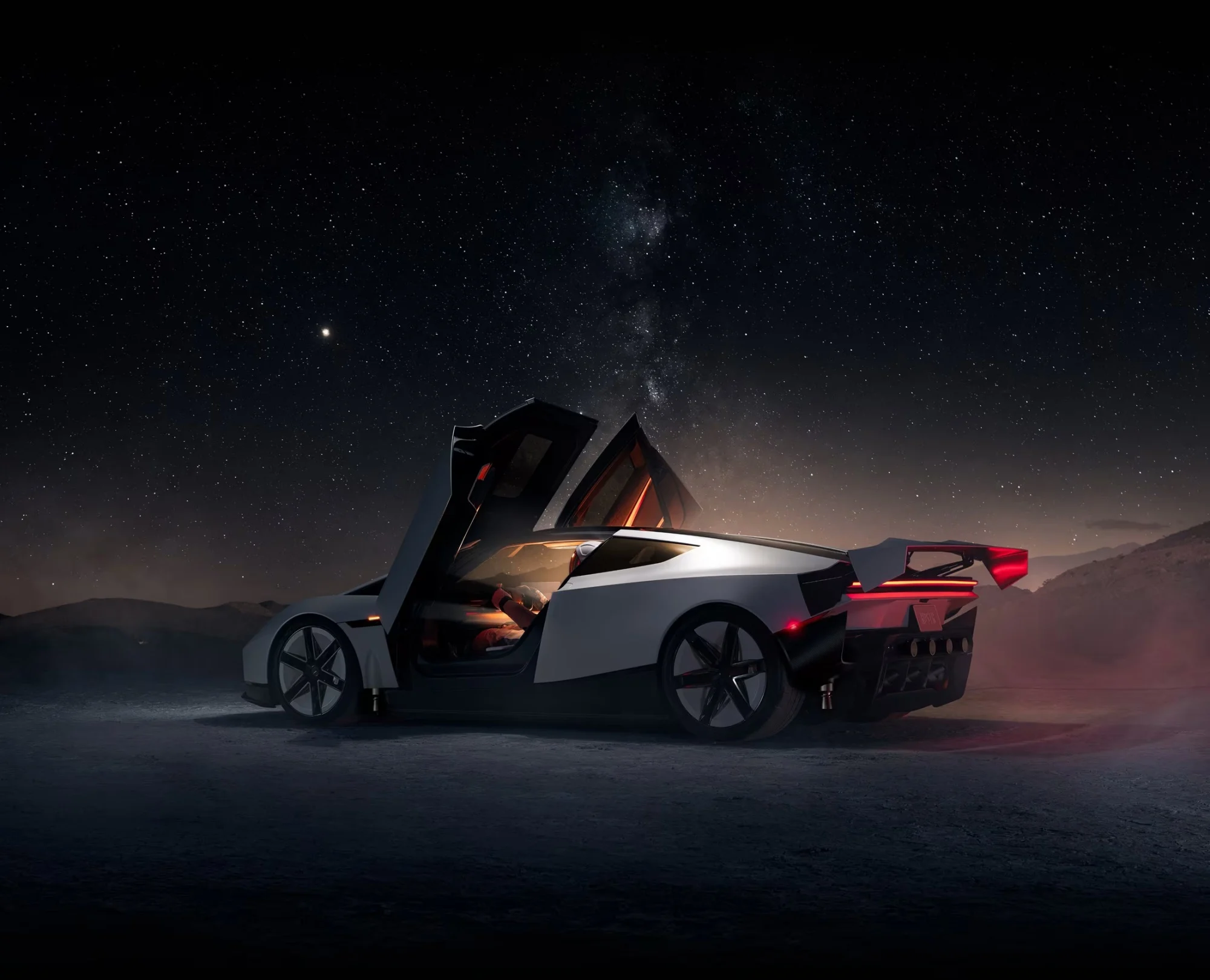
A Stunt That Defies Physics
After nine years of anticipation and multiple delays, Tesla has finally taken the wraps off its second-generation Roadster. In a dramatic demonstration at a SpaceX test site in McGregor, Texas, the company proved that its claims of a 'flying' car weren't just marketing hype. The vehicle showcased the ability to drive up a C-shaped ramp, hang upside down using a suction-based ground-sealing system, and launch itself into the air.

How the SpaceX Thrusters Work
The core of the Roadster's performance lies in its integration of SpaceX technology. The vehicle is equipped with approximately 10 cold-gas thrusters that utilize compressed air stored in a composite overwrapped pressure vessel (COPV). These thrusters provide the necessary force for extreme maneuvers, including the mid-air flips witnessed at the unveiling.
- Cold-gas thrusters: 10 nozzles powered by compressed air to enable flight and attitude control.
- Ground-sealing system: A multi-mode fan system that generates suction to allow the car to adhere to inverted surfaces.
- Performance: Musk claims a 0–60 mph acceleration time of under one second and a top speed exceeding 230 mph.
- Rechargeable: The compressed air tanks are designed to be recharged while the vehicle is in motion.
Availability and The Long Wait
While the engineering is undeniable, getting your hands on one will require both significant capital and extraordinary patience. Tesla is currently accepting reservations with a complex deposit structure: a $5,000 initial down payment followed by $45,000 within 10 days. For those interested in the high-specification 'Rocket' trim, the reservation deposit jumps to $250,000.
Its real test will come in 2028, if Tesla can turn a stunt car into a road car on schedule. Given the history, investors may want to see it before they believe it.
— Eamonn Sheridan, investinglive.com
With production not slated until 2028, the Roadster currently serves as a halo product—a brand statement designed to demonstrate Tesla's engineering ambition rather than a move to improve quarterly earnings. For now, it remains a rare, high-end display of what might be possible for the future of automotive transit.