technology••5 min read

Samsung’s AI Pivot: Why Cooling Is Now Mission-Critical Infrastructure

Samsung is expanding its B2B footprint by integrating AI-driven cooling technology into everything from residential appliances to high-density data centers. With the global demand for AI infrastructure skyrocketing, the company is positioning itself as a leader in the next generation of mission-critical hardware protection.

Samsung’s AI Pivot: Why Cooling Is Now Mission-Critical Infrastructure

The New Frontier for Samsung: B2B and AI-Driven Infrastructure

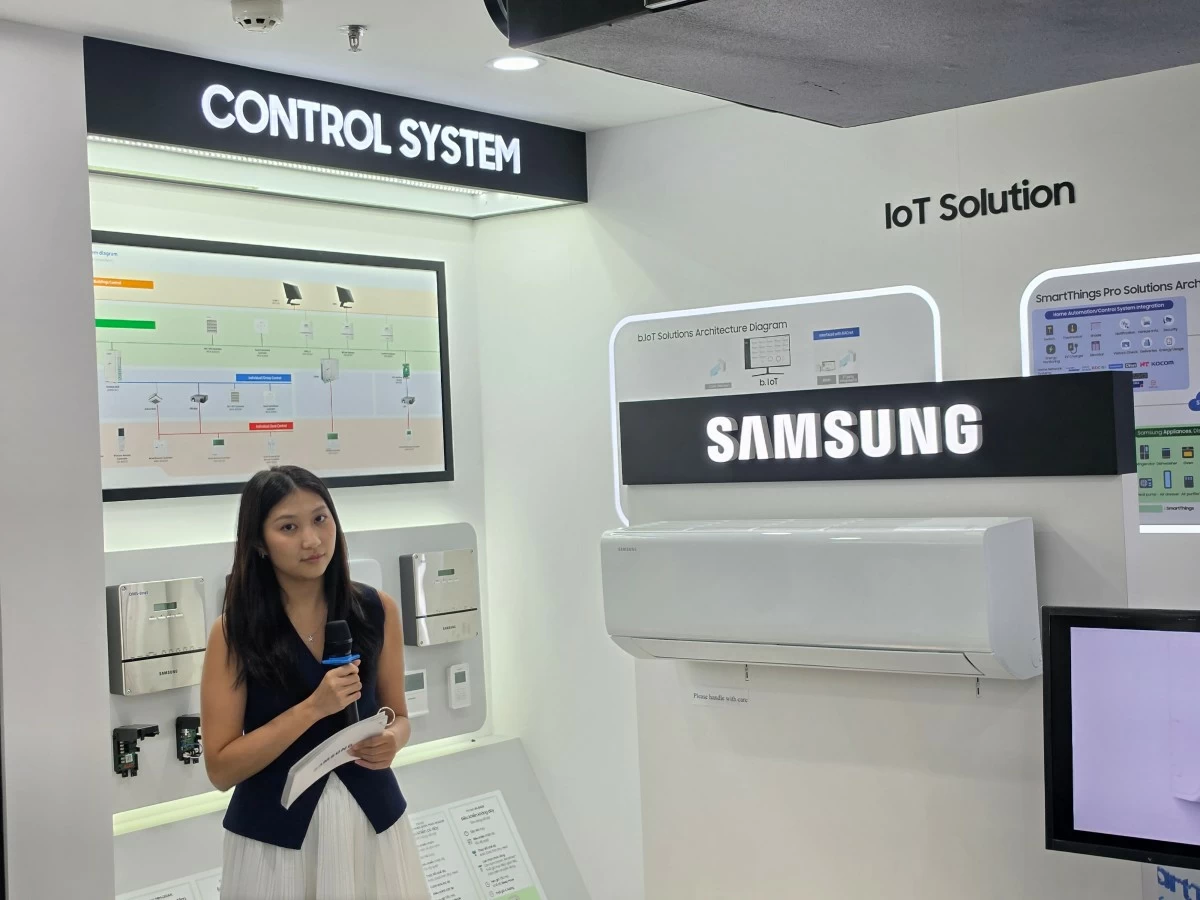
At the recent 'The Brief' showcase in Hanoi, Vietnam, Samsung Electronics underscored a significant strategic shift: a deep push into the Business-to-Business (B2B) sector. While the brand remains a household name for smartphones and televisions, its latest move centers on the backbone of the digital economy—climate control and infrastructure cooling.

As AI workloads multiply across Southeast Asia, the physical infrastructure supporting them is under immense pressure. Samsung’s response is a dual-pronged strategy: optimizing consumer comfort through AI-powered appliances and securing enterprise-grade hardware with modular, high-capacity cooling systems.

Samsung's 'The Brief' showcase highlighted the company's growing focus on enterprise-grade cooling solutions.

Why Cooling Is Now Mission-Critical

The rise of generative AI has created a paradox: while software becomes more virtual, the hardware required to run it becomes increasingly physical, dense, and heat-intensive. In the Southeast Asia and Oceania (SEAO) region, data center capacity is projected to expand by 180%. This surge is not merely a matter of more server racks; it is a thermal management crisis.

  • Data centers require specialized thermal management to protect mission-critical hardware from heat-related failure.
  • AI-driven workloads generate significantly more heat than traditional cloud computing environments.
  • Sustainability metrics are forcing businesses to balance high cooling performance with reduced energy consumption.
  • Samsung's acquisition of FläktGroup in 2025 provides the company with specialized expertise for large-scale data center cooling.

The Role of AI in Efficiency

Samsung is moving away from 'dumb' climate control, opting instead for intelligent systems that adapt in real time. For commercial enterprises, their DVM S2 Variable Refrigerant Flow system uses on-device AI to analyze building patterns and environmental conditions, reportedly reducing compressor energy use by up to 15%.

The future of the B2B ecosystem will be increasingly connected, intelligent, and energy-efficient. Our vision is to offer technology solutions that work seamlessly together to create intelligent environments.

— Changup Kim, President & CEO of Samsung Electronics SEAO

By integrating these HVAC systems with SmartThings Pro, Samsung aims to provide a 'connected enterprise' experience. This allows facility managers to monitor and optimize energy usage across retail, hospitality, and manufacturing environments, turning what was once a utility cost into a data-driven efficiency lever.

Key Takeaways

  • Samsung is aggressively expanding its B2B portfolio, focusing heavily on HVAC and cooling solutions for data centers and commercial real estate.
  • The 2025 acquisition of FläktGroup positions Samsung as a major player in large-scale mission-critical cooling infrastructure.
  • AI is being utilized to optimize system performance, allowing for real-time adjustments that reduce energy consumption in both homes and data centers.
  • Data center cooling is now recognized as 'mission-critical hardware protection' rather than just climate control.
  • Samsung plans to maintain this momentum with upcoming 2027 air conditioning hardware, continuing their focus on extreme-weather durability.

FAQ

Why is Samsung focusing so heavily on the B2B sector?

Samsung is moving beyond consumer products to support the growing digital and industrial infrastructure needs in the SEAO region, specifically targeting data centers and commercial buildings.

How does Samsung use AI in its cooling systems?

Samsung's AI, such as that found in the DVM S2 system, learns from environmental conditions and usage patterns in real-time to optimize compressor operations and reduce energy waste.

What is the importance of the FläktGroup acquisition?

Acquired in 2025, FläktGroup provides Samsung with specialized expertise in large-scale cooling for mission-critical infrastructure like data centers and advanced manufacturing.

How is Samsung preparing for extreme weather events like El Niño?

Samsung utilizes technologies like DuraFin+ for corrosion resistance and Triple Protector Plus to safeguard against electrical fluctuations and power surges.

Related Videos

E&M InnoPortal: Pioneering Immersion Cooling for High-Performance Computing

micro2media

Data Center 101 | What is Data Center?

Overwatch University

What data centers actually do

Morning Brew

Sources