A Major Pivot in the Smart Home Space
On October 13, 2026, Apple significantly expanded its smart home footprint with a massive product drop. The centerpiece is the HomeView, a $299 smart display designed to act as the nerve center for your connected home. But the launch was about more than just one device; it signaled a unified 'Apple Home Collection' strategy, aiming to solve the fragmentation issues that have long plagued the smart home industry.
HomeView: Design and Technical Specs
The Apple HomeView is built around a 7-inch Liquid Retina display, driven by the A18 processor. Apple has packed significant intelligence into the unit, including facial recognition that can distinguish between up to six different users. This allows for a personalized experience, whether you are checking the calendar or using FaceTime.
- 7-inch Liquid Retina display
- A18 processor for on-device processing
- Facial recognition supporting 6 distinct users
- Multi-camera support: View up to 9 streams simultaneously
- Versatile mounting: Wall or table-top use
Building a Cohesive Ecosystem
Beyond the display, Apple introduced the HomePod Mini 2 and an upgraded Apple TV 4K with the A19 chip. Perhaps most importantly, Apple is launching its own line of security accessories—including cameras, a video doorbell, a smart lock, and a thermostat—starting at $40. By partnering with manufacturers like LG Electronics and Schneider Electric, Apple is leaning into the Matter standard, ensuring that these new devices offer a consistent setup experience that doesn't require extra apps or complex account creation.
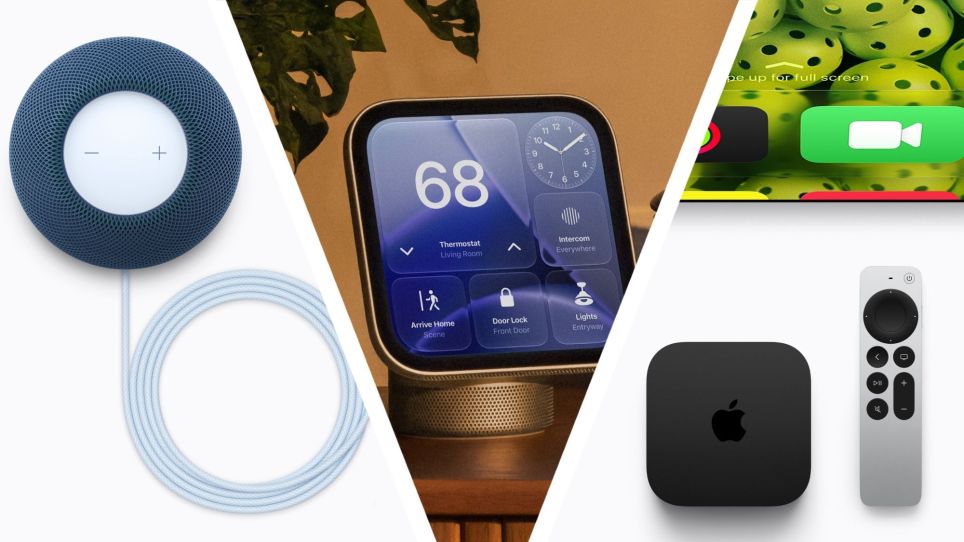
Every product across the new lineup shares a consistent, seamless setup and control experience. Starting with a single tap with iPhone, the accessory is added to Apple Home, similar to setting up HomePod.
— Apple Newsroom