A Divergent Path in a High-Rate Environment
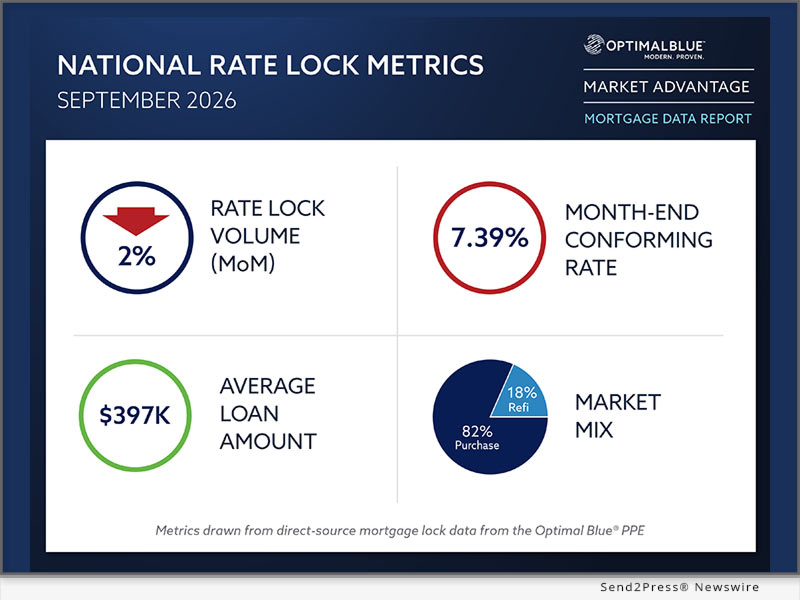
The broader mortgage market faced a challenging September 2026, with total rate-lock volume sliding 2% month-over-month and 26% compared to the previous year. Yet, beneath these aggregate numbers, a different story is unfolding: the non-qualified mortgage (non-QM) sector is not just surviving—it is thriving.
According to the latest Market Advantage report from Optimal Blue, non-QM lock volume jumped 8% in September alone. These loans, which cater to borrowers who do not fit into the rigid 'qualified' box of traditional lending, now represent 12% of total production, signaling a major shift in how Americans are financing their homes.
Why Borrowers Are Turning to Non-QM
Traditional lending often relies on rigid income documentation, such as standard W-2s and debt-to-income (DTI) ratios, which can inadvertently sideline creditworthy individuals. Non-QM loans fill this void by offering alternative paths to qualification, including bank statement programs, asset-depletion underwriting, and 1099-income qualification.
- Bank statement programs allow self-employed borrowers to qualify based on cash flow rather than tax returns.
- DSCR (Debt Service Coverage Ratio) loans enable investors to finance properties based on rental income potential.
- Automation in income and asset verification is making these loans faster and more efficient to process.
- Institutional investor demand has turned non-QM from a niche product into a recognized, stable asset class.
The Role of Technology and Strategy
The expansion of this sector isn't just about borrower need; it’s about better infrastructure. Modern platforms, such as Sun West’s Angel AI, are helping originators calculate income and match borrowers to products with greater precision. However, experts warn that technology shouldn't be the only factor.
Originators who rely solely on automated approvals risk missing viable deals. It is vital to manually review declined applications to identify alternative qualification paths.
— Non-QM Industry Panelists
Looking Ahead: Is This Sustainable?
As non-QM loans account for an increasingly significant slice of the mortgage pie—estimated at 10% to 15% of the total market—the focus is shifting toward responsible scaling. With more than a decade of performance data to back these assets, institutional investors have gained confidence in the product.
While rising interest rates weigh heavily on the housing market as a whole, the non-QM sector’s ability to pivot toward income-complex borrowers suggests it will remain a critical tool for lenders looking to maintain volume when traditional origination slows.