technology••4 min read

IonQ Just Hit a Major Milestone in Quantum Networking

IonQ has successfully connected trapped-ion qubits to solid-state quantum memory at a rate exceeding 1,000 entanglement events per second. This world-first achievement marks a critical step forward in building reliable, scalable quantum networks. The breakthrough paves the way for more complex, interconnected quantum systems.

IonQ Just Hit a Major Milestone in Quantum Networking

A New Speed Record for Quantum Connections

Quantum computing is rapidly moving from theoretical physics to enterprise reality, and IonQ just provided the latest proof. On October 9, 2026, the company announced a world-first achievement: sustaining entanglement rates of more than 1,000 events per second between a trapped-ion qubit and solid-state quantum memory.

This is not just a laboratory curiosity; it is a fundamental requirement for the future of quantum networking. To build a functional quantum internet or modular quantum computers, systems must be able to 'talk' to one another reliably and at high speeds. By achieving this rate through a photonic interconnect, IonQ is solving one of the most persistent bottlenecks in the field.
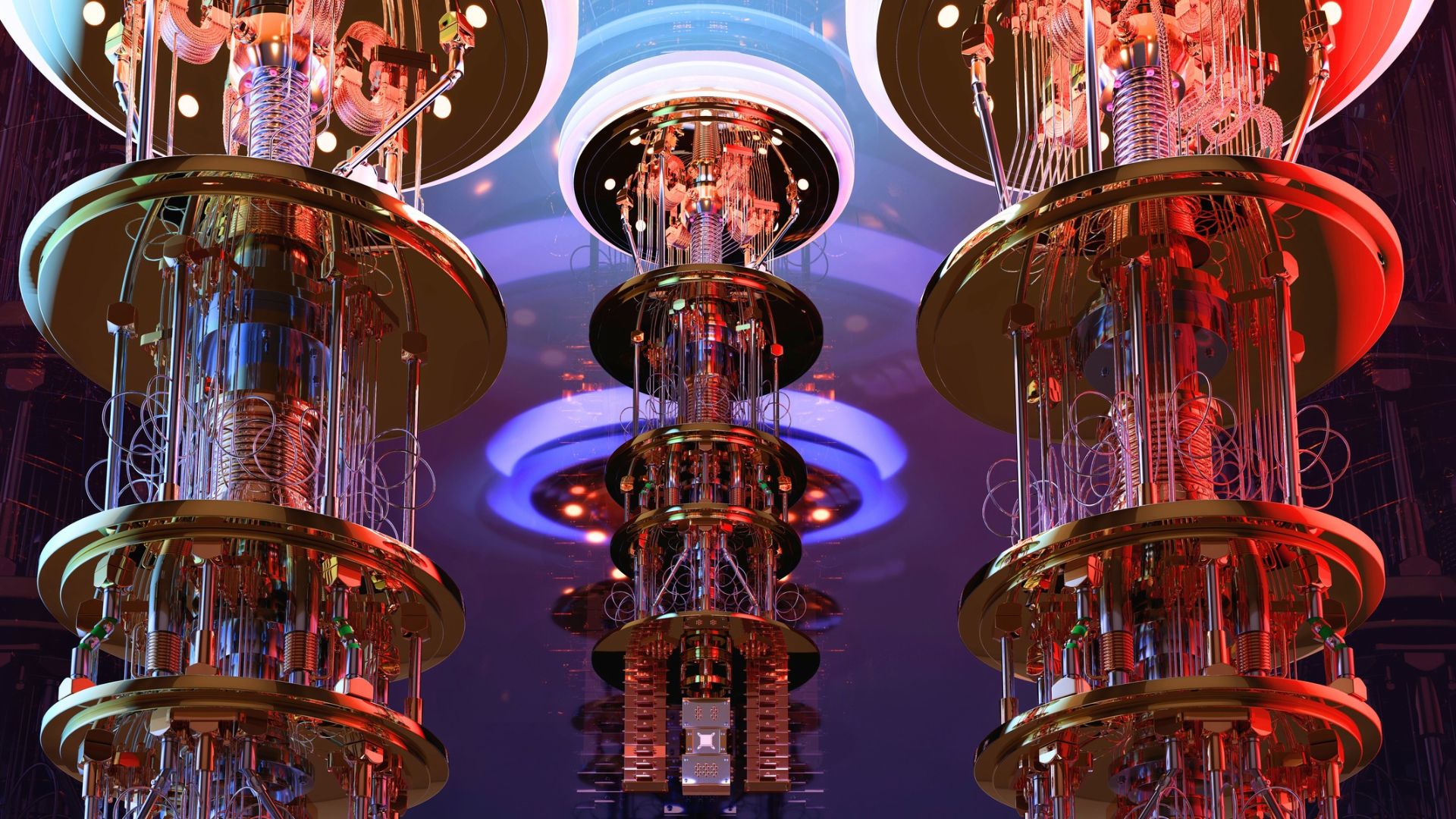
The new 1,000-entanglement-per-second milestone is a critical breakthrough for quantum networking.

Why Entanglement Rates Matter

Entanglement is the 'quantum connection' that allows separate systems to work in unison. Without high-speed, stable entanglement, building larger-scale quantum machines becomes nearly impossible. For enterprise-grade quantum computing—the kind that companies like IonQ are already deploying for logistics, finance, and materials science—the ability to link processors via quantum memory is essential.

  • Scalability: High-speed interconnects allow smaller quantum processors to be linked into a larger, more powerful system.
  • Networking: Reliable links between trapped ions and solid-state memory form the backbone of a future quantum internet.
  • Practical Utility: Faster entanglement rates directly translate to better performance for complex tasks like molecular modeling and AI fine-tuning.

Building the Quantum Enterprise

This announcement arrives during a period of significant momentum for IonQ. The company is currently participating in the Quantum Benchmarking Initiative (QBI) supported by DARPA, aimed at realizing industrially useful quantum computers by 2033. Furthermore, the company has expanded its commercial reach through the IonQ Forte and Forte Enterprise systems, which are available via Amazon Braket.

Entanglement is the quantum connection that lets separate systems work together, and it is the essential ingredient for networking quantum computers.

— IonQ Official Press Release

As IonQ continues to integrate its quantum hardware with enterprise data centers, benchmarks like this 1,000-event-per-second threshold prove that the gap between experimental physics and scalable computing is closing faster than many expected.

Key Takeaways

  • IonQ achieved a world-first milestone of 1,000 entanglement events per second.
  • The connection links trapped-ion qubits to solid-state quantum memory via photonic interconnects.
  • High-speed entanglement is a critical requirement for scaling quantum computers into larger, interconnected networks.
  • The breakthrough supports IonQ’s ongoing work in the DARPA Quantum Benchmarking Initiative.
  • This advancement is part of a broader trend of shifting quantum research toward practical, commercial enterprise applications.

FAQ

What is quantum entanglement?

Quantum entanglement is a physical phenomenon where particles become interconnected such that the state of one instantly influences the state of the other, regardless of distance. It is the core mechanism used to connect and scale quantum computers.

Why is 1,000 entanglements per second important?

This rate represents a significant jump in the speed at which quantum systems can interact. Reliable, high-speed entanglement is necessary for building complex, modular quantum networks that can solve real-world problems.

What is the difference between trapped-ion qubits and solid-state memory?

Trapped-ion qubits are individual atoms suspended in space by electromagnetic fields, while solid-state memory stores quantum information in stable, physical materials. Linking these two is crucial for creating robust quantum data architectures.

How does this impact current quantum computing usage?

In the short term, it validates the architecture IonQ uses for its Forte and Forte Enterprise systems. Long term, it paves the way for more efficient quantum computing applications in industries like medicine, finance, and AI.

Related Videos

Learn Quantum: What is Trapped Ion Quantum Computing?

IonQ

Quantum Computers Explained: How Quantum Computing Works

Science ABC

IonQ CEO on quantum computing and mechanics, AI

CNBC Television

Sources