tech news••5 min read

Google's New Frontier: Why Project Suncatcher Is Sending AI to Orbit

Google has successfully launched a prototype satellite as part of Project Suncatcher, testing whether AI chips can survive the harsh environment of space. This ambitious move aims to leverage near-constant solar energy to meet the massive power demands of future machine learning infrastructure.

Google's New Frontier: Why Project Suncatcher Is Sending AI to Orbit

A Moonshot in Literal Terms

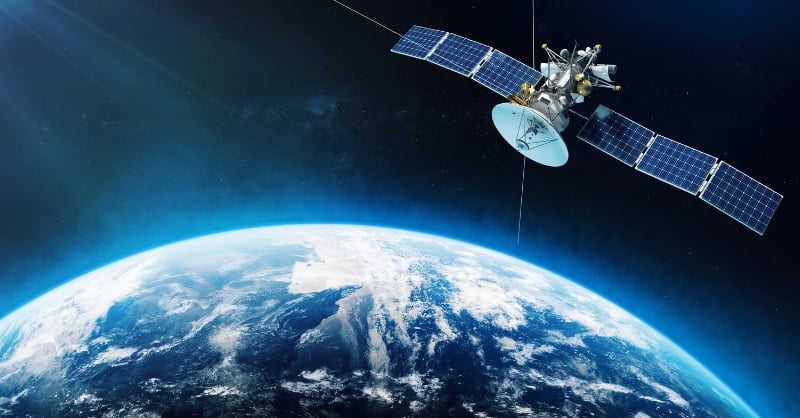
Google’s "moonshot" projects are famous in the tech industry, but with Project Suncatcher, the term has become literal. On October 1, 2026, the company officially launched a prototype satellite into orbit to test whether it can host scalable machine learning infrastructure. By moving compute off-planet, Google hopes to bypass the significant power constraints that AI data centers face here on Earth.

Project Suncatcher is a research initiative exploring the viability of orbital AI infrastructure.

Why Move Compute to the Stars?

As artificial intelligence models grow in complexity, the energy required to power them has surged. Space offers a unique advantage: near-constant access to sunlight. Satellites in low Earth orbit can generate significantly more solar energy than ground-based arrays, potentially providing a sustainable, infinite power source for high-performance computing clusters.

  • Near-constant solar power access, providing up to eight times more energy than Earth-based solar.
  • Reduction of energy burden on local terrestrial power grids.
  • Scalable "satellite constellations" that allow for flexible maintenance and upgrades.
  • Use of high-bandwidth space lasers to link multiple orbital data centers.

Testing the Limits of Hardware

The primary objective of the initial launch is to evaluate how Google’s custom Tensor Processing Units (TPUs) handle the brutal conditions of the space environment. Engineers are currently monitoring how the hardware performs under three specific stressors: extreme ionizing radiation, intense launch vibrations, and the complex thermal challenges of operating in a vacuum.

We’ll send tiny, tiny racks of machines, and have them in satellites, test them out, and then start scaling from there.

— Sundar Pichai, CEO of Google

The Future of Orbital Infrastructure

While the current mission is a small-scale proof of concept, the long-term vision is substantial. Google plans to spend the next several weeks gathering telemetry from the satellite to inform future iterations. If the hardware proves resilient enough to survive, the industry could see functional, decentralized AI data centers in orbit as early as the mid-2030s.

Key Takeaways

  • Google launched a prototype satellite on October 1, 2026, to test space-based AI computing.
  • The project aims to solve the energy crisis caused by the massive power needs of modern AI.
  • Space-based satellites can generate up to eight times more solar power than on Earth.
  • Google is testing its Tensor Processing Units (TPUs) against radiation, vibrations, and cooling challenges in a vacuum.
  • Future plans involve creating 'satellite constellations' linked by high-bandwidth lasers.

FAQ

What is Project Suncatcher?

Project Suncatcher is a Google research project exploring the potential of moving machine learning infrastructure into space to utilize solar energy.

Why does Google want to put data centers in space?

Data centers in space have access to near-constant sunlight, offering a sustainable power solution that avoids taxing terrestrial energy grids.

What are the biggest challenges for space-based AI?

The primary engineering hurdles include protection against extreme radiation, enduring launch vibrations, and managing heat dissipation in a vacuum.

When could we see operational AI data centers in orbit?

While currently in the prototype stage, Google's roadmap suggests that functional orbital AI data centers could be viable by the mid-2030s.

Related Videos

Google Is Putting AI Data Centers in Space (Project Suncatcher Explained)

AI WITH Rithesh

Google Project Suncatcher Explained: Trillium TPUs, Solar Orbiters & Orbital Compute

TimesXP

Google’s Bold Plan: Building AI Data Centers in Space | Project Suncatcher Explained

Future Gen News

Sources