A New Era for Diagnostic Medicine
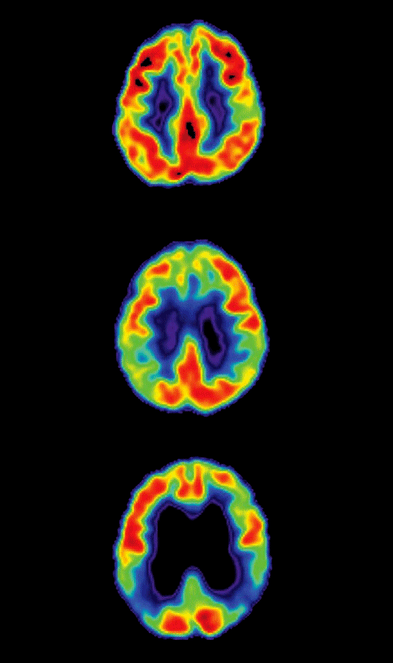
For decades, the search for a simple, reliable way to detect Alzheimer's disease felt like a medical impossibility. Traditional diagnostics—specifically brain PET scans and lumbar punctures—are not only expensive and invasive but also difficult to access for the average patient. However, a significant shift is underway. Recent medical advancements have moved the goalpost, bringing blood-based testing into the mainstream.
In 2025, the U.S. Food and Drug Administration (FDA) cleared the first blood tests specifically designed to assist in the diagnosis of Alzheimer’s. This development marks a turning point, moving the medical community away from heavy reliance on complex imaging toward a routine, clinical approach that could vastly improve patient outcomes.
How the New Technology Works
At the heart of this innovation is the ability to identify specific biomarkers—proteins that circulate in the bloodstream—which indicate the presence of amyloid plaques in the brain. These plaques are recognized as hallmark signs of Alzheimer’s disease.
- The Lumipulse G pTau217/ß-Amyloid 1-42 Plasma Ratio test: Measures specific proteins to reflect the likelihood of amyloid plaques in adults 55 and older with cognitive decline.
- The Elecsys test: Focuses on p-tau181, another critical biomarker associated with disease progression.
- Emerging research: Institutions like the Keck School of Medicine at USC are pushing further with new methods like the Penta-Plex Alzheimer’s Disease Capture Sandwich Immunoassay (5ADCSI), which can detect five different biomarkers simultaneously.
Why Early Detection Matters
The push for these tests isn't just about technical accuracy; it's about patient demand. According to the 2025 Alzheimer’s Disease Facts and Figures report, roughly 91% of Americans would want to undergo a simple blood test if it were available to help them understand their cognitive health. This desire stems from the fundamental need for early access to treatment and informed life planning.
Access to early treatment and care is the main reason cited for wanting a simple test.
— Alzheimer's Impact Movement
While these tests are now available, their use is still largely confined to specialists. As primary care providers gain more confidence in the accuracy and clinical utility of these diagnostics, we may soon reach a future where Alzheimer's screening is a standard part of routine geriatric check-ups.