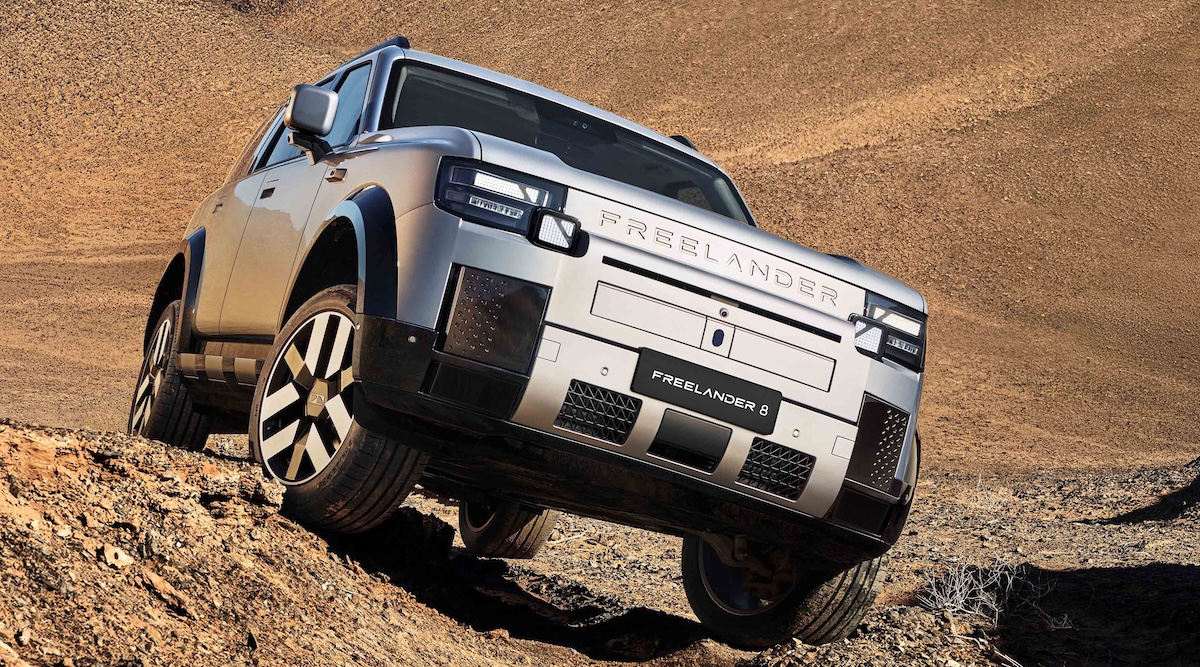
A New Chapter for Middle Eastern Mobility
For decades, the Middle East has been defined by its status as the world’s primary oil exporter. However, a significant shift is underway. Major global automakers, including the Chery Group and Jaguar Land Rover, are signaling a new strategic focus by pouring resources into the region’s burgeoning electric vehicle (EV) market. This pivot was underscored on September 29, 2026, when the Freelander brand held its global launch at the Emirates Palace Mandarin Oriental in Abu Dhabi, marking a bold step into the premium EV landscape.

The Economics of the Transition
The move is not merely symbolic; it is backed by staggering growth projections. According to industry reports, the Middle East and Africa EV market, valued at approximately $5.06 billion in 2026, is expected to skyrocket to over $20 billion by 2031, representing a compound annual growth rate (CAGR) of 32.15%. Several factors are driving this rapid expansion:
- Government diversification strategies designed to move economies beyond oil dependency.
- Sovereign wealth fund investments in local EV production ecosystems.
- The utilization of abundant solar energy to lower charging costs for consumers.
- Incentive programs, such as free charging and parking, offered in key hubs like Dubai and Abu Dhabi.
The push to increase electric car sales would elevate the demand for efficient charging systems, thus boosting the electric vehicle industry.
— Market Research Analyst
Challenges and Future Implications
Despite the optimism, the region faces unique hurdles. Extreme climate conditions require specifically engineered vehicle models, and the infrastructure must be rapidly scaled to support mass adoption. However, as global supply chains stabilize and nations continue to implement sustainability reforms, the Middle East is poised to become a vital market for both legacy automakers and new electric-only brands. As the region balances its traditional oil revenues with a future built on renewable energy and transport, the automotive landscape in the desert is undergoing its most significant change in a century.