A Major Milestone for Quantum Security
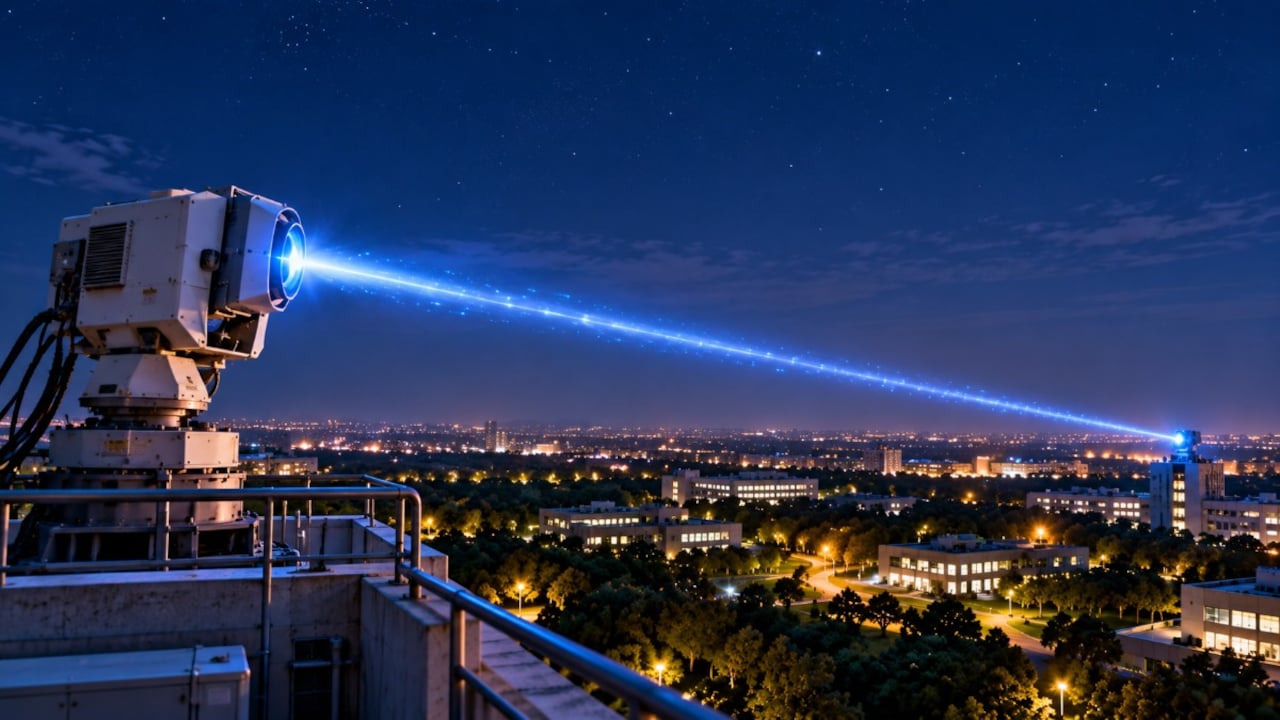
India has officially entered a new era of secure data transmission. In a recent field trial, researchers successfully established a 5.56-km free-space Quantum Key Distribution (QKD) link. The demonstration connected the Bhaskaracharya National Institute for Space Applications and Geo-informatics (BISAG-N) with the Indian Institute of Technology Gandhinagar (IITGN), proving that secure quantum channels can operate effectively over significant distances without the need for traditional fiber-optic cables.
How QKD Changes the Game
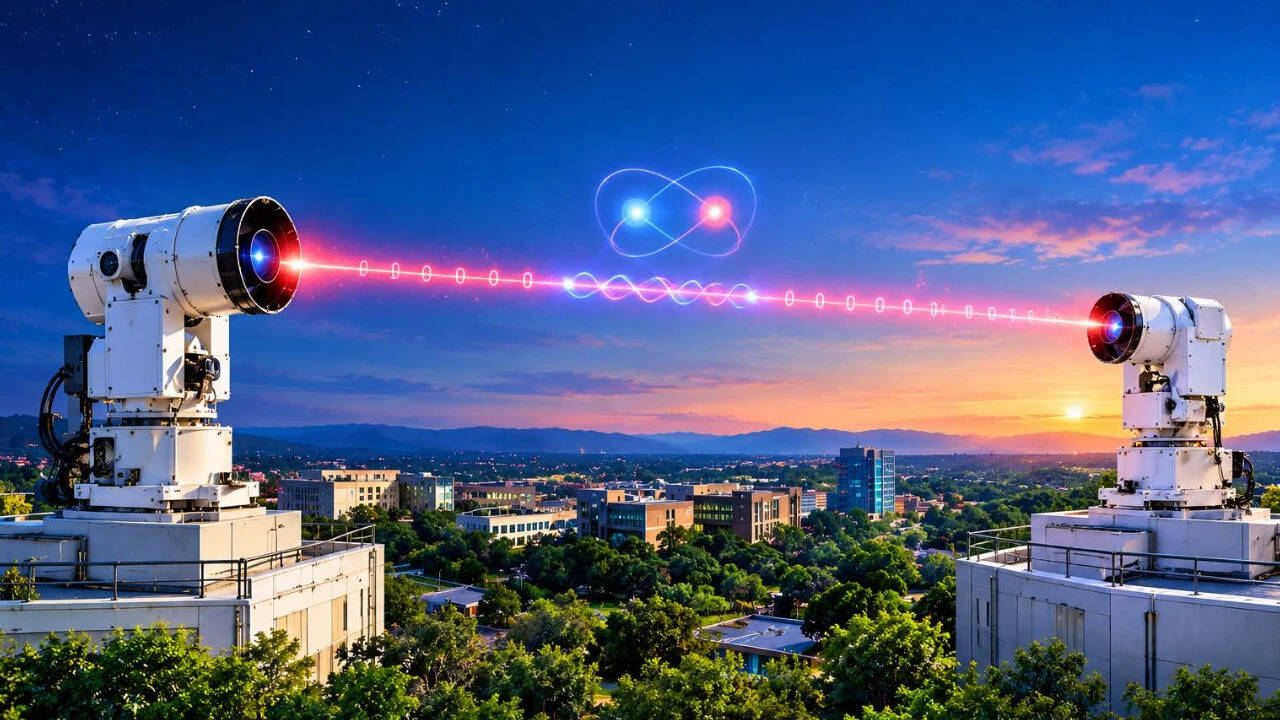
Quantum Key Distribution is not just a faster way to send data; it is fundamentally different from classical encryption. By using the principles of quantum mechanics, QKD allows two parties to produce a shared random secret key known only to them. Because the act of measuring quantum states changes them, any attempt by a third party to eavesdrop on the key exchange is immediately detectable.
- Unhackable security: Quantum laws prevent undetected interception.
- Infrastructure flexibility: Free-space links bypass the need for expensive, high-maintenance fiber-optic cables.
- Lower error rates: The recent trial maintained a quantum bit error rate of under 5%.
- Strategic integration: The system is linked to the 'Vedic Kavach' platform for real-world encryption applications.
From Terrestrial Tests to Satellite Systems
While 5.56 km is a impressive distance for a free-space link, the ultimate goal for Indian researchers—including ISRO—is to move these capabilities into orbit. Satellite-based quantum communication would allow for global, highly secure networks, effectively rendering traditional 'middle-man' attacks impossible. Previous experiments, such as smaller 300-meter tests, have served as the foundation for this rapid scaling.
The trial reflects wider efforts to prepare India’s digital infrastructure for future cyber threats associated with quantum computing, alongside broader work on quantum-era digital security.
— OpenGov Asia