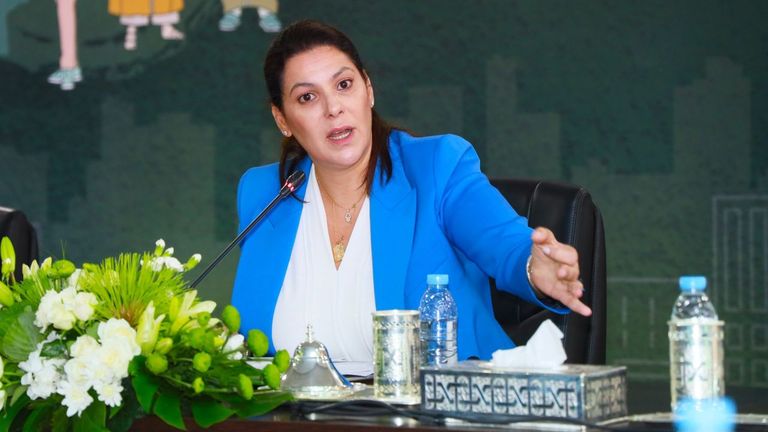
A Landmark Appointment in Rabat
In a historic development for North Africa, King Mohammed VI has appointed Fatima Zahra El Mansouri as the new Prime Minister of Morocco. The appointment, confirmed on September 29, 2026, follows the victory of her centrist Authenticity and Modernity Party (PAM) in recent parliamentary elections. This move marks the first time a woman has held the highest executive office in the country’s history.
El Mansouri is not a newcomer to the political spotlight. Having served as the mayor of Marrakesh—first elected in 2009—and more recently as the Minister of Housing, she has spent years navigating the complex landscape of Moroccan governance. Her rise to the premiership is being viewed by many as a watershed moment for cultural and social norms within the Arab world.

From Marrakesh to the Prime Minister’s Office
El Mansouri's political career has been characterized by resilience. Since the founding of the PAM party in 2008, she has risen through the ranks, defying traditional expectations. Her tenure as Minister of Housing under the previous administration provided her with critical experience in policy implementation and government operations.
- 2009: Became the first female mayor of Marrakesh.
- 2021: Returned to the mayoral seat in Marrakesh.
- 2021-2026: Served as Minister of National Territory Planning, Urban Planning, Housing and City Policy.
- 2024: Became co-ordinator of the PAM leadership coalition.
The Road Ahead: Coalition and Reform
Despite the celebration surrounding her appointment, El Mansouri faces immediate logistical and political hurdles. Her party secured 97 seats in the latest election, falling short of the 198 seats required for an absolute majority in the 395-member parliament. The incoming Prime Minister must now broker a coalition agreement to form a stable, functioning government.
Beyond parliamentary arithmetic, El Mansouri’s government will be tasked with addressing the country's youth unemployment and a growing generational divide. Observers suggest that while her appointment carries immense symbolic value, her real test will be delivering tangible, long-term economic reforms that benefit the Moroccan populace.
People in public spaces, in cafes, on trains on their commute and just regular folks are having conversations about women's leadership and the taboo that says women can't be heads of government or women can't be bosses of men.
— Stephanie Willman Bordat, co-founder of Mobilizing for Rights Associates (MRA)