A New Chapter in Lunar Exploration
The global race to the Moon’s South Pole is heating up, and a powerful new partnership is preparing to take the lead. The Lunar Polar Exploration Mission (LUPEX), often referred to as Chandrayaan-5, represents a significant collaboration between the Indian Space Research Organisation (ISRO) and the Japan Aerospace Exploration Agency (JAXA). This uncrewed mission aims to go where few have ventured, targeting the Moon’s permanently shadowed regions to investigate the presence and quality of water ice.
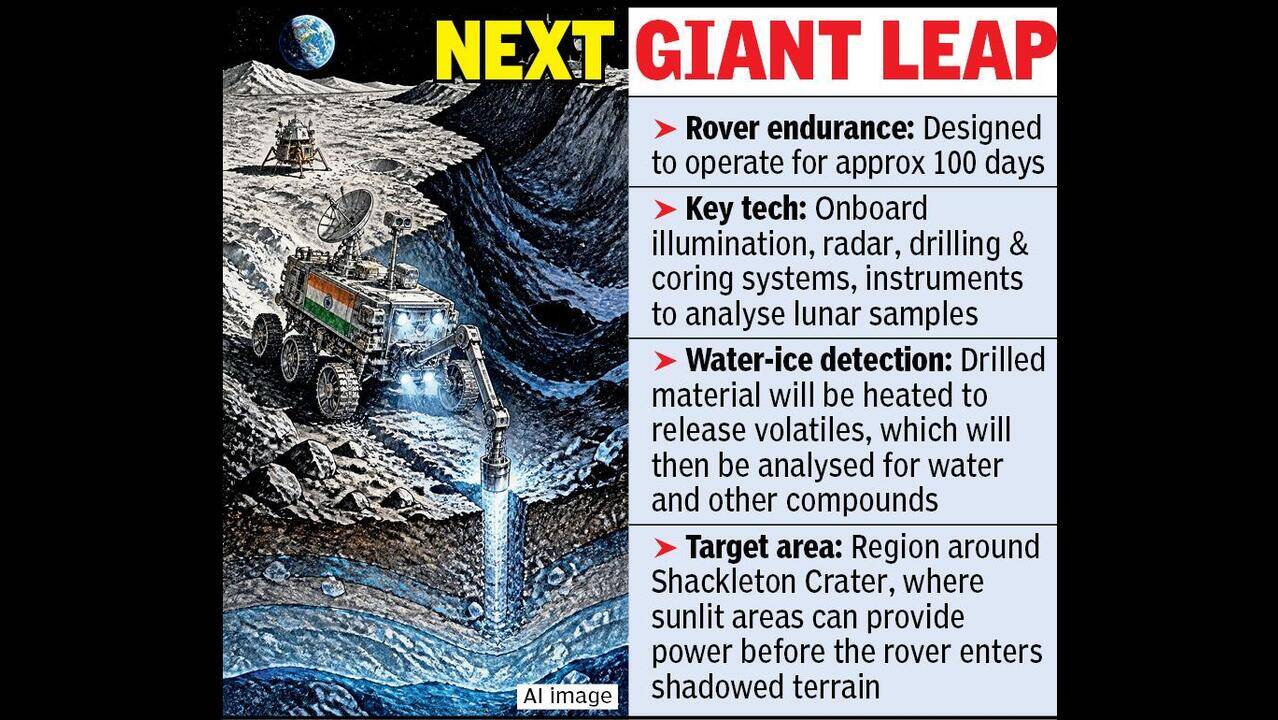
Mission Objectives and Hardware
The mission, targeted for launch no earlier than 2028, leverages the unique strengths of both space agencies. JAXA will provide the H3-24L launch vehicle and a 350 kg lunar rover, while ISRO is responsible for the lunar lander. The rover is currently undergoing a redesign to manage weight and ensure it can withstand the extreme cold of the lunar night, utilizing a special insulation mechanism rather than traditional radioisotope heating units.
- JAXA: Providing the H3-24L rocket and the lunar rover.
- ISRO: Developing the lunar lander and contributing scientific instruments.
- NASA & ESA: Providing additional scientific instrumentation.
- Primary Goal: Locating and analyzing lunar water ice up to 3 meters below the surface.
Why the South Pole Matters
The lunar South Pole is a high-stakes scientific target due to its potential to harbor water ice in craters that have remained in shadow for eons. The LUPEX mission will deploy advanced tools, including an ISRO-provided ground-penetrating radar to map the subsurface structure, and a NASA-led neutron spectrometer to detect hydrogen—an indirect indicator of water. These findings are expected to be foundational for future long-term lunar habitation and deep space exploration.
The mission concept has been planned to last well over 100 days on the moon, allowing for extensive in-situ analysis of volatile materials.
— Mission Planning Documentation