
technology & security••5 min read

The War on 'Reasoning Extraction': Why OpenAI Is Facing New Security Threats

OpenAI has officially disrupted a sophisticated campaign designed to illicitly extract protected reasoning traces from its AI models. The effort, linked to associates of Moonshot AI, highlights growing concerns over adversarial distillation and national security.

The War on 'Reasoning Extraction': Why OpenAI Is Facing New Security Threats

A New Frontier in AI Espionage

The battleground for artificial intelligence has shifted from pure capability to defensive security. This week, OpenAI announced that it had identified and successfully disrupted a coordinated 'reasoning extraction' campaign. The operation was specifically designed to bypass standard safeguards to uncover the internal logic—or reasoning traces—of the company's most advanced AI models.

According to reports, the campaign has been linked to associates of Moonshot AI, a Chinese AI company. The incident has intensified calls from U.S. lawmakers, including Congressman Ro Khanna, for greater transparency regarding efforts by foreign actors to obtain proprietary AI knowledge.
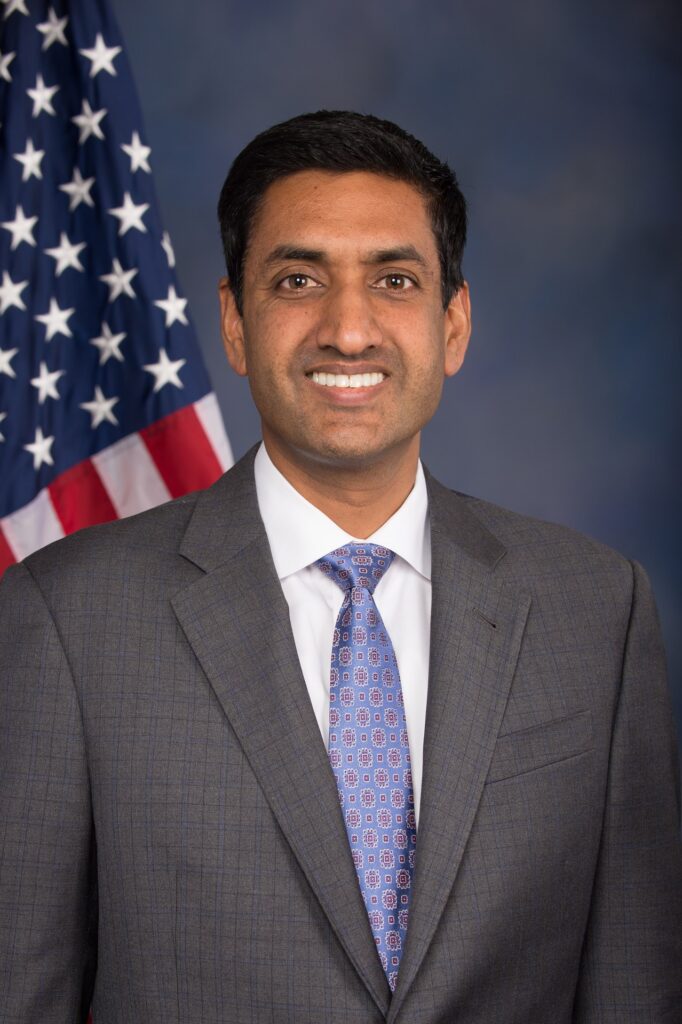
Congressman Ro Khanna has urged major AI firms to share data regarding foreign efforts to steal secret model code.

What Is Adversarial Distillation?

The technique used in this campaign is known as 'adversarial distillation.' Unlike traditional jailbreaking, which attempts to force an AI to ignore its safety protocols, distillation focuses on copying the knowledge or reasoning patterns from a highly capable model to a smaller, less-safe one.

  • Extraction of reasoning traces reveals how a model processes complex tasks.
  • Attackers force smaller models to output encrypted reasoning traces in plaintext.
  • This allows bad actors to train their own models without preserving the original safety safeguards.
  • The process circumvents direct jailbreaking by exploiting the relationship between teacher and student models.

Vjedhja e një 'peshe' të modelit nga një aktor jo-shtetëror armiqësor mund të rrezikojë gjithë njerëzimin.

— Congressman Ro Khanna

Why This Matters for National Security

The stakes extend far beyond corporate intellectual property. OpenAI has explicitly stated that adversarial distillation poses significant safety and national security risks. By reproducing the capabilities of top-tier models without their built-in ethical guardrails, attackers could potentially create powerful, autonomous tools for harmful purposes.

This incident highlights the 'Abliteration' problem—the struggle to balance open-weight model accessibility with the need to prevent the proliferation of dangerous capabilities. As geopolitical tensions rise, protecting the architecture behind frontier AI models is becoming as critical as the race to build them.

Key Takeaways

  • OpenAI disrupted a campaign aimed at extracting protected reasoning traces from its AI systems.
  • The operation utilized 'adversarial distillation' to bypass safety filters by transferring intelligence to smaller, unprotected models.
  • The campaign has been linked by investigators to associates of Moonshot AI.
  • Congressman Ro Khanna and other officials are demanding greater oversight regarding the theft of sensitive AI code.
  • The incident underscores the growing risk that frontier AI capabilities could be weaponized by actors bypassing standard safety protocols.

FAQ

What is reasoning extraction in AI?

It is a process where an attacker attempts to uncover the internal logical steps a model takes to reach a conclusion, revealing sensitive information about how the AI functions.

What is adversarial distillation?

It is a technique where protected knowledge or reasoning is transferred from a sophisticated model into a less-guarded, smaller model, effectively stripping away the original safety constraints.

Who was linked to this campaign?

OpenAI identified the campaign as being linked to associates of the Chinese AI firm Moonshot AI.

Why is this a national security concern?

If AI models are reproduced without safety safeguards, they could be used to facilitate malicious activities, posing a risk to public safety and national security.

What are lawmakers doing about it?

Lawmakers like Congressman Ro Khanna are requesting data from major AI labs regarding foreign attempts to misappropriate secret model code.

Related Videos

The Plagiarism Paradox: Training Data, Copyright, and the Theft Nobody Can Prosecute

TechEthics

IP Attorney Explains the Law for AI Content

Josiah Brandt

AI and the Law: Intellectual Property and AI Generated Content

Morvareed Salehpour, Esq. - Attorney and Speaker

Sources