science & tech••4 min read

New Study Reveals How Dogs 'Decode' Human Speech Just Like Infants

Researchers have discovered that dogs use a sophisticated, human-like strategy to pick out words in continuous speech. By focusing on consonant sounds, our canine companions process language remarkably similarly to human infants.

New Study Reveals How Dogs 'Decode' Human Speech Just Like Infants

Decoding the Canine Brain

For years, dog owners have speculated about how much of our daily conversation our pets actually understand. While we often rely on tone and intonation, new research published in the journal Science suggests that dogs are doing far more heavy lifting than we previously realized. A study from the Neuroethology Research Group in Hungary has revealed that dogs use the same cognitive strategies as human infants to segment and identify words within a continuous stream of speech.
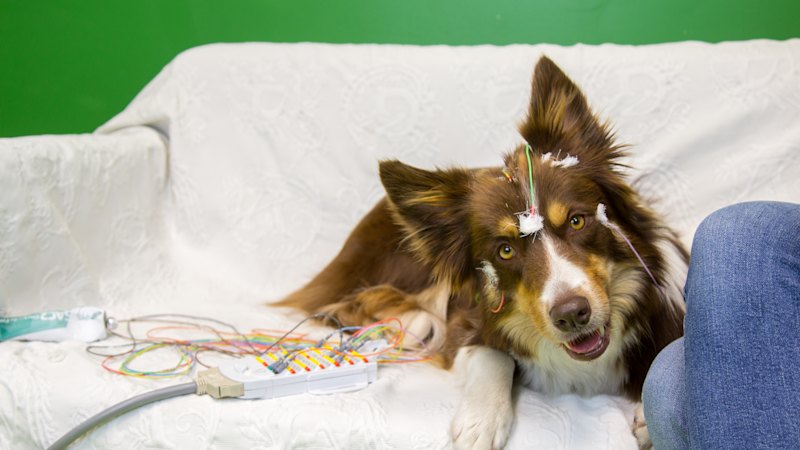
A 6-year-old Labrador participates in a speech processing study.

The Consonant Bias

The researchers compared the brain activity of 20 humans and 20 companion dogs as they listened to speech streams. They discovered that both species rely on 'consonant bias' to make sense of language. When listening to a continuous stream of words with no audible pauses, the brain focuses on consonant sounds to determine where one word ends and the next begins.

  • Dogs and humans share a similar neural strategy for segmenting speech.
  • Consonants act as key markers for identifying individual words in a stream.
  • Human brains process speech at a finer resolution, treating individual sounds as units.
  • Canine brains tend to process speech at the syllable level rather than the individual sound level.

What This Means for Human-Dog Bonds

While dogs demonstrate a human-like ability to process language structure, the study also highlighted key differences in resolution. Humans are uniquely capable of syncing with speech rhythms at a very fine level. However, the fact that dogs have evolved to use the same word-segmentation tactics as human babies provides new insight into why we communicate so effectively with our pets.

In a continuous speech stream, it is easier to detect individual words when we focus on consonants. And from infancy onward, this is exactly what the human brain tends to do. This phenomenon is known as the consonant bias.

— Neuroethology Research Group

Key Takeaways

  • Dogs use consonant sounds to identify word boundaries in human speech.
  • This strategy is identical to how human infants learn to process language.
  • The research involved 20 companion dogs and 20 human participants.
  • While dogs process speech similarly to us, their brain resolution is focused on syllables rather than individual speech sounds.

FAQ

Do dogs understand individual words?

The study indicates that dogs are capable of using specific brain mechanisms to segment and identify words within continuous speech, much like human infants.

Are dogs as good at language as humans?

No. While dogs show similar strategies for segmenting speech, humans are uniquely equipped to process speech at a much finer, more complex resolution.

How was the research conducted?

Researchers from the Neuroethology Research Group used brain activity monitoring to compare how 20 humans and 20 companion dogs responded to continuous streams of speech.

Does my dog understand my tone of voice?

Yes. Previous research has indicated that dogs can process both word meaning and intonation, and often integrate these two types of information to understand communication.

Related Videos

Dogs actually understand what you're saying, study shows

CBS Mornings

Do Dogs Understand Human Language? (Here’s what it sounds like to them)

Dogs Wiz

Sources