A Crisis Without Borders
The intersection of global warming and rapid climate change has pushed the planet into a volatile new era. Recent satellite imagery from NASA has confirmed that Arctic sea ice has shrunk to record levels, with an area of ice larger than India having vanished. This rapid melt is not merely a data point in a climate report; it is the primary engine fueling rising sea levels that now threaten the very existence of coastal nations and communities.
The Human Cost of Encroaching Waters
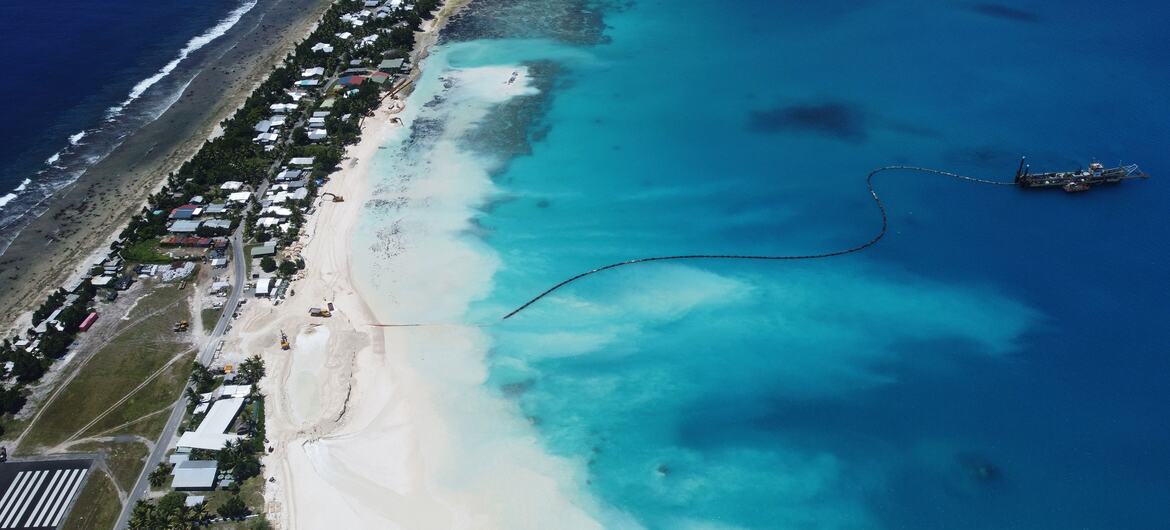
For small island developing states and low-lying coastal regions, sea-level rise is an imminent, existential crisis. Leaders recently approved the UN Declaration on Sea Level Rise by consensus, acknowledging that 'rising seas are sinking futures.' The impact of these shifts is disproportionate, often hitting the most vulnerable populations who have the fewest resources to adapt.
- Inundation of coastal infrastructure and residential areas.
- Loss of critical wetlands that act as natural buffers against storms.
- Increased frequency of waterlogging and saltwater intrusion in agricultural zones.
- Displacement of communities, raising urgent human rights concerns.
From Global Policy to Local Floods
While international summits discuss long-term resilience, the immediate effects of climate-related instability are already visible. In India, for instance, the Budhabalanga River in Odisha recently surged past its danger mark, following incessant rainfall linked to a deep depression. This serves as a stark reminder that climate change amplifies existing weather patterns, making flooding more frequent and severe even far from the coast.
Rising seas are sinking futures.
— United Nations Declaration on Sea Level Rise
The Path Forward: Protection and Resilience
Experts suggest a three-pronged approach to managing these coastal threats: planned retreat, accommodation, and structural protection. However, these strategies involve complex trade-offs. While wealthy areas may afford massive infrastructure projects to keep water at bay, less developed regions face the difficult reality of relocating populations. Moving forward, the goal is to mobilize climate finance and leverage environmental data to ensure that adaptation is not just a luxury for the privileged, but a global priority.