
science & technology••5 min read

A 63-Year-Old Museum Secret Just Rewrote the Dinosaur Timeline

For over six decades, a collection of fossils sat largely ignored in a London museum cabinet. New analysis of these bones has revealed a previously unknown species that is fundamentally changing our understanding of when dinosaurs first roamed the planet.

A 63-Year-Old Museum Secret Just Rewrote the Dinosaur Timeline

The Discovery Hiding in Plain Sight

In a testament to the importance of museum archives, an international research team has identified a new prehistoric species named *Dinodontosaurus isiyavamanda*. The fossils were originally excavated in 1963 in the Manda beds of Tanzania, then transported to the Natural History Museum in London, where they remained largely untouched for over 60 years. By combining these long-forgotten skeletal samples with newer head fragments discovered in 2012, researchers have finally pieced together the identity of this unique, tusked herbivore.
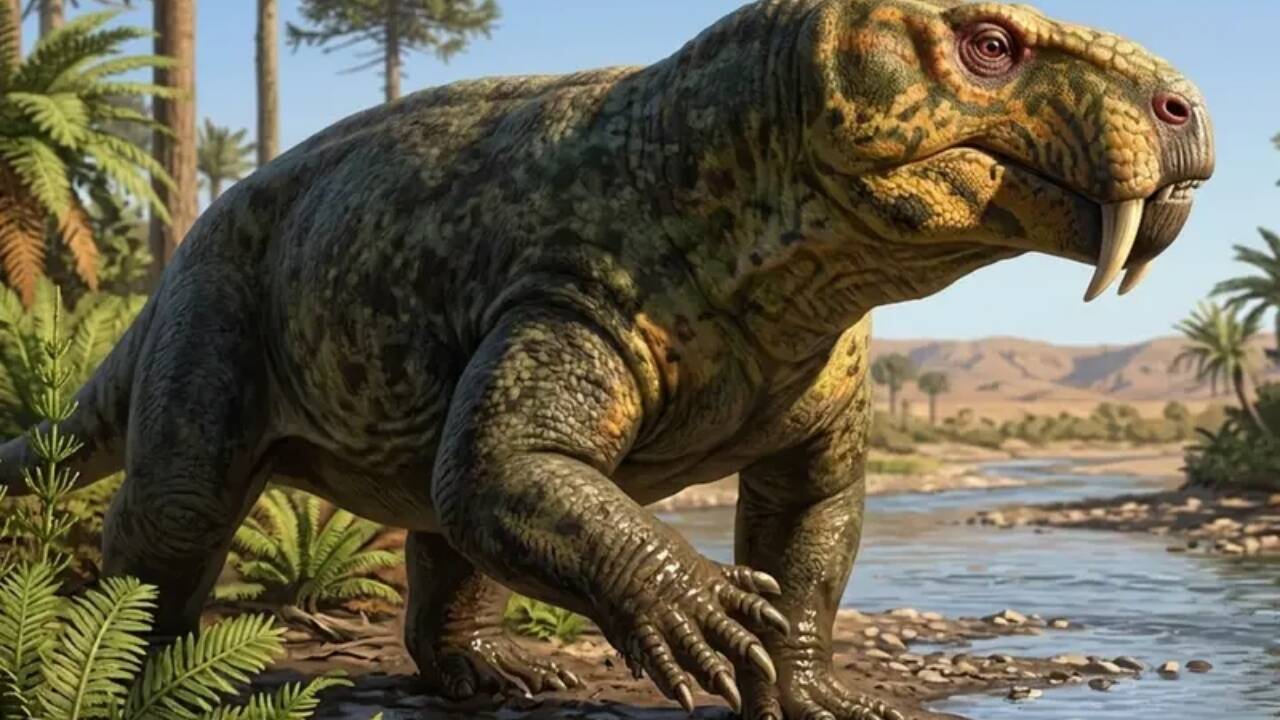
The newly described Dinodontosaurus isiyavamanda, a dicynodont that lived 240 million years ago.

Why This Matters for Dinosaur History

The importance of this find extends far beyond naming a new creature. *Dinodontosaurus isiyavamanda* belongs to a group of plant-eating animals called dicynodonts—distant relatives of mammals. Crucially, fossils of this genus were previously only known to exist in South America. The presence of the same genus in both Tanzania and South America provides a vital chronological anchor.

  • Re-dating rock layers: Because the same animal lived on both continents, scientists can now synchronize the geological ages of those fossil sites.
  • Refining the timeline: The Tanzanian site is the same location where researchers previously identified candidates for the 'oldest dinosaurs.'
  • Shifting the clock: With the site now dated to the Late Ladinian–Carnian stage rather than the Middle Triassic, the timeline for the appearance of the first dinosaurs may be millions of years younger than previously assumed.

It goes to show how revisiting museum collections can change our understanding of the past just as much as finding new fossils in the field, showing the importance of looking after these invaluable records of life on Earth.

— University of Bristol Research Team

Key Takeaways

  • A new species, Dinodontosaurus isiyavamanda, was identified from fossils collected in 1963.
  • The animal was a tusked, plant-eating dicynodont, not a dinosaur.
  • Its presence in Tanzania links African fossil sites to those in South America, allowing for more accurate geological dating.
  • This discovery suggests that the earliest dinosaurs may have evolved millions of years later than previously thought.
  • The findings highlight the immense scientific value of long-term museum collections.

FAQ

What is Dinodontosaurus isiyavamanda?

It is a newly discovered prehistoric herbivore that lived 240 million years ago, characterized by its beak and tusks. It belongs to the dicynodont group, which are relatives of mammals.

Why was this discovery made now?

Researchers from the University of Bristol and other institutions re-examined fossils that had been sitting in the London Natural History Museum archives since their collection in 1963.

How does this change the dinosaur timeline?

By linking the Tanzanian fossil site to better-dated sites in South America, scientists concluded the rocks are younger than once thought, implying that the first dinosaurs appeared later in history.

Are there more fossils to study?

Yes, researchers noted that a significant amount of the Tanzanian material, specifically the postcranial skeletons, still remains to be fully analyzed.

Related Videos

Dinodontosaurus Discovery Reshapes Early Dinosaur Timeline in Tanzania | WION Podcast

WION

¡Descubren una nueva especie prehistórica en Tanzania!

TENERIFEWEEK

Sources