A New Landmark in Exposition Park
For years, the prospect of the Lucas Museum of Narrative Art felt like something out of a sci-fi dream. Now, it is a physical reality in Los Angeles' Exposition Park. The museum, co-founded by George Lucas, is officially open to the public, offering a home for what the legendary filmmaker calls 'the people’s art.' It represents a massive cultural investment, tracing the evolution of how humans tell stories—from ancient mythology and Renaissance paintings to modern-day comics, animation, and cinema.
Unlike traditional museums that often strictly delineate between fine art and popular culture, this institution treats them as equal components of the human experience. With 30 galleries covering approximately 100,000 square feet, the museum houses over 1,200 objects designed to spark wonder and community connection.
Architecture as Narrative
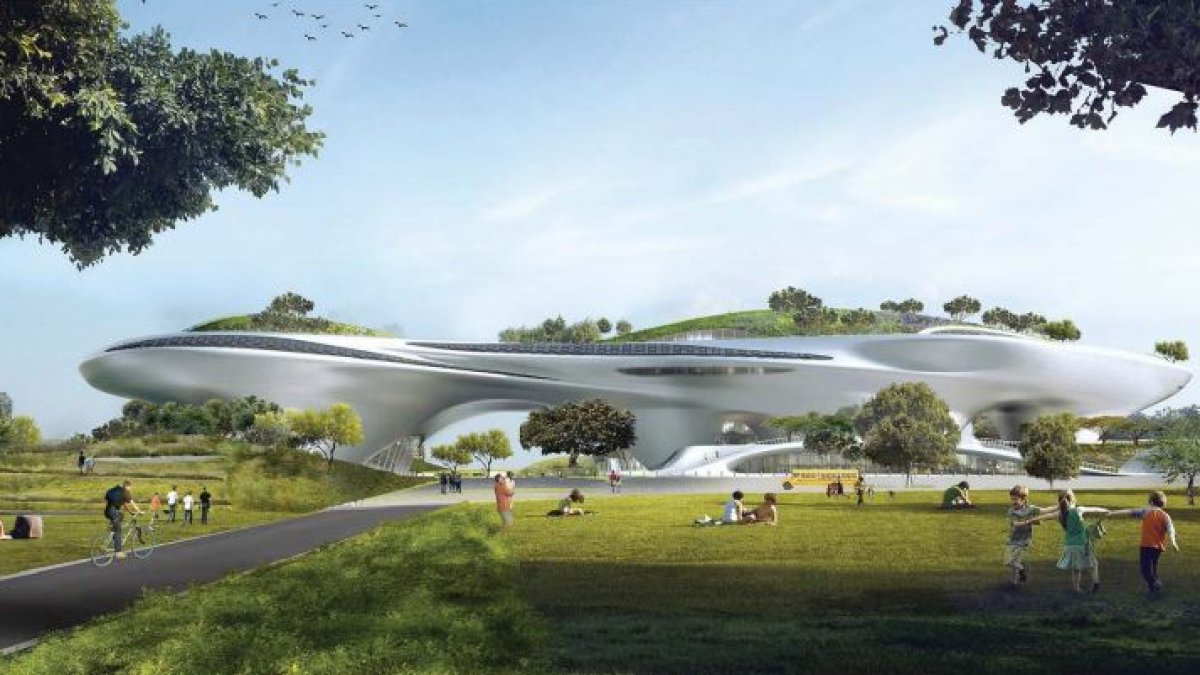
The building itself is perhaps the boldest statement in the museum’s mission. Designed by architect Ma Yansong of MAD Architects, the structure rejects the rigid, boxy aesthetics of typical museums. Instead, it features a futuristic, biomorphic form that appears to float above the landscape, inspired by clouds and the surrounding tree canopy.
- Constructed with over 1,500 custom-molded, fiberglass-reinforced polymer (FRP) panels.
- Features a dramatic oculus to manipulate natural light.
- Engineered for seismic stability while maintaining a curved, fluid design.
- Integrates dynamic gardens designed by landscape architect Mia Lehrer.
This art is important. Let's put it in an important building.
— George Lucas, co-founder
Beyond the Star Wars Legacy
While the name 'Lucas' naturally draws associations with the Star Wars franchise—and, indeed, the museum features concept art from the saga—the collection is far broader in scope. The museum positions itself as a sanctuary for narrative art, a category that includes illustration, graphic novels, and visual storytelling across history. By placing Norman Rockwell paintings alongside film props and ancient artifacts, the museum challenges visitors to recognize the shared myths that bind society together.
As visitors wander through the inaugural exhibitions, the goal is not just to view static objects, but to understand how these stories help us make sense of our lives, our values, and our place in the world.