sustainability••5 min read

From Turbines to Tiny Homes: The Surprising Second Life of Wind Power

As thousands of wind turbine blades reach the end of their lifecycle, innovators are turning the difficult-to-recycle fiberglass into everything from community infrastructure to sustainable housing. This movement highlights a growing commitment to a circular economy in the renewable energy sector.

From Turbines to Tiny Homes: The Surprising Second Life of Wind Power

The Wind Energy Waste Challenge

The rapid expansion of wind energy has been a cornerstone of the global transition to clean power. However, it has introduced a persistent logistical headache: what happens when those massive, durable turbines retire? Unlike the steel towers or copper wiring that make up the rest of the structure, wind turbine blades are primarily made of composite materials like fiberglass—a substance notoriously difficult to recycle.

As thousands of blades reach the end of their operational lifespan, the industry is moving away from the landfill model. Instead, engineers and architects are reimagining these components as structural resources for the built environment.
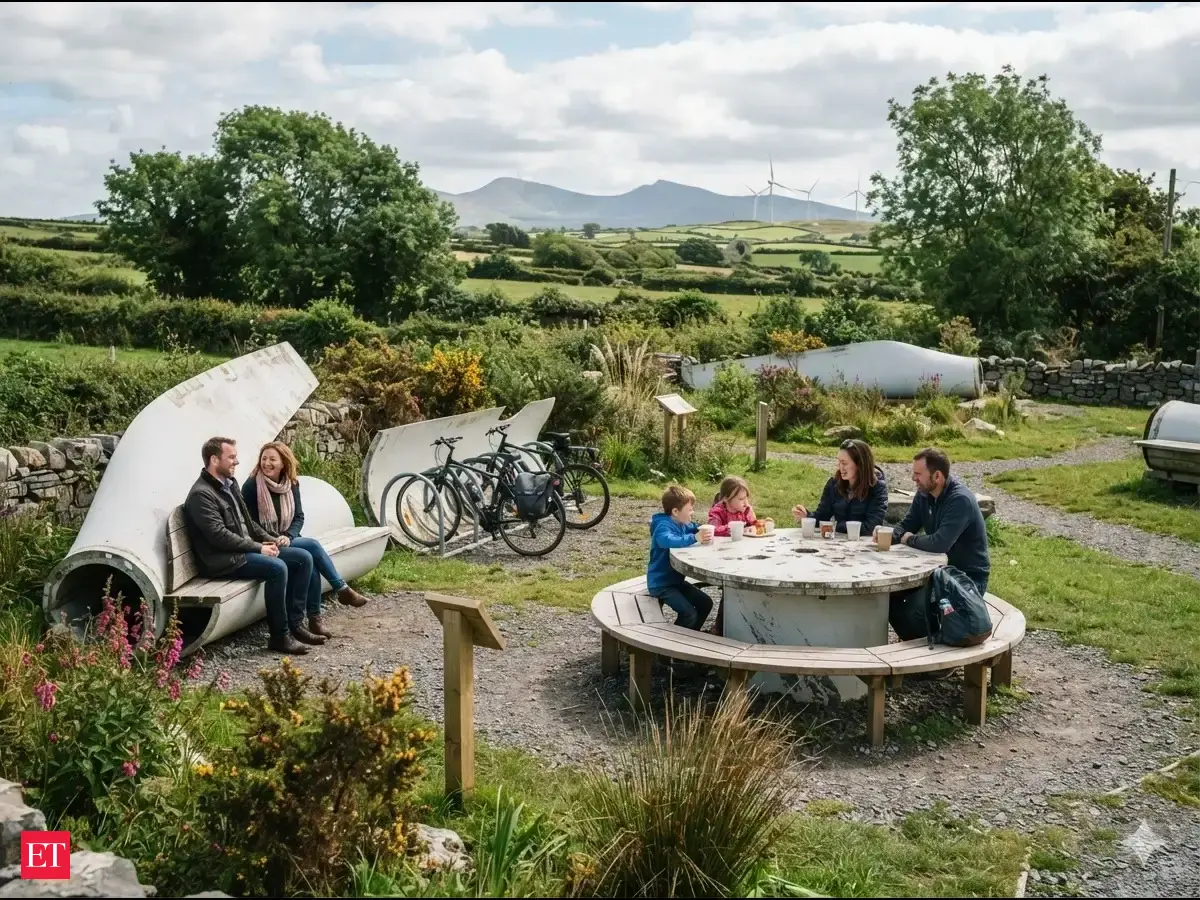
Retired wind turbine blades repurposed into community infrastructure like benches and bike racks.

Turning Turbines into Infrastructure

The sheer strength-to-weight ratio and weather resistance of turbine blades make them surprisingly versatile for reuse. In Ireland, the company BladeBridge has pioneered ways to transform retired blades into functional community assets, including bridges, picnic tables, and charging hubs. This adaptive reuse approach doesn't just reduce waste; it provides cities with durable, pre-engineered building materials that can last for decades.

  • Tiny homes featuring repurposed nacelles or blade segments.
  • Pedestrian bridges and structural sound barriers.
  • Playgrounds and urban furniture designed for high durability.
  • Experimental power transmission poles testing blade longevity.

A Shift Toward a Circular Economy

Beyond architectural reuse, high-tech solutions are making blade recycling a commercial reality. Companies like Carbon Rivers have developed processes to recover mechanically intact glass fibers from decommissioned blades. These recovered materials can be funneled back into the production of new wind turbines or even electric vehicle components, closing the loop on a lifecycle that was once considered a dead end.

With Carbon Rivers’ novel process, today’s decommissioned blades can become tomorrow’s wind turbine blades and electric vehicles.

— Benson, Carbon Rivers

Key Takeaways

  • Most wind turbine components are recyclable, but fiberglass blades present a unique waste management challenge.
  • Adaptive reuse projects are transforming retired blades into bridges, benches, and urban infrastructure.
  • Innovative recycling processes now allow for the recovery of glass fibers to create new manufacturing materials.
  • The European wind industry is working toward a goal of 100% recovery for decommissioned blades.
  • Reuse strategies leverage the inherent strength and weather resistance of turbine composite materials.

FAQ

Why are wind turbine blades difficult to recycle?

Blades are constructed from complex composite materials, primarily fiberglass, which do not break down easily like steel or copper.

Can wind turbine blades be used for housing?

Yes, their structural integrity and aerodynamic shape have inspired architects to use blade parts and nacelles as modular building components for tiny homes.

Is the entire wind turbine recycled?

Approximately 85% of a wind turbine, including the steel tower and internal wiring, is easily recyclable; the blades have historically been the primary component sent to landfills.

What happens to the recovered material from blades?

Through chemical and mechanical processes, companies can recover glass fibers to make new composite materials for use in automotive parts, textiles, and even new wind turbines.

Related Videos

Why Wind Turbine Blades Are So Hard to Recycle

Business Insider

This Is Why We Don't Recycle Wind Turbine Blades

Engineering with Rosie

Wind Turbine Blade Recycling Line | Crushing & Fiber Separation Process

Suny Group

Sources