Shedding Light on the Ocean Floor
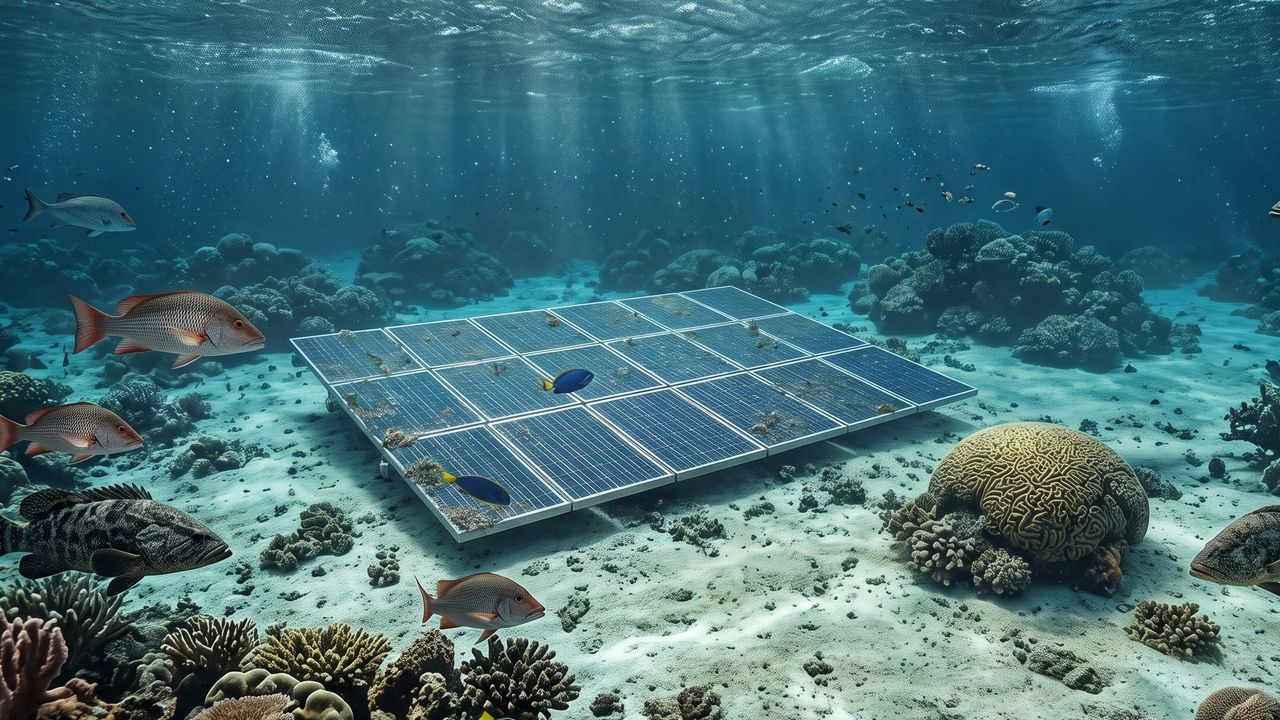
For decades, solar power has been synonymous with sun-drenched rooftops and vast terrestrial farms. However, a team of researchers led by Simin Ma at Yunnan University has challenged the conventional limits of photovoltaics. By leveraging the unique properties of perovskite materials, the team has developed solar cells that can effectively harvest energy at a depth of 10 meters, a development that could be a game-changer for marine exploration.
The Perovskite Advantage
Perovskites have long been hailed as the successor to traditional silicon solar cells due to their lower production costs and high efficiency. Their secret weapon, however, is tunability. Unlike silicon, which struggles to absorb the limited light spectrum that penetrates deep into the ocean, perovskites can be engineered to absorb the specific wavelengths of light that reach submerged environments.
- Tunable properties allow for better light absorption in blue-shifted aquatic environments.
- Cooler underwater temperatures may help improve the longevity of the cells.
- The technology enables continuous energy harvesting for remote marine equipment.
Powering the Future of Marine Autonomy
The implications for this technology are significant. Currently, autonomous underwater vehicles (AUVs) and submerged Internet of Things (IoT) sensors are limited by their battery life, often requiring expensive or complex recovery operations to recharge. Self-charging, submerged panels could provide a perpetual power source, allowing these systems to remain deployed for extended periods without human intervention.
This work presents the first functional validation of submerged solar cells practically operating at a water depth of up to about 10 meters, greatly broadening their application scope.
— Ocean News