A Rare Glimpse Into the Past
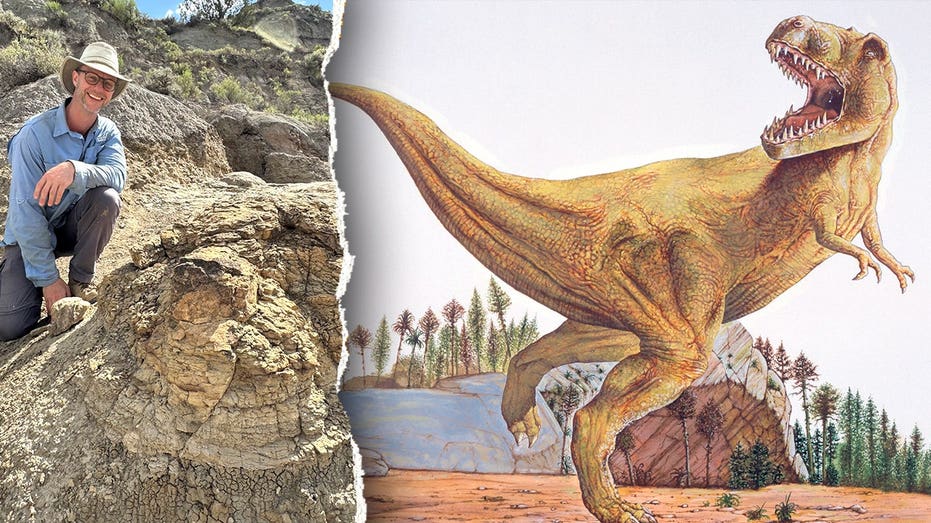
For over a century, the Tyrannosaurus rex has stood as the undisputed king of the dinosaurs, yet much of its movement remained a subject of scientific modeling and educated guesswork. That changed recently in the badlands of southwestern North Dakota, where a team of scientists discovered the first-ever confirmed trackway of an adult T. rex. Found within the Hell Creek Formation, this sequence of four massive, three-toed footprints dates back approximately 66.5 million years, offering an unprecedented look at how this fearsome predator navigated its environment.
Why This Discovery Matters
While isolated T. rex footprints have been identified in the past, they provide only a snapshot of a single moment. A trackway, by contrast, acts as a fossilized path, allowing researchers to calculate the creature's gait, stride, and speed. Before this discovery, scientists lacked concrete evidence of an adult T. rex walking across a landscape, making this find a major milestone in vertebrate paleontology.
- The trackway spans over 23 feet, featuring four distinct, large footprints.
- The prints were discovered in the Hell Creek Formation, an area rich in Upper Cretaceous and Lower Paleocene fossils.
- The discovery was a joint effort between the Denver Museum of Nature & Science and Liverpool John Moores University.
- These footprints were left by a fully grown adult, distinguishing them from previous findings of smaller tyrannosaurid tracks.
With a trackway, we can actually follow an animal as it moved across the landscape. That is incredibly rare for T. rex.
— Research team perspective
Looking Ahead
This discovery does more than just fill a gap in the fossil record; it opens new avenues for understanding the biomechanics of the T. rex. As paleontologists continue to analyze the spacing and depth of these impressions, we may soon have a much clearer picture of how the tyrant lizard king patrolled its territory during the final stages of the Cretaceous period. The Denver Museum of Nature & Science expects to bring three of these historic footprints into its collection this fall, ensuring that the public can witness this piece of history firsthand.