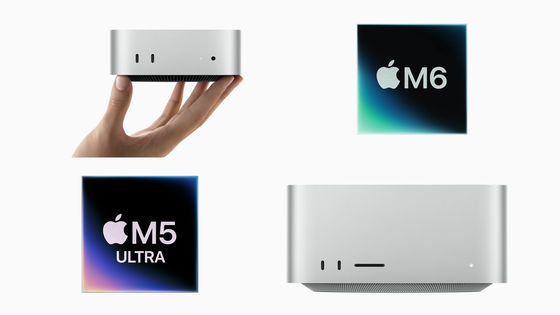
A New Era for Apple Silicon
Apple’s latest hardware cycle has officially reached the enthusiast market, with early Geekbench results providing a clear look at the capabilities of the M6 and M5 Ultra chips. While the M6 brings the efficiency of a new 2nm process to the Mac mini, the M5 Ultra pushes the boundaries of workstation performance in the Mac Studio. For users who have been holding onto their original M1-era devices, the generational leap is now impossible to ignore.

M6: Precision and Power for the Mac mini
The M6 arrives with a refined 12-core CPU configuration, consisting of 2 super cores, 4 performance cores, and 6 efficiency cores. Early Geekbench 7 testing shows a single-core score of 4,071 and a multi-core result of 22,783. This performance shift represents a 27% increase over the M5, cementing Apple's claim to world-leading single-threaded efficiency.
- 2nm process architecture
- Dual Neural Engines for AI-driven agentic tasks
- Up to 170GB/s of unified memory bandwidth
- Supports up to 32GB of unified memory
M5 Ultra: The Workstation Heavyweight
While the M6 targets the mass market, the M5 Ultra is designed for heavy-duty professionals. By utilizing the new UltraFusion architecture to connect four dies, the M5 Ultra operates as a single massive processor. In Geekbench testing, the 36-core version of the chip achieved a staggering multi-core score of 52,516—a sixfold increase compared to the original M1 chip.
The M5 Ultra isn't just an iterative update; it's a massive shift for pro workflows, enabling local training of AI models and 8K video editing that previously required dedicated rack-mounted hardware.
— Tech Analysis