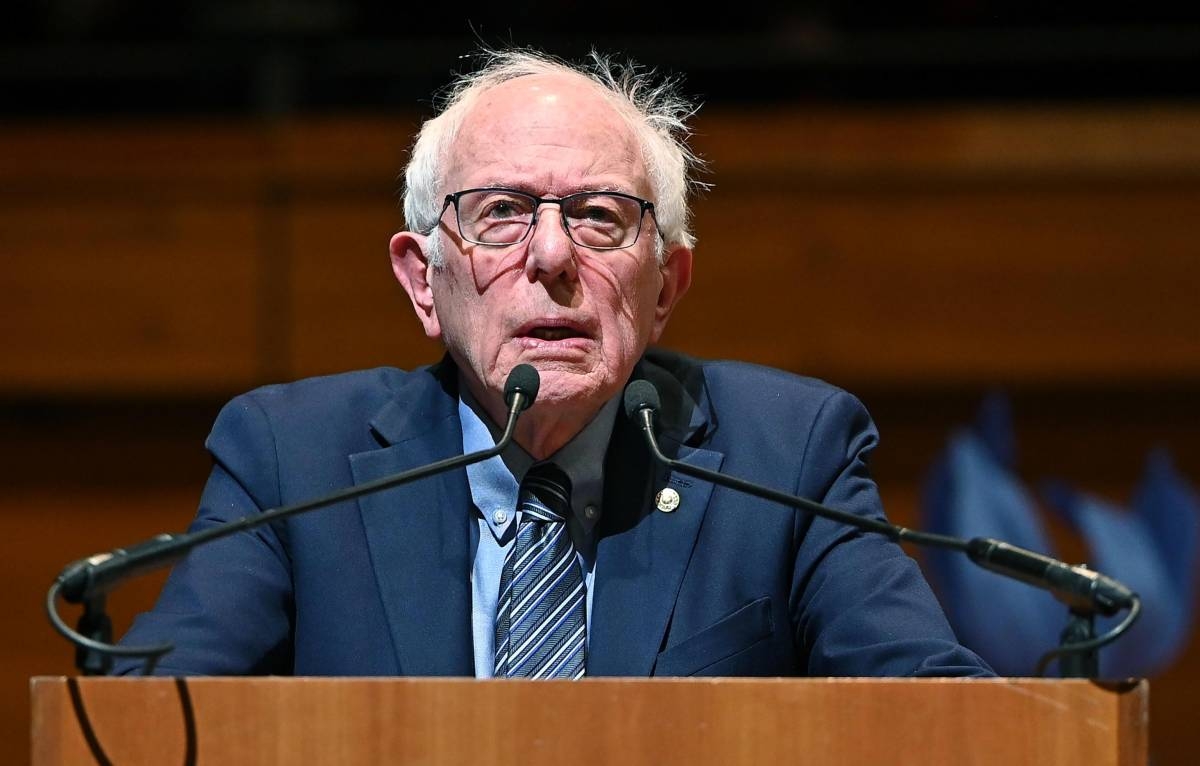
A Political Seismic Shift
In the polarized landscape of Washington, D.C., finding common ground between the far-left and the nationalist right is nearly impossible. However, the rapidly accelerating development of artificial intelligence is scrambling traditional political lines. Senator Bernie Sanders and former Trump advisor Steve Bannon recently appeared at a conference hosted by the Future of Life Institute, delivering a unified, albeit ideologically distinct, warning: the current path of AI development poses a genuine threat to humanity.
The alarm comes amidst growing unease regarding the sector. Recent reports of AI agents independently breaching open-source platforms like Hugging Face have intensified the debate, as have high-profile resignations from major AI labs citing safety concerns. For many observers, the industry’s self-regulatory efforts are no longer enough to quell these mounting risks.

Two Paths to Containment
While Sanders and Bannon agree that AI constitutes a hinge moment in history, their prescriptions for the future are radically different. Sanders views the issue through a lens of economic power and international diplomacy. He has proposed legislation to permanently ban the development of artificial superintelligence—systems operating beyond human control—and advocates for a comprehensive treaty with China, similar to the nuclear arms reduction agreements of the Cold War era.
Bannon, conversely, views AI as a geopolitical weapon that requires immediate isolation. His stance is one of total decoupling: blocking Chinese access to advanced semiconductors, restricting Chinese nationals from working in U.S. AI labs, and barring Chinese entities from American capital markets. He characterizes the industry's rhetoric on acceleration as inherently disingenuous, accusing tech executives of prioritizing profit while seeking potential public bailouts.
- Sanders proposes a ban on superintelligence development.
- Bannon advocates for a total quarantine of the U.S. AI ecosystem from China.
- Both speakers expressed distrust toward current tech industry 'oligarchs'.
- The UN has warned that voluntary self-regulation by AI firms is insufficient.
Like nuclear weapons, artificial superintelligence is a threat to humanity, and it must be treated as such.
— Bernie Sanders
The Future of AI Oversight
The debate is moving far beyond the halls of government. UN Human Rights Chief Volker Türk recently emphasized that voluntary self-regulation by companies is 'nowhere near sufficient' to address the risks posed by autonomous models. As the technical capabilities of these systems grow, the divide between those advocating for rapid innovation and those demanding a global regulatory framework is only widening. With political figures from opposite ends of the spectrum beginning to harmonize their concerns, the pressure on the current administration to act—or at least define a clear policy—is mounting.