A New Era of Competition
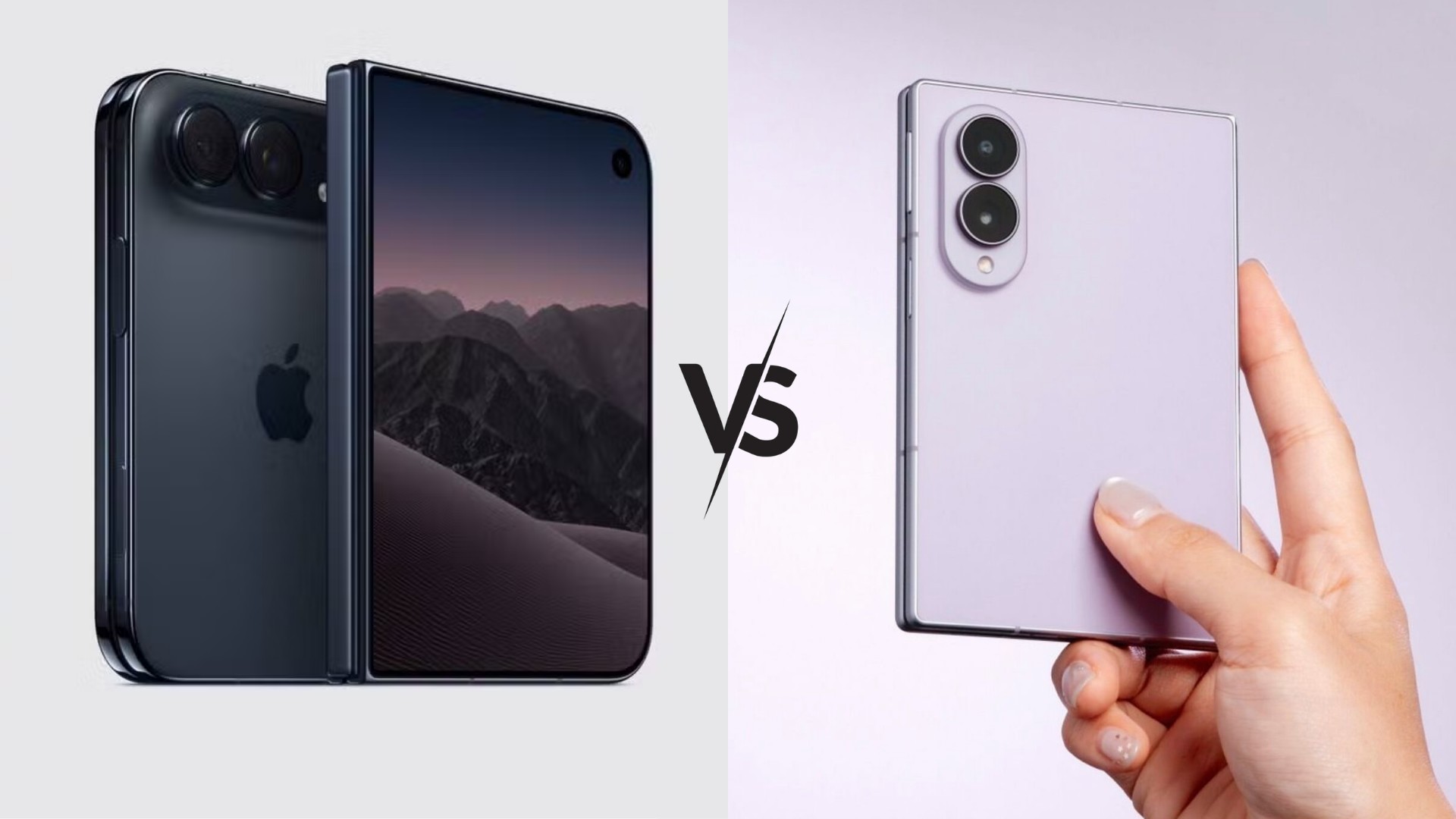
The landscape of premium mobile hardware has shifted. With the debut of the iPhone Duo, Apple has officially challenged Samsung’s dominance in the foldable market. While both devices occupy the popular 'passport' form factor, featuring 7.6-inch internal displays, they represent two very different philosophies regarding how a folding smartphone should function and feel.
Design and Durability
Samsung maintains a clear advantage when it comes to portability. The Galaxy Z Fold 8 is significantly lighter at 201g compared to the 254g iPhone Duo. It is also thinner, measuring 9.7mm folded, whereas the Apple counterpart is 11.3mm. However, Apple counters with superior build integrity; the iPhone Duo boasts an IP68 rating, offering genuine dust protection and deeper water resistance. The Z Fold 8, by contrast, carries an IP48 rating, which safeguards against larger debris but remains more vulnerable to sand.
Software and Productivity
For power users, the Samsung Galaxy Z Fold 8 offers a more mature multitasking ecosystem. The One UI 9 interface allows for a three-way screen split, facilitating complex workflows like researching, writing, and video conferencing simultaneously. Additionally, the device supports Samsung DeX, essentially turning your phone into a desktop workstation when connected to a monitor.
- Multitasking: Samsung supports 3-way window splitting; Apple supports 2-way.
- Productivity: Samsung features DeX mode for a desktop-like experience.
- Input: The iPhone Duo offers Apple Pencil support for precision tasks.
- Security: The Galaxy Z Fold 8 includes both facial recognition and a side-mounted fingerprint reader.
The iPhone Duo is some 53g heavier than the Z Fold 8, but it does offer IP68 water and dust resistance, while the Z Fold 8 only offers IP48-level protection.
— TechRadar