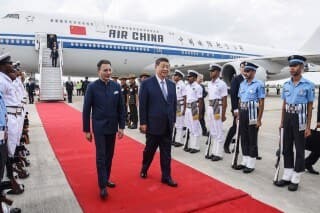
A New Chapter for BRICS Diplomacy
The 18th BRICS Summit, held in New Delhi this September, has become the epicenter of global geopolitical maneuvering. As the bloc continues to evolve, the presence of Chinese President Xi Jinping—making his first visit to India in seven years—underscores the significance of this year’s gathering. For a coalition that now includes Egypt, Ethiopia, Iran, Saudi Arabia, the UAE, and Indonesia, the focus has shifted toward high-quality development and inclusive economic cooperation.
Trade Dynamics and Bilateral Ties
Trade between India and China remains a central pillar of the regional narrative. Recent data reveals that two-way trade reached $127.7 billion in the 2025-26 period, marking a 7.9 percent increase from the previous year. This growth occurs despite ongoing complex geopolitical tensions.
During the summit, the bilateral meeting between Prime Minister Narendra Modi and President Xi Jinping signaled a commitment to dialogue. President Xi emphasized that improving the relationship between China and India serves the common interests of both nations and contributes to broader regional stability.

Expanding the Bloc's Reach
The expansion of the BRICS bloc is a strategic move to integrate diverse economies. Ethiopia, in particular, is looking to leverage its new membership to gain greater access to international markets. PM Modi’s bilateral engagement with Ethiopian Prime Minister Abiy Ahmed Ali highlights the importance of fostering these new partnerships as the alliance seeks to address global economic challenges.
- President Xi Jinping’s first visit to India in seven years.
- India-China trade grew to $127.7 billion in 2025-26.
- The summit marks the inclusion of new member states like Ethiopia, Egypt, and Iran.
- Focus on high-quality development and inclusive economic growth.
The key lies in its commitment to openness and inclusiveness.
— Global Times editorial regarding BRICS cooperation