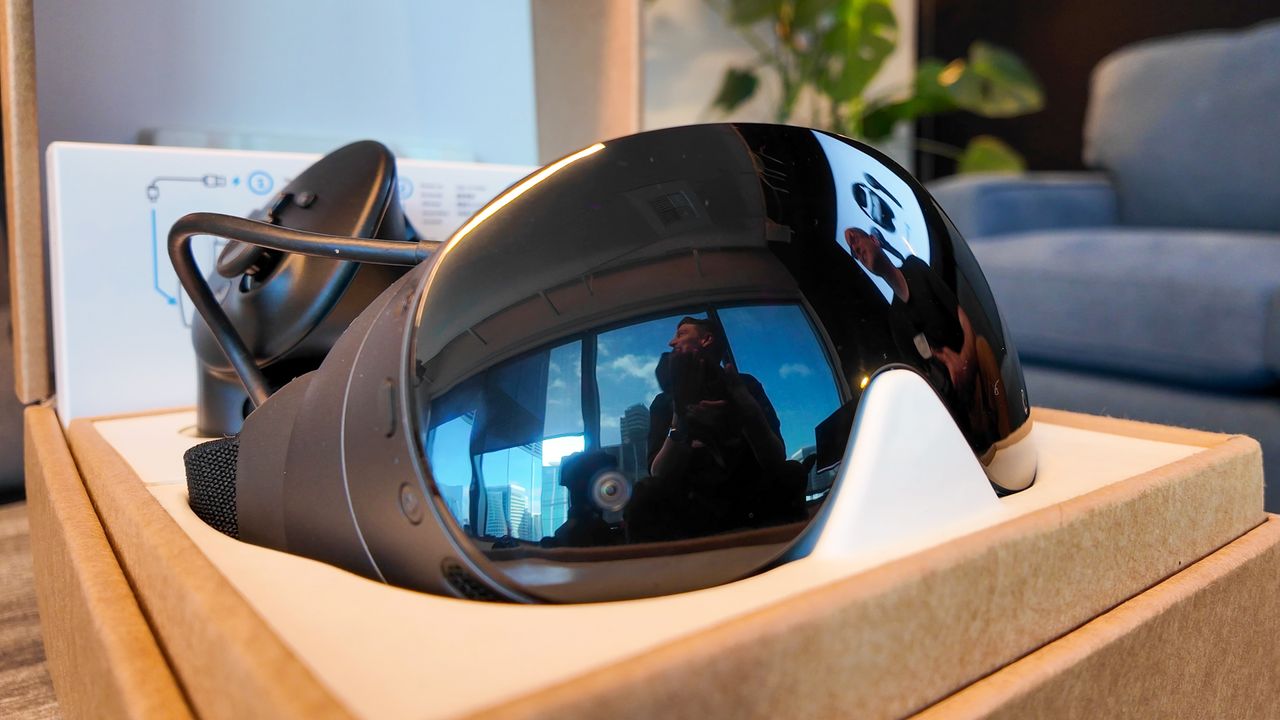
A Market in Flux: The Decline of Traditional VR
For years, the promise of immersive virtual reality was billed as the next frontier of consumer technology. However, as 2025 draws to a close, the data tells a sobering story: global VR headset shipments are in a sharp decline. According to industry reports, shipments fell 14% year-over-year in the first half of 2025 alone, with total annual figures for VR and mixed reality headsets expected to drop by nearly 43% by the end of the year.
While Meta maintains a dominant 80% market share, even they are navigating a landscape marked by weakening consumer demand for bulky, high-end head-mounted displays. The fatigue is palpable, as early hype gives way to the practical realities of long-term usage, storage, and the inherent friction of current hardware.
The Rise of the 'Glasses-First' Era
While VR struggles, the broader XR (Extended Reality) market is seeing a massive pivot. Consumers are increasingly favoring form factor over complete isolation. Shipments for AR smart glasses surged 50% year-over-year in the first half of 2025, suggesting that the public is more interested in augmented experiences that don't require strapping a computer to their face.
- VR headset shipments saw a 14% year-over-year decline in H1 2025.
- AR smart glasses shipments rose by 50% in the same period.
- IDC projects that the broader XR market, led by glasses, will grow 41.6% in 2025.
- Traditional MR/VR headsets are expected to see a rebound in 2026, though niche appeal will persist.
Why the Shift Matters
This transition represents a strategic evolution for major tech players. The 'glasses-first' momentum is driven by a desire for portability and mainstream acceptance. While VR remains a powerful tool for specific niches like professional design, high-end training, and gaming, it is no longer the sole engine of the spatial computing industry.
MR/VR headsets are projected to rebound in 2026 with the launch of new devices, though their appeal will remain largely limited to gamers and businesses focused on design, training, and collaboration.
— IDC Market Research