geopolitics••5 min read

Buying or Not Buying Oil Won’t End the War: EAM Jaishankar Puts India’s Firm Russian Oil Stand on Record in Kyiv

External Affairs Minister S. Jaishankar has firmly defended India’s decision to continue importing Russian oil during a high-level visit to Kyiv. The minister emphasized that trade decisions are not the key to ending the ongoing war, advocating instead for dialogue and diplomacy.

Buying or Not Buying Oil Won’t End the War: EAM Jaishankar Puts India’s Firm Russian Oil Stand on Record in Kyiv

A Diplomatic Stance on Energy and Conflict

During a landmark bilateral visit to Kyiv on September 3, India’s External Affairs Minister S. Jaishankar set the record straight regarding India’s energy policy. Amid pressure from Western nations and Ukraine over continued Russian crude imports, Jaishankar maintained that India's domestic energy security remains a non-negotiable national priority. He explicitly stated that the Russia-Ukraine conflict, now entering its fifth year, will not be resolved simply by countries altering their trade in commodities like oil or minerals.
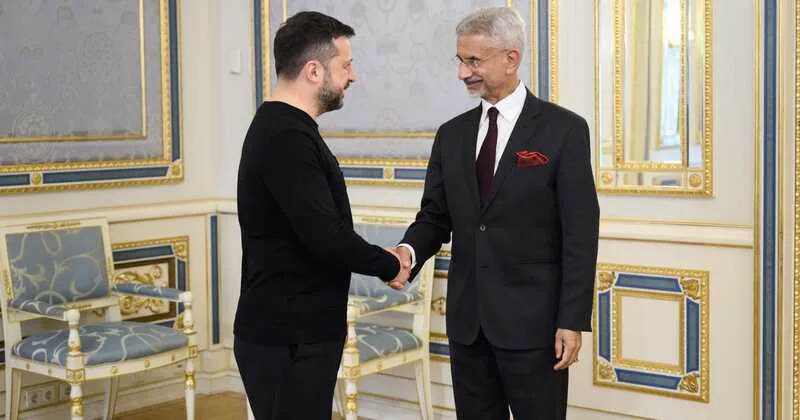
External Affairs Minister S. Jaishankar visits Kyiv, Ukraine, September 2026.

Balancing National Needs and Global Stability

Jaishankar’s visit—his first dedicated bilateral trip to Ukraine as External Affairs Minister—highlighted the complex tightrope India walks as a major global power. While India has faced criticism for its energy trade with Russia, the government remains focused on its responsibility to provide affordable energy to 1.4 billion people. During his discussions with Ukrainian officials, including Foreign Minister Andrii Sybiha and President Volodymyr Zelenskyy, the conversation pivoted from trade to broader humanitarian and economic concerns.

  • Energy Security: Russian oil remains essential for Indian domestic refiners navigating global market volatility.
  • Diplomatic Neutrality: India maintains that the conflict must be solved through negotiations, not on the battlefield.
  • Global Impact: The conflict has caused significant disruptions in the Black Sea, affecting global food and fertilizer supplies.
  • Future Cooperation: Despite policy disagreements, India and Ukraine discussed potential partnerships in pharmaceuticals, digital innovation, and technology.

This conflict, which is today in its fifth year, will not dissolve because somebody is buying or not buying oil or alumina or minerals or metals.

— S. Jaishankar, External Affairs Minister of India

The Human Cost and the Path to Peace

The minister also addressed the tangible consequences of the war on the Global South. He highlighted the plight of Indian seafarers caught in the conflict zone and the broader rise in inflation and shortages impacting food and fertilizer security. By engaging directly with Kyiv, India aims to position itself as a constructive mediator that respects the sovereignty of all nations while advocating for a return to diplomacy—a sentiment reflected in Prime Minister Narendra Modi’s recent call for an 'end of war' to his Russian counterparts.

Key Takeaways

  • S. Jaishankar reaffirmed that India will not halt Russian oil imports based on Western pressure.
  • India defines its energy policy as a sovereign priority to support its 1.4 billion population.
  • The minister emphasized that dialogue and diplomacy are the only viable paths to resolving the Russia-Ukraine conflict.
  • India and Ukraine are seeking to deepen ties in sectors like digital infrastructure and pharmaceuticals despite current geopolitical differences.
  • Global food and energy security remain top concerns for India due to the ongoing disruptions in the Black Sea.

FAQ

Why does India continue to purchase Russian oil?

India views the purchase of affordable Russian oil as an essential component of its national energy security, helping to stabilize fuel supplies for its 1.4 billion citizens.

What is India's official stance on the Russia-Ukraine war?

India consistently maintains that the conflict cannot be resolved on the battlefield and advocates for 'dialogue, diplomacy, and negotiations' to achieve a lasting peace.

Did India visit Ukraine to discuss the war?

Yes, EAM S. Jaishankar visited Kyiv in September 2026 to discuss bilateral cooperation, the impact of the war on global food and energy security, and to encourage diplomatic solutions.

What areas of cooperation are India and Ukraine exploring?

Beyond geopolitical discussions, the two countries are looking to strengthen cooperation in infrastructure, pharmaceuticals, agriculture, digital innovation, and technology.

Related Videos

The Future of Food Security with Dr. Michael Gilbert and Dr. Sylvain Charlesbois

CIBC

COP26: The role of innovation for food security and sustainable supply chain in climate action

International Finance Corporation

Tech Innovations that will Transform the Global Food Supply Chain

KAMR Local 4 News

Sources