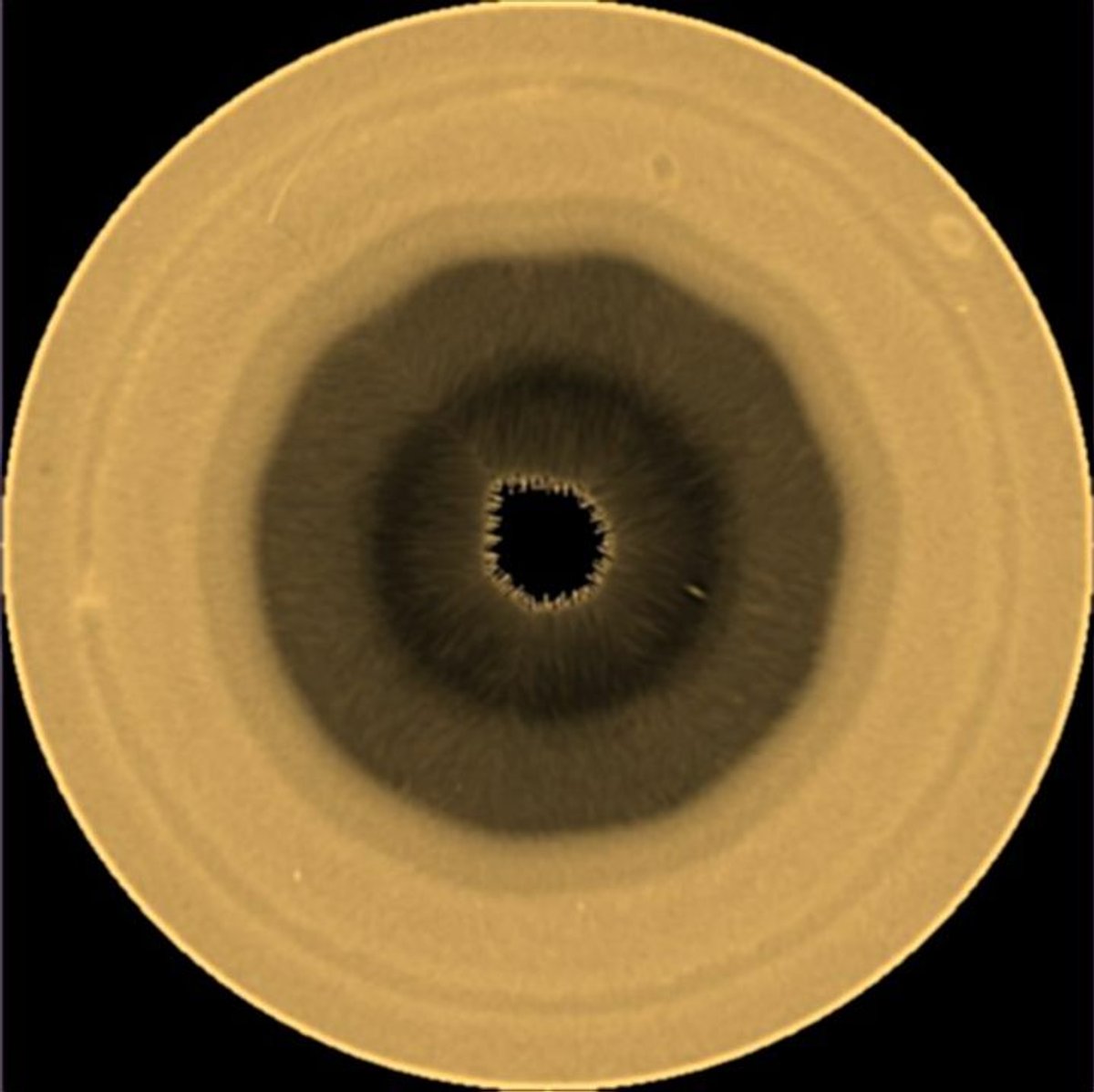
A New Geometric Mystery in the Gas Giant
For decades, Saturn’s north pole has captivated astronomers with its stable, perfect hexagon—a six-sided jet stream pattern that has persisted since it was first spotted by Voyager spacecraft in the 1980s. Now, that northern curiosity has a southern counterpart. Researchers have officially identified a new, ten-sided wave structure, or 'decagon,' encircling Saturn’s south pole.
The discovery, published in the journal Science Advances, was made using the Hubble Space Telescope. Unlike the long-observed northern hexagon, this southern decagon appears to be a recent development, leaving planetary scientists scrambling to understand the mechanics behind its sudden appearance.

What We Know About the Decagon
The atmospheric structure is not just a localized storm; it is a sprawling, vertically extended wave that sits within one of Saturn’s powerful jet streams. Because it spans multiple layers of the atmosphere, researchers believe it is a deep-seated feature rather than just a shallow cloud formation.
- It is a 10-sided (decagonal) wave structure.
- The feature was identified using Hubble Space Telescope data from 2024 and 2025.
- It is positioned within a high-speed jet stream at the planet's south pole.
- Unlike the stable northern hexagon, this structure appears to have formed recently.
The most intriguing part to me is that this seems to have just formed recently. The question is, why did it suddenly form now when we haven’t seen one before?
— Amy, Researcher (via ESA Hubble)
Implications for Planetary Science
The emergence of the decagon highlights the dynamic and often unpredictable nature of gas giants. While computer models have helped us theorize how the northern hexagon maintains its shape, the appearance of a new, distinct polygon at the opposite pole suggests that the atmospheric processes on Saturn are far more complex than previously assumed.
Further investigation is already being planned. Scientists aim to leverage additional observations from the James Webb Space Telescope and advanced computer simulations to determine the decagon’s longevity and its relationship to the planet's overall atmospheric circulation. Until then, the southern pole remains one of the most enigmatic regions in our solar system.