A Reservoir Beneath Our Feet
For generations, we have viewed Earth's oceans as the primary home for water on our planet. However, modern mineral physics and geophysical observations are painting a much more complex picture. Evidence is mounting that significant quantities of water may be trapped hundreds of miles beneath the surface, stored within the crystalline structure of minerals in the Earth's mantle.
How Water Travels to the Depths
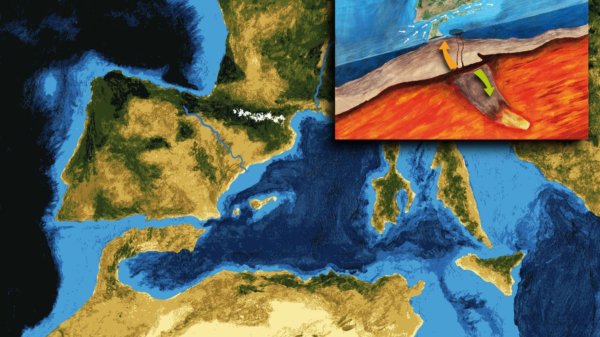
The mechanism behind these deep-earth water reserves involves the planet's constant tectonic movement. As tectonic plates collide, colder slabs of the Earth's crust are forced downward into the mantle—a process known as subduction. This journey carries hydrous minerals and water deep into the planet's interior.
- Plate tectonics transport surface water into the mantle via subduction zones.
- Nominally anhydrous minerals act as sponges, holding water molecules within their atomic structure.
- Geophysical observations indicate that the transition zone of the mantle can be locally 'wet'.
- Hydrogen isotope analysis provides a 'fingerprint' helping researchers identify primordial water sources.
The Deep Water Cycle
This isn't just about static water deposits; it’s part of a massive, slow-moving 'deep water cycle.' When these water-bearing minerals reach extreme heat and pressure, they can contribute to partial melting within the mantle. This process creates a cycle that potentially connects the world’s surface oceans to the very depths of the planet’s interior.
The discovery suggests water from the Earth's surface can be driven to such great depths by plate tectonics, eventually causing partial melting.
— BNL Newsroom
Implications for Planetary Evolution
Understanding where this water goes and how it behaves is crucial for researchers studying the formation and history of Earth. By analyzing hydrogen isotopes in lavas, scientists are beginning to differentiate between surface water recycled into the mantle and primordial water that may have been present since the planet's birth. This research doesn't just illuminate Earth's history; it provides a framework for understanding how other terrestrial planets might manage their own internal reservoirs.