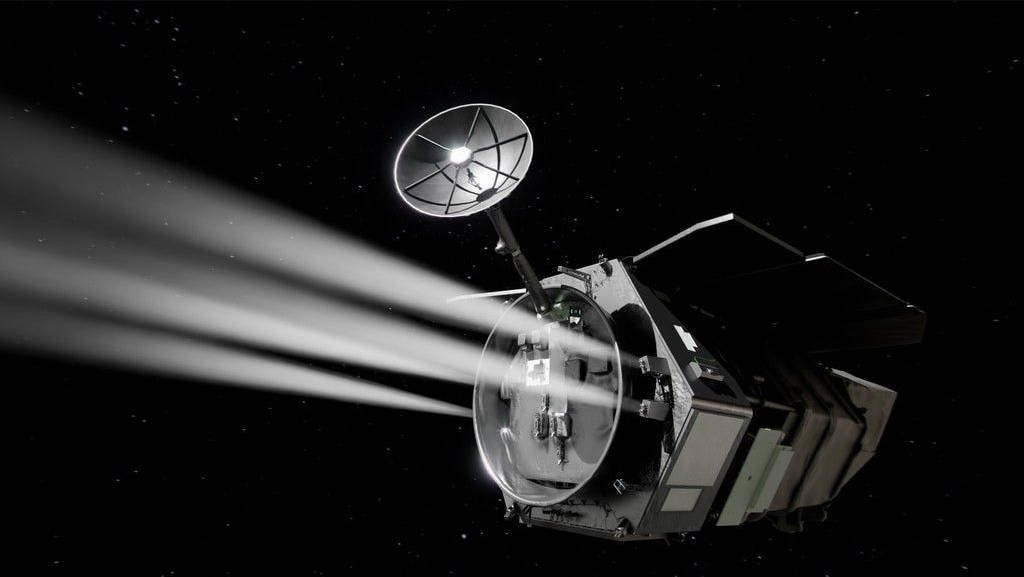
A New Giant in the Sky
On August 30, 2026, the landscape of deep-space exploration shifted. NASA officially launched the Nancy Grace Roman Space Telescope from the Kennedy Space Center in Florida. The observatory, which is poised to become a crown jewel of modern astronomy, was carried into orbit by a SpaceX Falcon Heavy rocket.
With a price tag of $4.3 billion, the Roman Space Telescope is designed to act as a wide-angle lens for the cosmos. While its primary mirror is 2.4 meters in diameter—matching the size of the Hubble Space Telescope—its specialized equipment allows it to capture a field of view 100 times larger than its predecessor. This capability is expected to provide an unprecedented look at the hidden universe.

Why the Roman Mission Matters
The Roman mission is not just about taking sharper pictures; it is fundamentally about solving the 'dark' mysteries of the universe. Scientists aim to use the telescope to investigate dark energy and dark matter, which remain some of the most profound unanswered questions in physics. Beyond the invisible forces that govern the structure of galaxies, the telescope will also be a prolific hunter of exoplanets.
- Dark Energy and Matter: Mapping the expansion of the universe to understand the forces pulling it apart.
- Exoplanet Discovery: Scientists anticipate identifying approximately 2,500 new planets outside our solar system.
- Wide-Field Imaging: Covering a massive area of the sky to detect supernovae and distant, previously unseen galaxies.
- Coronagraph Technology: Testing new direct-imaging technology to potentially see planets in more detail than ever before.
The Roman Space Telescope is designed to provide data that might settle some of the most enduring mysteries of the universe.
— L3Harris Technology
Technical Prowess
The project represents a collaborative effort across years of development. L3Harris played a pivotal role in the mission, including the refinishing of the primary mirror and developing hardware for the telescope's two primary instruments: the Wide Field Instrument and the Coronagraph Instrument. By combining these, NASA hopes to turn the telescope into a high-speed survey machine, capable of observing 100 million stars over hundreds of days.