technology••5 min read

Elon Musk’s Billion-Year Plan: Why SpaceX and xAI are Building a Lunar Future

Elon Musk has unveiled a bold vision involving lunar-based AI satellite factories and electromagnetic mass drivers. By leveraging moon-based resources, the SpaceX and xAI merger aims to scale computing power to levels that could theoretically protect Earth for the next billion years.

Elon Musk’s Billion-Year Plan: Why SpaceX and xAI are Building a Lunar Future

From Earth to Orbit: The New SpaceX-xAI Frontier

In a series of recent updates, Elon Musk has outlined a vision that bridges the gap between aerospace engineering and artificial intelligence. Following the acquisition of xAI by SpaceX in February 2026, the company is shifting its focus toward a future where computing power is not limited by terrestrial constraints. Musk believes that within two to three years, the most cost-effective way to generate AI compute will be in space, utilizing the unique environment of the Moon.

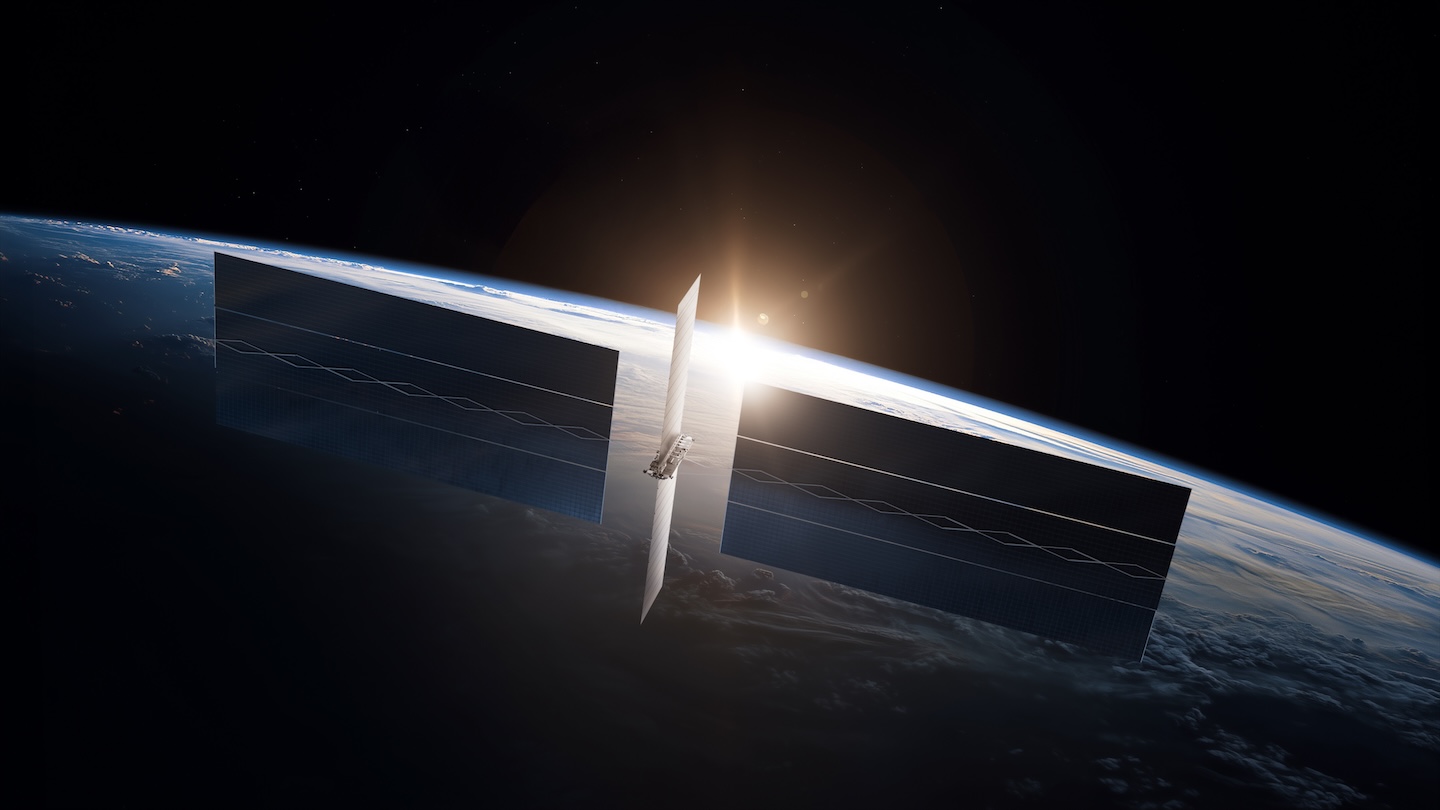
SpaceX is leveraging its rapid launch cadence and heavy-lift capabilities to pivot toward orbital AI infrastructure.

The Mechanics of the Lunar Mass Driver

The centerpiece of Musk’s plan is the 'mass driver'—an electromagnetic launch system designed to catapult payloads directly from the lunar surface. Because the Moon lacks an atmosphere and possesses significantly lower gravity than Earth, it serves as an ideal staging ground for launching mass-produced AI hardware into deep space.

  • Lunar factories will utilize local resources to manufacture AI satellites, reducing the need for costly Earth-to-space logistics.
  • Electromagnetic mass drivers replace traditional chemical rockets for launching payloads, offering a more efficient delivery system.
  • The project aims to achieve 500 to 1000 terawatts per year of AI compute deployed into orbit.
  • Infrastructure at Earth-Sun Lagrange points could theoretically support climate intervention strategies for up to a billion years.

Scaling Intelligence to the Kardashev Level

Musk’s ambition goes beyond simple satellite deployment. He describes this as a path to ascending the Kardashev scale—a method of measuring a civilization's level of technological advancement based on energy consumption. By harvesting a significant percentage of the Sun's energy through orbital solar arrays, humanity could theoretically scale its economy and intelligence capacity to levels millions of times greater than current Earth-based limits.

It is possible to put 500 to 1000 TW/year of AI satellites into deep space, meaningfully ascend the Kardashev scale and harness a non-trivial percentage of the sun’s power.

— Elon Musk

Key Takeaways

  • SpaceX acquired xAI in early 2026 to integrate rocket technology with advanced artificial intelligence.
  • Musk plans to use lunar-based factories to manufacture AI satellites, utilizing the Moon's low gravity.
  • Electromagnetic mass drivers are the proposed method for launching these satellites from the lunar surface.
  • The ultimate goal is to scale AI computing power to massive, multi-terawatt levels, supporting humanity's expansion into space.
  • Musk suggests these space-based systems could eventually assist in long-term climate intervention for Earth.

FAQ

What is a mass driver?

A mass driver is an electromagnetic system designed to accelerate and launch objects (like satellites) without the use of chemical rocket fuel.

Why build factories on the Moon instead of Earth?

The Moon's low gravity and lack of atmosphere make it much cheaper and easier to launch heavy payloads into space compared to launching from Earth.

When does SpaceX expect to start launching AI satellites?

Elon Musk indicated that SpaceX's first AI satellites are expected to begin launching in the final quarter of 2027.

What is the primary goal of the SpaceX-xAI merger?

The merger aims to combine aerospace infrastructure with advanced AI to create a physical and digital layer capable of operating in space, on the Moon, and on Mars.

Related Videos

Elon Explains SpaceX Solar AI Satellites & The Sun's Immense Power

Solving The Money Problem

The Sentient Sun: Why AI Wants to Leave Earth (Visualizing the SpaceX & xAI Merger)

Accidental AInthropologist

Sources