A New Frontier in the Sky
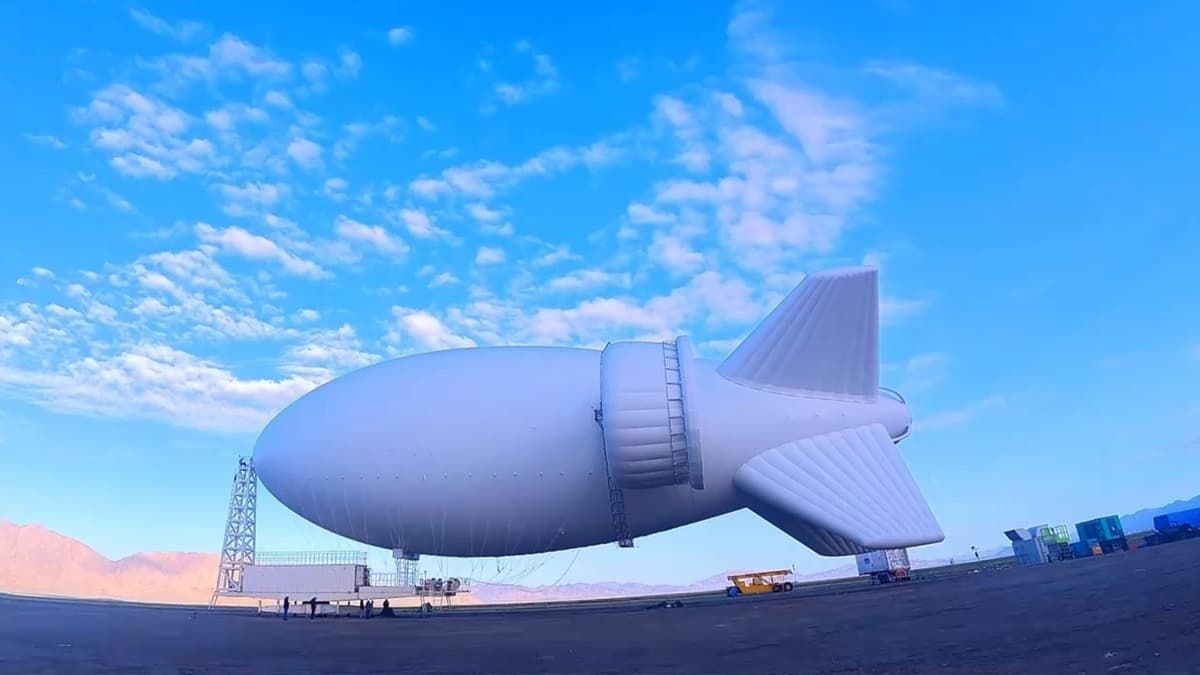
Conventional wind turbines are limited by their height and the physical constraints of massive concrete foundations. However, a new project out of China aims to bypass these restrictions entirely by taking power generation to the stratosphere. The S4000, a gargantuan helium-filled airship, has officially completed a flight test at an altitude of 4,000 meters (13,123 feet), marking a significant milestone in airborne wind energy (AWE) development.
How the S4000 Works
The S4000 is an upgraded successor to the S2000 platform. Rather than a stationary tower, the system utilizes a large, buoyant envelope that carries a power-generating unit into the sky. It stays aloft using helium, tethered to a ground-based station that handles power conversion and grid connectivity.
- Reaches altitudes of 4,000 meters to access stronger, more reliable high-altitude winds.
- Features a design service life of up to 20 years for long-term operations.
- Compatible with mainstream grid power supply requirements.
- Designed to be deployable in varied environments including deserts, highlands, and islands.
The Road Ahead for Airborne Energy
The successful test represents more than just a altitude record; it demonstrates the feasibility of extracting energy from regions previously considered unreachable for traditional wind farms. By avoiding the 'marine boundary layer' and other ground-level turbulence, these systems promise consistent power output that could be a game-changer for grid stability.
The technology could potentially be used in places such as deserts, highlands and islands, where high-altitude winds could provide another source of renewable energy.
— CCTV News / Industry Reports
While the technical achievement is impressive, the project remains in the development phase. Significant hurdles regarding cost, safety, and large-scale commercial reliability must be addressed before we see these 'flying windmills' as a common sight in the energy landscape.