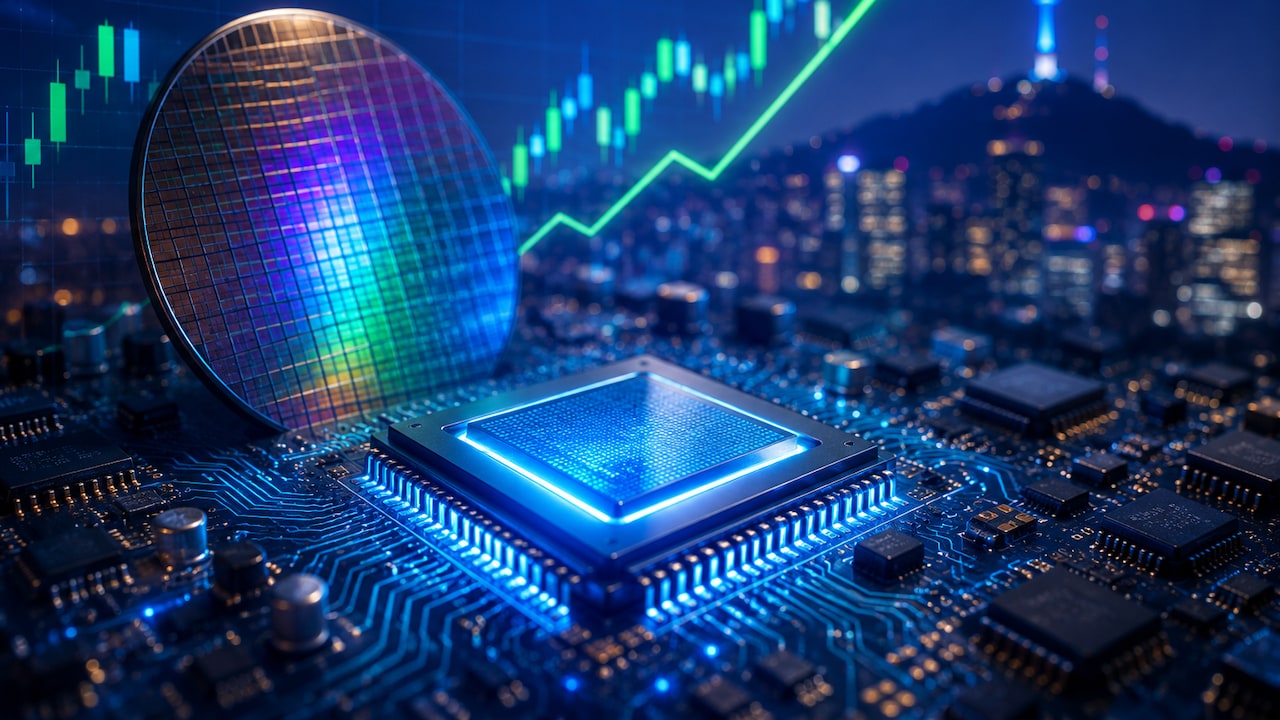
The New AI Reality: Memory Constraints
For years, the AI narrative centered almost exclusively on GPUs. However, the conversation has shifted. Elon Musk recently identified memory as the primary binding constraint for AI development, citing a massive disconnect between supply and demand. In recent earnings calls for both Tesla and SpaceX, Musk highlighted that while compute power remains vital, the ability to store and access that data efficiently has become the industry's most significant hurdle.
The numbers are stark: Musk pointed to a 200% growth in demand for memory, contrasted against a mere 20% growth in supply. This imbalance has turned memory manufacturers into the latest darlings of the stock market, as investors pivot from pure-play GPU builders to companies capable of solving the memory shortage.

A Rally Driven by Scarcity
The market has responded with fervor. Recent weeks have seen semiconductor stocks—including SanDisk, Micron, and SK Hynix—rally by as much as 7%. This surge is rooted in a fundamental shift in how the tech industry values components. For example, SanDisk recently confirmed that two-thirds of its record revenue stemmed directly from price increases, a clear indicator of the massive pricing power currently held by memory providers.
- Memory demand is growing at 200% annually, far outpacing the 20% supply growth.
- High-bandwidth memory (HBM) supply is not expected to see relief before 2029.
- Institutional investors are increasing stakes in storage providers, reflecting long-term confidence in the hardware sector.
- Pricing power has shifted to manufacturers as data center operators scramble for hardware.
What Lies Ahead for AI Infrastructure
Industry analysts are bracing for a prolonged period of tightening supply. As Deloitte notes, the race for system-level performance in hyperscale data centers requires integrating high-bandwidth memory (HBM) closer to logic chiplets. Because these AI workloads are forecast to triple or quadruple annually between 2026 and 2030, this physical integration is no longer a luxury—it is a necessity.
AI capex is already in hundreds of billions, so its sheer scale makes it less possible to grow at the same breakneck pace. This means earnings of AI stocks are more likely to slow, which isn't good news for stock prices.
— Phelix Lee, Morningstar Equity Analyst
While the market remains bullish on the growth of AI infrastructure, experts caution that the sheer scale of current investment makes the previous 'breakneck' pace of growth difficult to maintain. Investors should look for companies that can bridge the gap between current production limitations and the explosive, long-term needs of the global AI ecosystem.