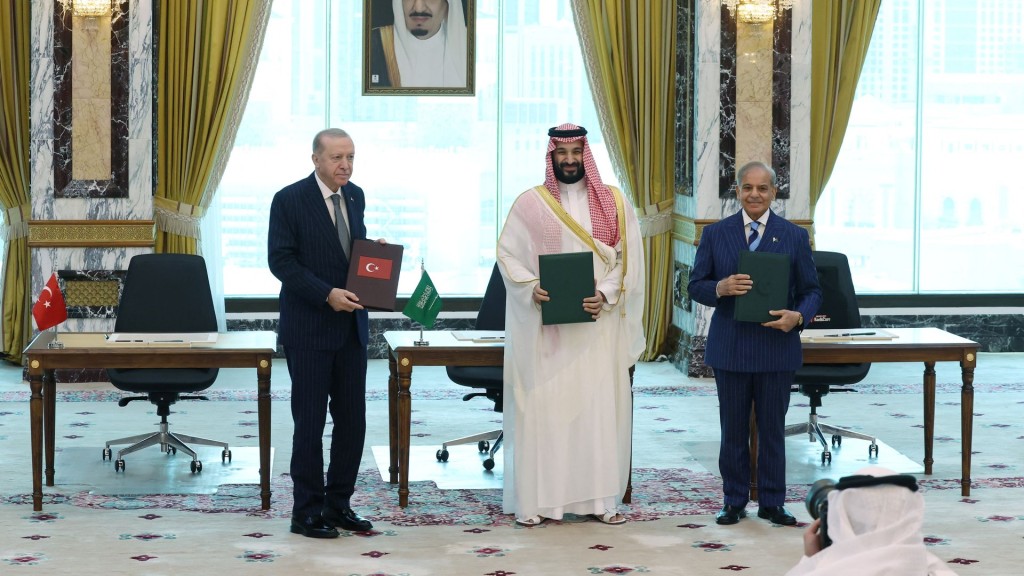
A New Security Architecture
The regional order in the Middle East has reached a historic inflection point. On August 7, 2026, Saudi Arabia, Turkey, and Pakistan signed a landmark mutual defense pact in Mecca. This agreement, often referred to as the 'Mecca Axis,' creates a formal security framework that treats an attack on one signatory as an attack on all three.
The pact emerges at a time of immense regional volatility, framed by the ongoing stalemate between the United States, Israel, and Iran. As the conflict creates ripple effects across maritime routes and global energy markets, these three nations have decided to insulate themselves through a collective security arrangement.

Why the Mecca Axis Matters
The significance of the Mecca Axis lies in the changing nature of regional influence. For decades, the US served as the primary security guarantor for many Middle Eastern states. However, the current decline in American strategic influence, combined with an increasingly assertive Israeli military posture and the regional dominance of the Iranian regime, has forced local powers to look inward and toward one another.
- Collective Defense: The pact establishes that an armed attack against any signatory is legally treated as an attack against all.
- Strategic Autonomy: The agreement highlights a pivot away from total reliance on traditional Western security architectures.
- Geopolitical Realignment: Saudi Arabia, Turkey, and Pakistan are positioning themselves as the new anchors of regional stability.
Global Spillover and Future Implications
The implications of this pact extend far beyond the immediate region. Africa, for example, is feeling the secondary shockwaves of the broader Iran conflict. Nations in sub-Saharan Africa are currently navigating economic disruption, security volatility, and the necessity of finding new investment partners as major powers refocus their resources on the Persian Gulf.
The Iran war is a brutal reminder that in a hyper-connected world there is no such thing as a local war.
— Atlas Institute for International Affairs