
Exploring the Final Frontier of Titan
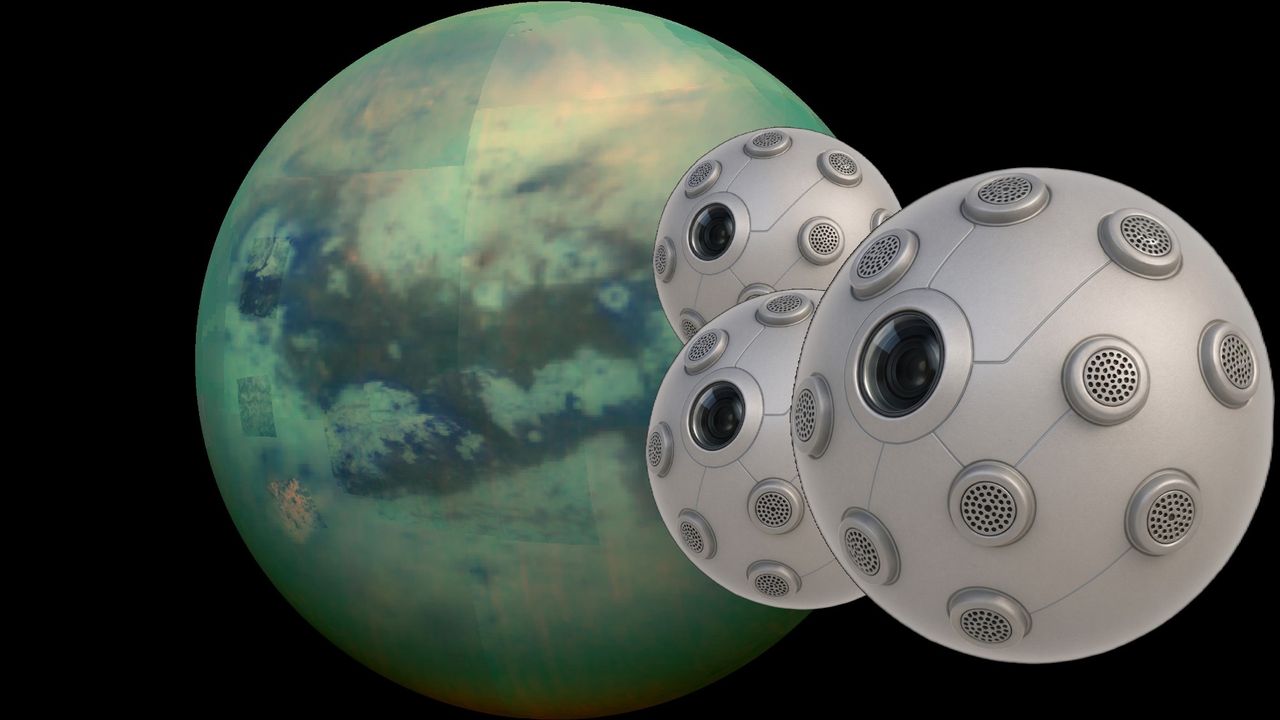
Saturn’s moon, Titan, is often cited as one of the most Earthlike bodies in our solar system, boasting a landscape rich in hydrocarbon lakes and mysterious 'karst' terrain. However, the same features that make it scientifically fascinating also make it incredibly difficult to navigate. Recognizing this, NASA has awarded an early-stage grant to the SPARK project—a team developing spherical 'aerobots' capable of flying through the moon's dense atmosphere to explore its complex cave systems.
What is the SPARK Project?
The project, officially titled 'Solid-state Propulsion for Autonomous Reconnaissance of Karst' (SPARK), is currently funded under NASA’s Innovative Advanced Concepts (NIAC) program. Led by Daniel Drew, an assistant professor at the University of Hawaii at Mānoa, the project aims to solve the problem of planetary mobility.
- The aerobots utilize silent, atmospheric ion thrusters (electrohydrodynamic propulsors).
- Their spherical design allows for flight with minimal downwash, perfect for confined spaces.
- Unlike rovers, these vehicles can hover and maneuver in three dimensions, making them ideal for cave exploration.
- The project is currently in a nine-month initial phase focusing on feasibility and thermal modeling.
Why Titan Needs Flying Robots
Titan’s surface is rugged and unpredictable, riddled with sinkholes and caves caused by the moon's hydrocarbon cycles. Traditional rovers would struggle to traverse such uneven ground without getting stuck or damaged. By utilizing the moon's thick atmosphere, these lighter-than-air aerobots can drift or fly into areas that have previously been beyond our reach, offering a window into the geological history and potential habitability of the moon.
On Titan, however, things are entirely different. The environment allows for these specialized vehicles to overcome gravity and atmospheric drag in ways that would be impossible on Earth.
— Research Context
The Road Ahead
While the prospect of swarming robots on Titan is exciting, the technology is still in its infancy. The team must first prove the efficiency of their ion thrusters under Titan-like conditions. Even if successful, it remains unclear if the SPARK technology will be ready to hitch a ride on NASA's upcoming Dragonfly mission, which is currently slated for a 2028 launch. For now, the focus remains on rigorous testing and simulated performance models to ensure that when these robots do eventually take flight, they are ready for the extreme challenges of deep space.