technology••5 min read

India’s Space Race: How Private Startups Are Reshaping the Final Frontier

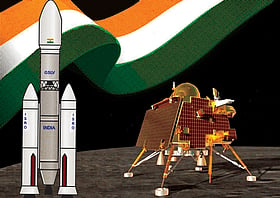
India has officially joined the elite ranks of nations with successful private space launches, marking a pivotal shift in its aerospace capabilities. With over 440 startups now fueling the ecosystem, the country is rapidly moving toward its goal of capturing a larger share of the global space market.

India’s Space Race: How Private Startups Are Reshaping the Final Frontier

A New Era for Indian Aerospace

For decades, the Indian Space Research Organisation (ISRO) was the undisputed architect of India’s space journey. However, the landscape shifted dramatically this past July, when an Indian private startup successfully launched a rocket into orbit. This milestone makes India only the third nation, following the United States and China, to witness a successful private-sector orbital launch, signaling that the country’s space sector has entered a high-growth phase.
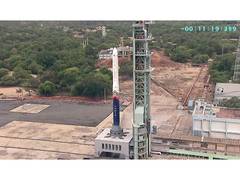
The rise of private space technology startups in India has been facilitated by IN-SPACe.

Building a Robust Startup Ecosystem

The transformation is not accidental. Since opening the sector to private participation in 2020, India has seen the emergence of approximately 440 space technology startups. The government established the Indian National Space Promotion and Authorization Center (IN-SPACe) to act as a bridge between ISRO and private players, providing them access to critical infrastructure like the Satish Dhawan Space Centre in Sriharikota.

  • IN-SPACe acts as a centralized platform for processing applications and technical reviews.
  • Private startups are now involved in satellite propulsion, launch vehicle design, and ground station operations.
  • The national goal is to increase India's share of the global space economy to 8% by 2033.
  • Strategic vision aims to grow the space economy to an estimated $44 billion.

Economic Ambition and Global Positioning

Prime Minister Narendra Modi recently underscored the importance of the space sector, linking it to the broader push for a 'Viksit Bharat' (Developed India). The focus has shifted from state-only operations to a collaborative model where innovation from startups drives defense, satellite deployment, and even semiconductor manufacturing for space applications.

The approach has shifted from government dominance to a hybrid model where public-private partnerships unlock national potential, evidenced by the opening of space for private participation and the strengthening of the research ecosystem.

— Independent Analysis

Key Takeaways

  • India is the third country to achieve a successful private-sector orbital launch.
  • There are now over 440 space technology startups operating within the Indian ecosystem.
  • IN-SPACe is the central body facilitating private access to ISRO’s infrastructure.
  • India aims to capture 8% of the global space market by 2033, targeting a $44 billion space economy.
  • Government policy shifts since 2020 have been the primary catalyst for this rapid expansion.

FAQ

What is IN-SPACe?

IN-SPACe is the Indian National Space Promotion and Authorization Center. It is the regulatory body that facilitates private sector participation in India’s space activities by granting access to ISRO's infrastructure.

Why is the private space sector in India growing now?

The sector has grown significantly following government policy shifts in 2020 that opened space exploration and satellite launch activities to private companies.

What is the goal for India's space economy?

India aims to grow its space economy to $44 billion and capture 8% of the global space market by 2033.

How many space startups are currently in India?

Reports indicate that there are around 440 space technology startups actively operating in the country.

Related Videos

How India Opened Its Space Industry | The Rise of India's Private Space Sector

Corporate Lens

Private Space Companies in India: The Next Big Leap

Curiosity Engine

India's Private Space Sector Explained | The Next ISRO?

Deep Thinker India

Sources