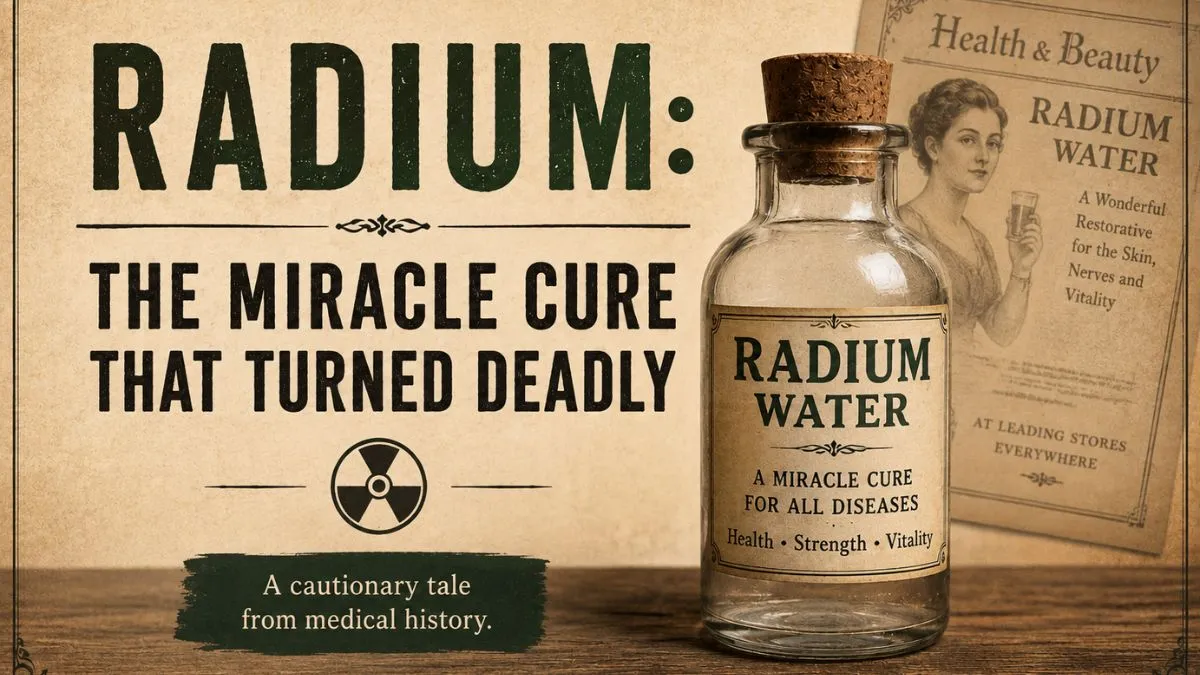
A Glowing Miracle
When Marie Curie announced the discovery of radium, it didn't just capture the scientific community—it captivated the world. With its ability to emit its own light and heat, the element appeared to be an alchemical wonder. By the 1920s, this excitement had mutated into a dangerous commercial craze, as patent medicine companies rushed to market radioactive products as universal panaceas.
The Rise of Radithor
Perhaps the most infamous product of this era was Radithor, a 'certified radioactive water' marketed by William J. A. Bailey’s Associated Radium Chemists, Inc. Sold primarily between 1918 and 1928, the tonic promised to cure over 150 ailments, ranging from indigestion and high blood pressure to impotence. It was sold at a premium price, making it a status symbol for the affluent who believed they were tapping into a modern scientific breakthrough.

A Tragic Turning Point
The health claims surrounding radium were largely unfounded and catastrophic. The most prominent victim of the Radithor craze was Eben Byers, a wealthy industrialist who consumed hundreds of bottles of the radioactive tonic. By the time of his death in 1932, the effects of radium poisoning were undeniable, leading to horrific physical deterioration.
- Radithor contained radium-226 and radium-228 dissolved in triple-distilled water.
- Over 400,000 bottles of Radithor were sold during its peak popularity.
- The craze prompted a shift in how the U.S. Food and Drug Administration regulated patent medicines.
- Radioactivity was mistakenly conflated with vitality and energy for nearly a decade.
Patent medicine companies exploited the murkiness surrounding ideas about radium, marketing a slew of products that claimed to harness the element’s healing and energizing powers.
— Substance of the Sun: The Cultural History of Radium Medicines in America