The Miracle Element
Following its discovery, radium was quickly misconstrued as a source of pure vitality. Because the element emitted a constant glow and radiant energy, the public and many self-proclaimed medical experts assumed it could invigorate the human body. This led to a wave of 'radioactive' consumer products that promised to cure everything from indigestion to high blood pressure.
Radithor and the Illusion of Health
Perhaps the most notorious example of this era was 'Radithor,' a solution of radium dissolved in water. Marketed by William J.A. Bailey, a fraudster masquerading as a doctor, the tonic was sold as an elixir to alleviate aches and provide sexual invigoration. One notable victim, industrialist Eben Byers, reportedly purchased 1,400 bottles of the toxic liquid after an injury. He died in 1932 following a gruesome decline that saw his teeth fall out, his jaw require removal, and his skull develop holes.
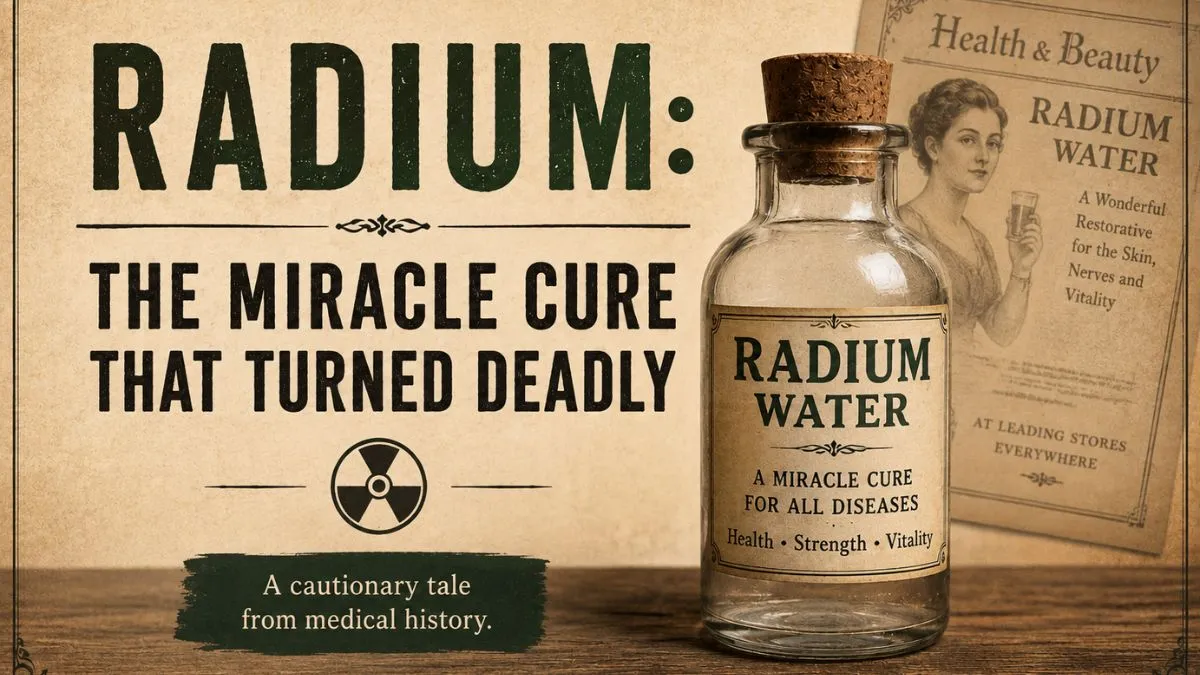
Why It Happened: The Danger of Unverified Claims
The radium craze was fueled by a lack of government oversight and a desperate public appetite for new technologies. Companies, such as the Radium Ore Revigator Company, sold specialized water coolers lined with carnotite—an ore of uranium and radium—claiming it would create 'fresh, potent, invigorating' water overnight. The public conflated the physical 'energy' of radioactive decay with biological health, ignoring the long-term, devastating consequences.
- Radium was mistakenly associated with vitality due to its natural glow and energy emission.
- Radithor was sold as a 'miracle' cure for over 150 ailments, leading to unknown numbers of deaths.
- The tragedy eventually forced the US Federal Drug Agency to intervene and shut down fraudulent manufacturers.
- This era highlights the critical necessity of rigorous scientific testing before health products reach the market.
This dark chapter in medical history serves as a stark reminder of the importance of rigorous scientific testing and government oversight.
— Engineering Facts