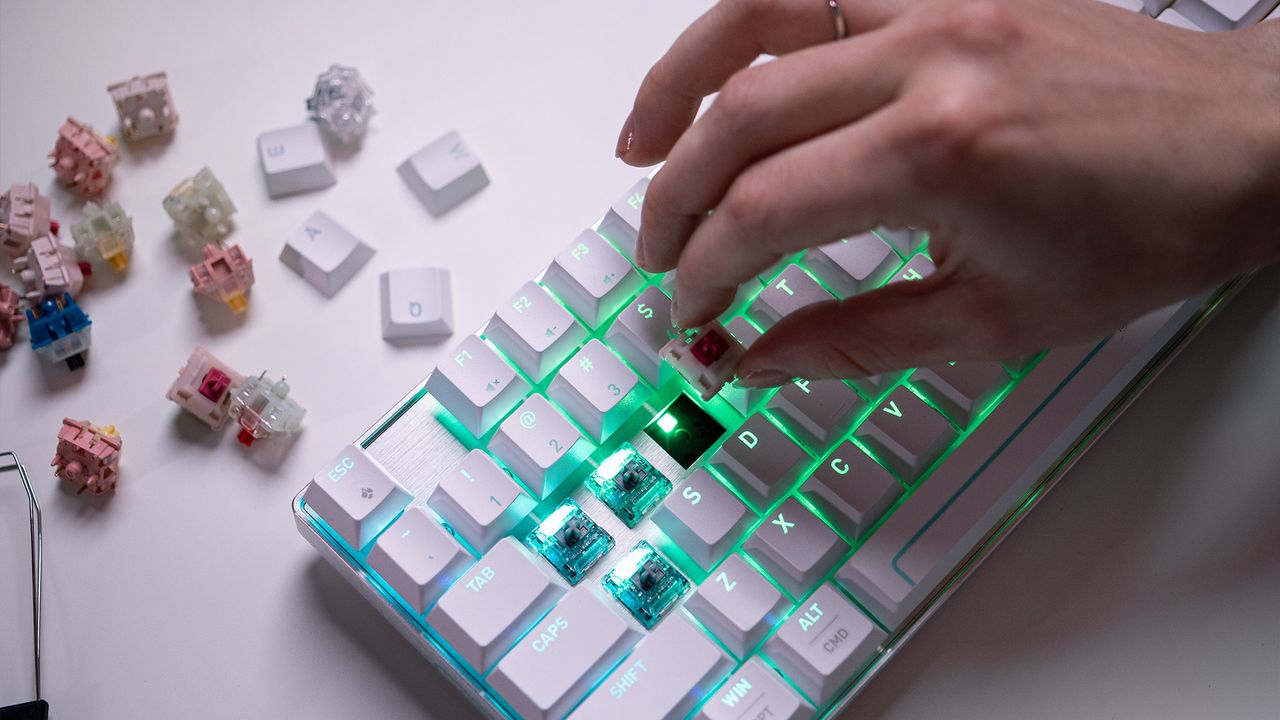
The New Standard in Gaming Precision
If you have shopped for a premium controller or high-end mechanical keyboard recently, you have likely encountered terms like 'Hall Effect' and 'TMR'. These magnetic sensing technologies are rapidly becoming the new industry standard, effectively rendering the traditional mechanical wear-and-tear of the past obsolete. But what sets these two technologies apart, and which one should you prioritize for your next setup?
Understanding Hall Effect Technology
Hall Effect sensors have become the go-to solution for manufacturers aiming to solve the dreaded 'stick drift' issue. Unlike older, potentiometer-based sticks that rely on physical contact and friction—which naturally wear down over time—Hall Effect sensors detect movement through magnetic fields. Because there is no physical contact between the sensor and the moving part, the mechanical degradation is drastically reduced, leading to longer-lasting controllers.
What Is TMR and Why Does It Matter?
TMR, or Tunnel Magnetoresistance, is a more recent innovation in gaming peripherals. Originally designed for high-precision industrial applications, TMR technology also uses magnetic fields to detect movement without physical contact. However, it differentiates itself through its extreme sensitivity.
- Enhanced Sensitivity: TMR sensors are capable of detecting much smaller changes in magnetic fields compared to Hall Effect sensors.
- Precision: The higher sensitivity allows for potentially more accurate input registration, making it a favorite for competitive gamers.
- Durability: Like Hall Effect, TMR eliminates physical friction, meaning it is immune to the same mechanical wear found in traditional components.
HE and TMR may sound like buzzwords added to the names of peripherals at the moment, but eventually, they will be the standard, and a lack of magnetic tech could be seen as a dealbreaker.
— TechRadar
Which Technology Should You Choose?
Both technologies offer a significant upgrade over traditional mechanical components. If you are a casual or semi-competitive player, a quality Hall Effect controller or keyboard will provide the durability and drift-free performance you need. However, if you are looking for the absolute cutting edge in sensitivity, keep an eye out for TMR-equipped devices. As manufacturing scales, we expect these technologies to become the baseline for all serious gaming gear.