economy & policy••5 min read

From Scarcity to Superpower: India’s Remarkable 79-Year Economic Ascent

India celebrates 79 years of independence, having evolved from a poverty-stricken nation in 1947 to a $4 trillion economic powerhouse. Prime Minister Narendra Modi’s latest address outlines a bold 'Sapta Dhara' vision for 2047, focusing on AI, defense, and manufacturing. This transformation marks one of the most significant economic journeys in modern history.

From Scarcity to Superpower: India’s Remarkable 79-Year Economic Ascent

A New Chapter for a Rising Nation

When India gained independence on August 15, 1947, it inherited a nation marked by systemic poverty, widespread food insecurity, and minimal industrial infrastructure. Fast forward 79 years, and the narrative has shifted dramatically. Today, India stands as a $4 trillion economy—a testament to decades of resilience, reform, and growth.
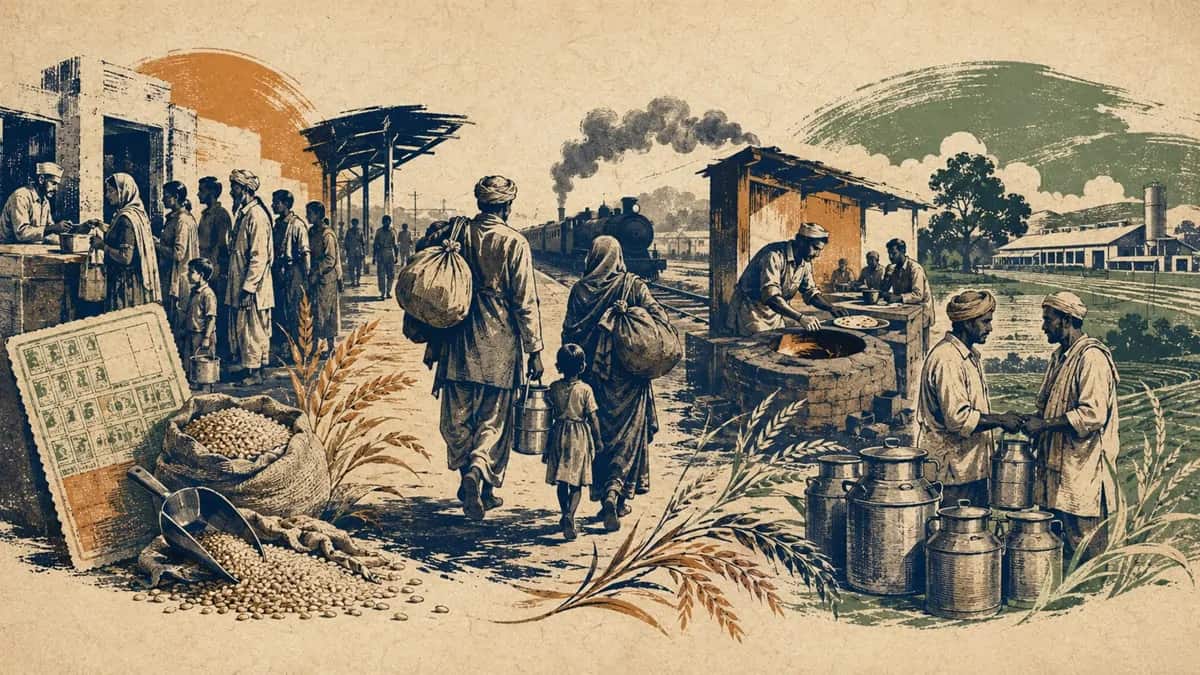
Early post-independence years were defined by food rationing and the establishment of cooperative movements.

The Road to $4 Trillion

The contrast between 1947 and 2026 is stark. In 1947, the country’s total electricity generating capacity was a mere 1,362 MW; by 2025, that figure had surged to approximately 556.9 GW. This infrastructure expansion is just one facet of a broader evolution that has seen India transition from being labeled one of the 'Fragile Five'—economies vulnerable to global capital shifts—to one of the world's fastest-growing major nations.

  • Infrastructure: Power capacity grew from 1,362 MW to 556.9 GW.
  • Consumption: A significant rise in the middle-class wallet and consumer aspirations.
  • Digital Transformation: A heavy emphasis on digital public infrastructure and supply-chain integration.
  • Economic Scale: Transitioning from an economy of Rs 2.7 lakh crore at birth to a $4 trillion giant.

The 'Sapta Dhara' Vision for 2047

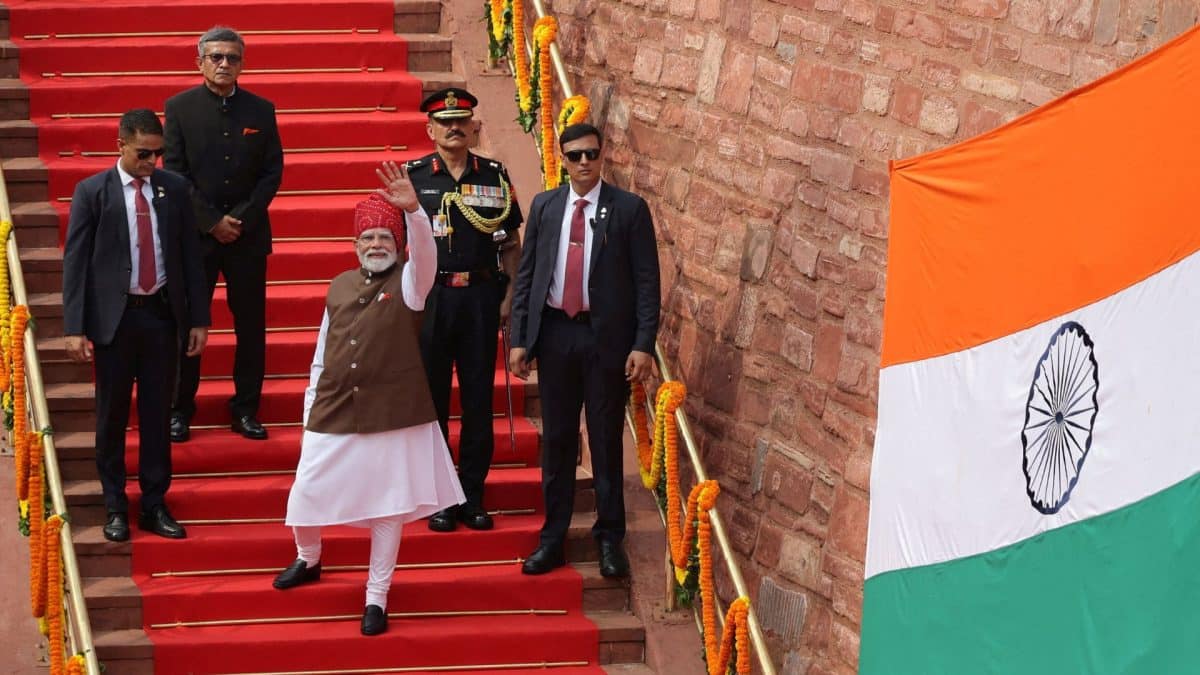
In his recent Independence Day address, Prime Minister Narendra Modi unveiled the 'Sapta Dhara' (seven-stream) roadmap, aimed at steering India toward becoming a 'Viksit Bharat' (Developed India) by 2047. Key components of this vision include a national AI mission, the expansion of semiconductor manufacturing, and a massive push for 100 GW of nuclear energy capacity.

The result is not merely a much larger economy. It is an economy that looks fundamentally different from the one India inherited in 1947.

— Economic Analysis

Key Takeaways

  • India has grown from a 60-80% poverty rate in 1947 to a $4 trillion global economy.
  • The 'Sapta Dhara' roadmap sets the stage for India's development targets for 2047.
  • Major sectors like AI, semiconductors, and nuclear energy are now at the center of government policy.
  • Public dissent and democratic mobilization have remained a consistent, shaping force throughout India's 79-year journey.
  • The focus has shifted from mere survival and rationing to complex, technology-driven manufacturing and global supply-chain integration.

FAQ

What is the 'Sapta Dhara' roadmap?

It is a seven-point development roadmap unveiled by PM Narendra Modi to guide India toward becoming a developed nation (Viksit Bharat) by 2047.

How much has India's electricity capacity grown since 1947?

Installed electricity capacity has grown from 1,362 MW in 1947 to approximately 556.9 GW by 2025.

What does the 'Fragile Five' label refer to?

It refers to a period in India's recent history when the country's economy was vulnerable to global capital flows and rising US interest rates.

What is the current estimated GDP of India?

As of 2026, India's economy is valued at nearly $4 trillion.

Related Videos

From Scarcity to Superpower: Story of India's Economic Rise

Firstpost

Quick summary of Indian Economy from 1947 to 2022

PW OnlyIAS

The Rise & Fall of the Indian Rupee vs US Dollar

FinVision

Sources