science & history••5 min read

The Infinite Power of Zero: How India’s Mathematical Gift Built Our Modern World

The number zero is more than just a digit; it is a foundational pillar of human knowledge. Discover how ancient Indian mathematical innovations transformed it from a simple placeholder into the backbone of modern science.

The Infinite Power of Zero: How India’s Mathematical Gift Built Our Modern World

A Simple Symbol, A Monumental Shift

In the landscape of modern mathematics, zero is ubiquitous. It functions as the bedrock of arithmetic, algebra, computing, and scientific measurement. Yet, for much of human history, the concept of 'nothing' being represented by a 'something' was an alien idea. The history of zero is a multi-civilizational journey, but India’s role in codifying zero as both a placeholder and a number remains one of the most significant intellectual milestones in history.
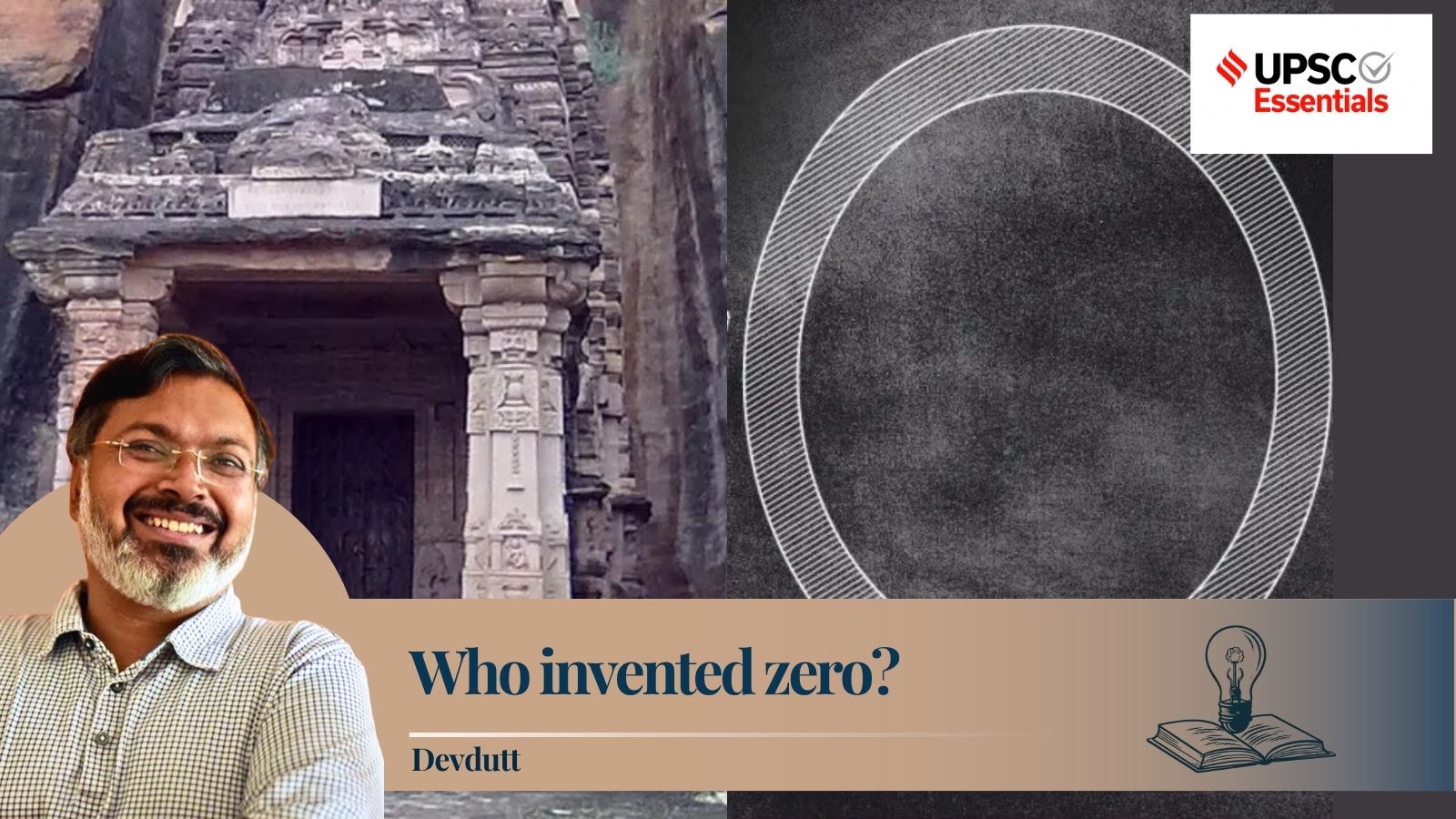
The evolution of zero is a testament to centuries of mathematical inquiry.

From Placeholder to Number

Early number systems relied on placeholders—symbols used to indicate an empty position in a sequence, like the '0' in 102. The Bakhshali manuscript provides one of the earliest records of this, utilizing a simple dot as a placeholder. However, the true transformation occurred when mathematicians began treating zero not just as an empty space, but as a distinct number with its own mathematical properties.

  • Aryabhata: A key figure in the development of early Indian mathematical concepts.
  • Brahmagupta: In the 7th century, he formally defined the arithmetic rules for zero, cementing its status as a number.
  • The Bakhshali Manuscript: Provides critical archaeological evidence of the early use of a dot-based placeholder.

Zero is both a number and a concept denoting the absence of quantity. It plays a foundational role in arithmetic, algebra, computing, and scientific measurement.

— Britannica

The Global Journey of the Zero

The conceptual leap from India eventually reached the Middle East via trade routes and cultural exchange. During the Islamic Golden Age, scholars adopted these Indian numerals, integrating zero into what would become the modern Arabic numeral system. From there, the concept traveled to Europe, fundamentally changing how humanity calculates, builds, and understands the physical universe.

Key Takeaways

  • Zero functions as both a placeholder and a distinct number.
  • The Bakhshali manuscript is among the earliest records of zero as a placeholder.
  • Brahmagupta is credited with defining the arithmetic rules for zero in the 7th century.
  • The concept of zero traveled from India to the Middle East, eventually becoming the basis for the modern global numeral system.
  • Modern physics and advanced computing would be impossible without the properties defined by zero.

FAQ

Did India invent zero?

While the history of zero involves multiple civilizations building knowledge over time, India’s contribution to defining zero as a number and integrating it into a positional system was instrumental to its modern usage.

What is the Bakhshali manuscript?

It is an ancient Indian mathematical document that contains some of the earliest recorded uses of a dot as a placeholder for zero.

Why is zero important in math?

Zero acts as a critical placeholder in positional number systems and allows for complex calculations in algebra, physics, and computer science.

How did zero spread globally?

The concept spread from India through trade routes, was adopted by Arab scholars during the Islamic Golden Age, and eventually reached Europe.

Related Videos

A brief history of banned numbers

TED-Ed

Ancient vs Modern Counting System

magnify

Sources