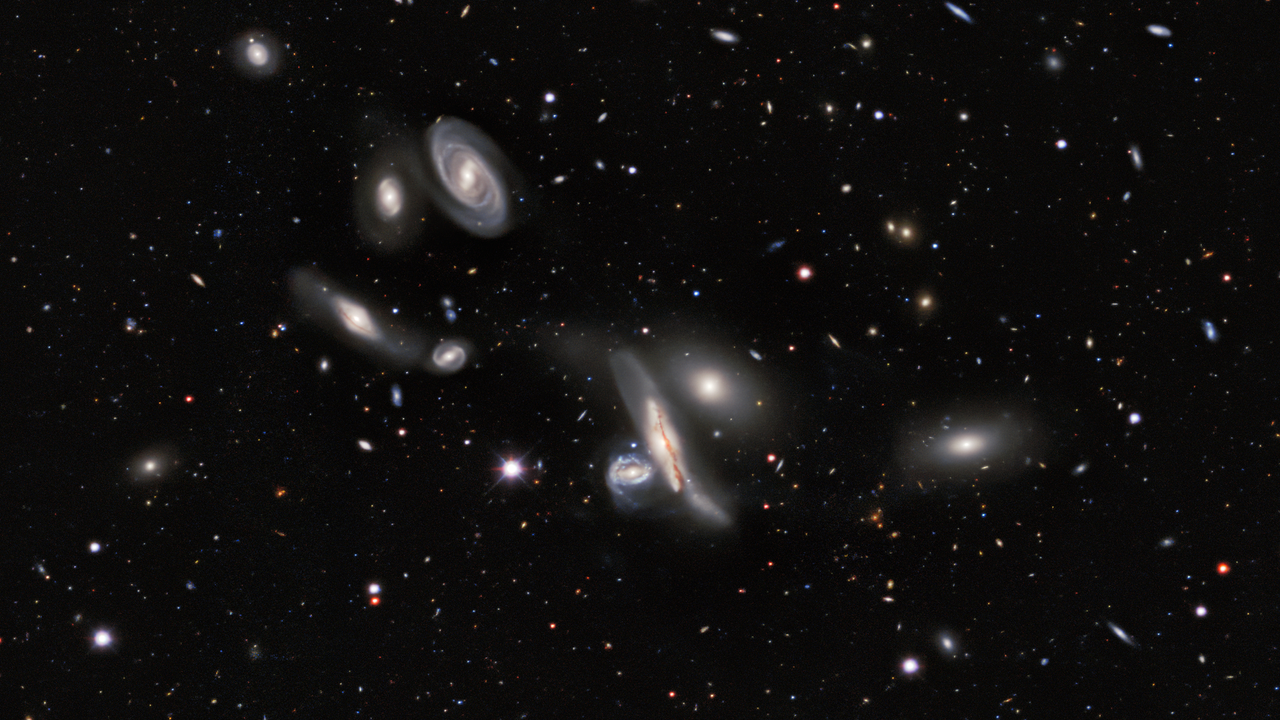
A New Portrait of the Cosmos
Astronomers have officially released the most expansive two-dimensional map of the universe ever produced. Created by the Dark Energy Spectroscopic Instrument (DESI) Legacy Imaging Surveys team, this colossal endeavor catalogs nearly 4 billion celestial objects—ranging from distant galaxies and stars to black holes and asteroids.
The map is a staggering technical achievement, composed of 5.6 trillion pixels. It acts as a comprehensive "deep photograph" of the night sky, providing researchers with a vital resource for navigating the complexities of our universe. By stitching together 263,407 individual telescope exposures taken over more than a decade, the team has created a permanent fixture for modern astronomy.

How the Map Came to Life
The production of this map was a multi-institutional effort involving more than 160 scientists. It synthesized data from three major ground-based sky surveys:
- Dark Energy Camera Legacy Survey (DECaLS) at NSF Cerro Tololo Inter-American Observatory
- Mayall z-band Legacy Survey (MzLS) at NSF Kitt Peak National Observatory
- Beijing-Arizona Sky Survey (BASS) at the University of Arizona’s Steward Observatory
This collaborative effort isn't just about taking pictures of space; it’s about providing a roadmap. The 2D imagery allows astronomers to pinpoint exact locations and brightness levels of objects. This data serves as the critical foundation for the primary DESI mission: to build a high-resolution 3D map that helps scientists investigate the mysterious nature of dark energy.
It's part of the fabric of astronomy research now.
— DESI Legacy Imaging Surveys Research Team
Impact and Future Implications
For the wider scientific community, this map functions as a pointer. Astronomers can cross-reference the Legacy Surveys data with their own targeted observations to study rare cosmic phenomena. By providing a publicly viewable interface via the Legacy Survey Sky Viewer, the project democratizes access to deep-space data, ensuring that both professional researchers and curious observers can explore the fabric of our universe.