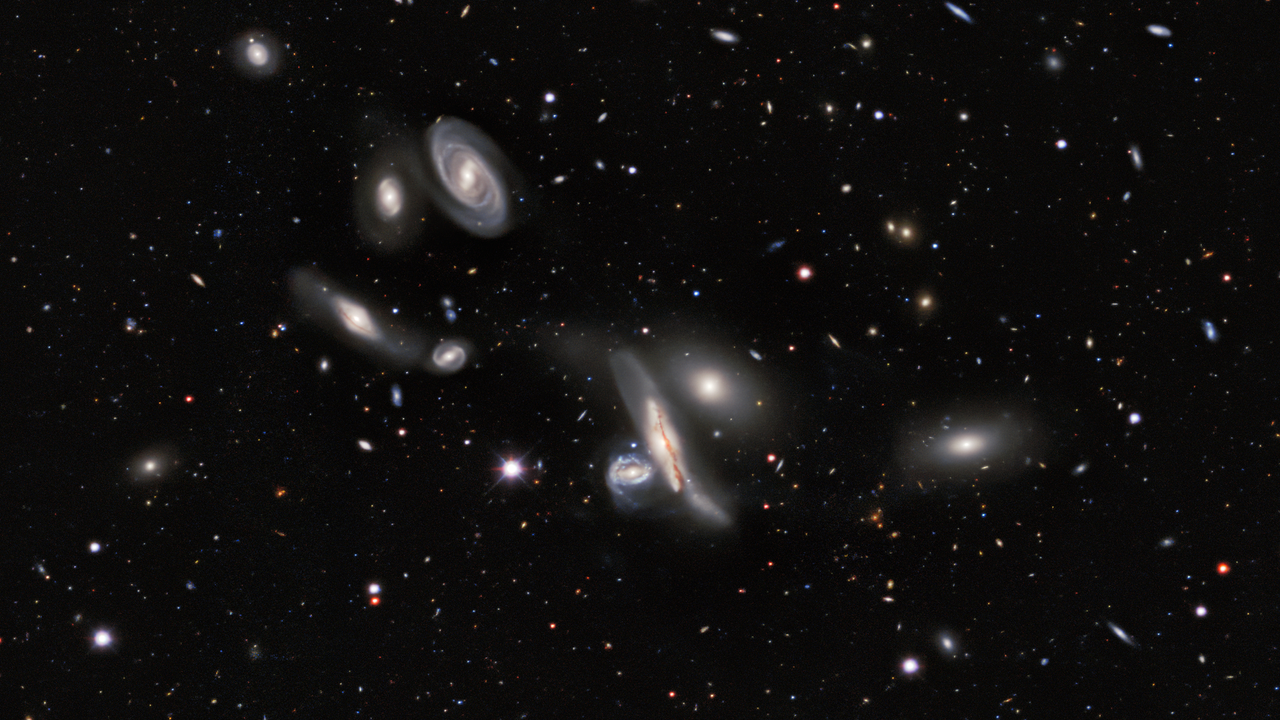
A New Atlas for the Cosmos
Astronomers have achieved a monumental feat in celestial mapping: the release of the largest-ever 2D color map of the universe. Compiled by the Dark Energy Spectroscopic Instrument (DESI) Legacy Imaging Surveys team, the project is a staggering display of endurance and data collection, representing over a decade of work and 263,000 individual telescope exposures.
With 5.6 trillion pixels, the map documents nearly 4 billion cosmic objects, primarily distant galaxies and stars. While it acts as a visual portrait of the night sky, its real value lies in its utility. This isn't just a static image for display; it is a high-resolution roadmap that will guide the next generation of space telescopes.

Why This Map Changes Everything
The Legacy Imaging Surveys project is designed to be a functional tool for scientists worldwide. Its data is already helping researchers search for rare cosmic phenomena, refine theories on galaxy evolution, and even train artificial intelligence systems to parse through massive datasets. Because it captures objects in both visible and near-infrared light, it provides a more comprehensive view of the sky than ever before.
- The map contains a massive 5.6 trillion pixels of data.
- It catalogs nearly 4 billion celestial objects.
- The collection process spanned over 10 years of telescope observations.
- It serves as a critical 'pointer' for future missions, including the Vera C. Rubin Observatory and the Nancy Grace Roman Space Telescope.
It's part of the fabric of astronomy research now.
— DESI Legacy Imaging Surveys Team
The Path Toward a 3D Universe
Beyond its own merits, this 2D map serves as a vital precursor to even grander goals. By establishing where celestial objects are located and how bright they appear, the map allows the Dark Energy Spectroscopic Instrument (DESI) to select targets for its 3D survey. This ongoing 3D project measures light across different wavelengths to calculate the distances of galaxies, allowing scientists to investigate the elusive nature of dark energy—a force responsible for the accelerating expansion of the universe.