
The New Contender in the ARM Arena
Nvidia’s entry into the high-performance ARM-based SoC market is no longer a secret. The RTX Spark, long anticipated as a potential rival to Apple Silicon, has recently appeared in Geekbench 7 listings. These early benchmarks provide the clearest picture yet of how Nvidia’s mobile superchip plans to compete in a landscape dominated by the M-series.
Performance Breakdown: How the Spark Measures Up
The latest Geekbench 7 data highlights two distinct variants of the RTX Spark: an 18-core model and a full-fat 20-core version. When pitted against Apple’s 14-core M4 Max, the results are telling. While the M4 Max retains a lead in single-core responsiveness, the RTX Spark has closed the gap significantly in multi-core workloads.
- The 20-core RTX Spark is currently showing multi-core results roughly 11% slower than the M4 Max.
- Single-core performance remains a challenge, with the RTX Spark trailing the M4 Max by approximately 24.5%.
- The 20-core variant offers a marginal 1.14% improvement in single-core and a 6.2% lead in multi-core tasks over its 18-core sibling.
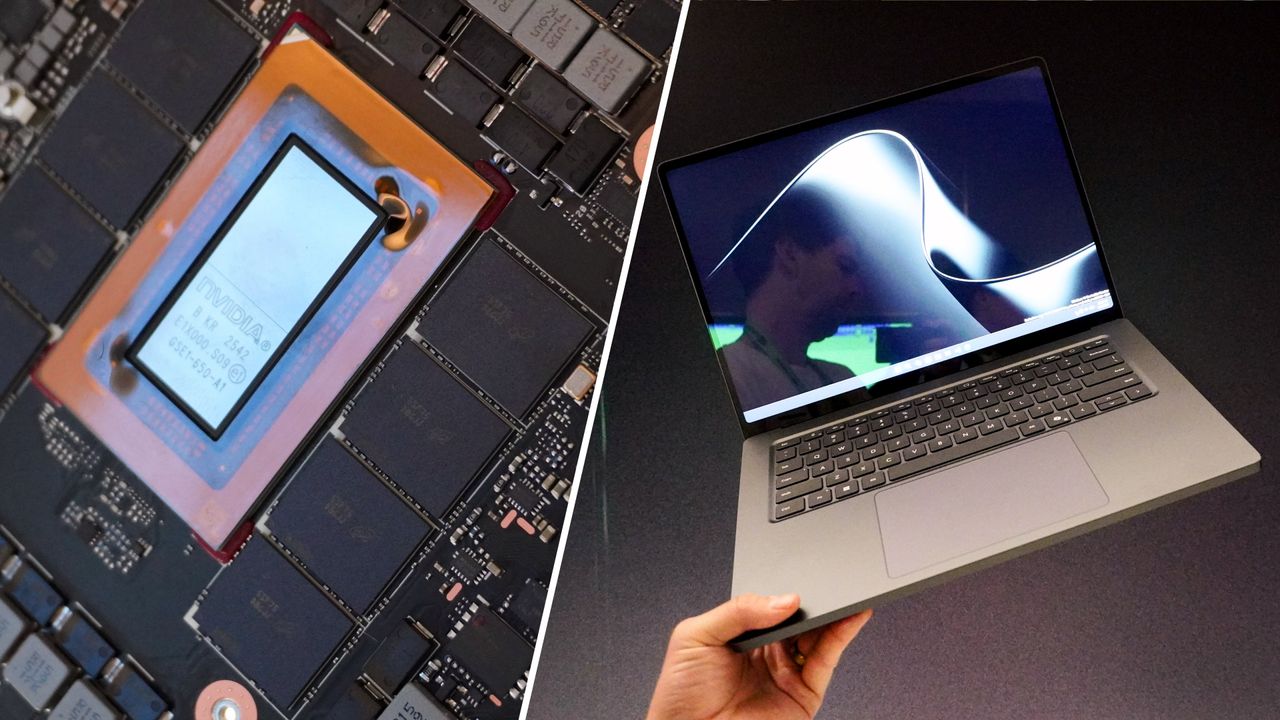
A New Strategy for the AI PC
Nvidia is positioning the RTX Spark as more than just a CPU; it is the cornerstone of its 'AI PC' strategy. Alongside hardware performance, Nvidia has been aggressively pushing software-level optimizations, including support for open models like Nemotron 3.5 Lightning. By focusing on local AI agent capabilities and faster performance on DGX and RTX systems, Nvidia aims to carve out a niche where raw compute meets on-device artificial intelligence.
For the RTX Spark, which also targets gaming and creative applications, the 3x faster GPU is quite nice.
— Tech industry observer via Hacker News
The Verdict: Is Apple Worried?
It is important to remember that these are preliminary benchmarks on unreleased hardware. Historically, optimization—such as improvements in NVFP4—can yield substantial performance gains between early leaks and final retail units. While the M4 Max maintains its crown for now, the RTX Spark represents a formidable shift for Windows-based systems looking to shed the limitations of traditional x86 architecture.